Italy - Strong demand for strawberries but yields dropped by up to 50% compared to a year ago

25.04.2024 627 views

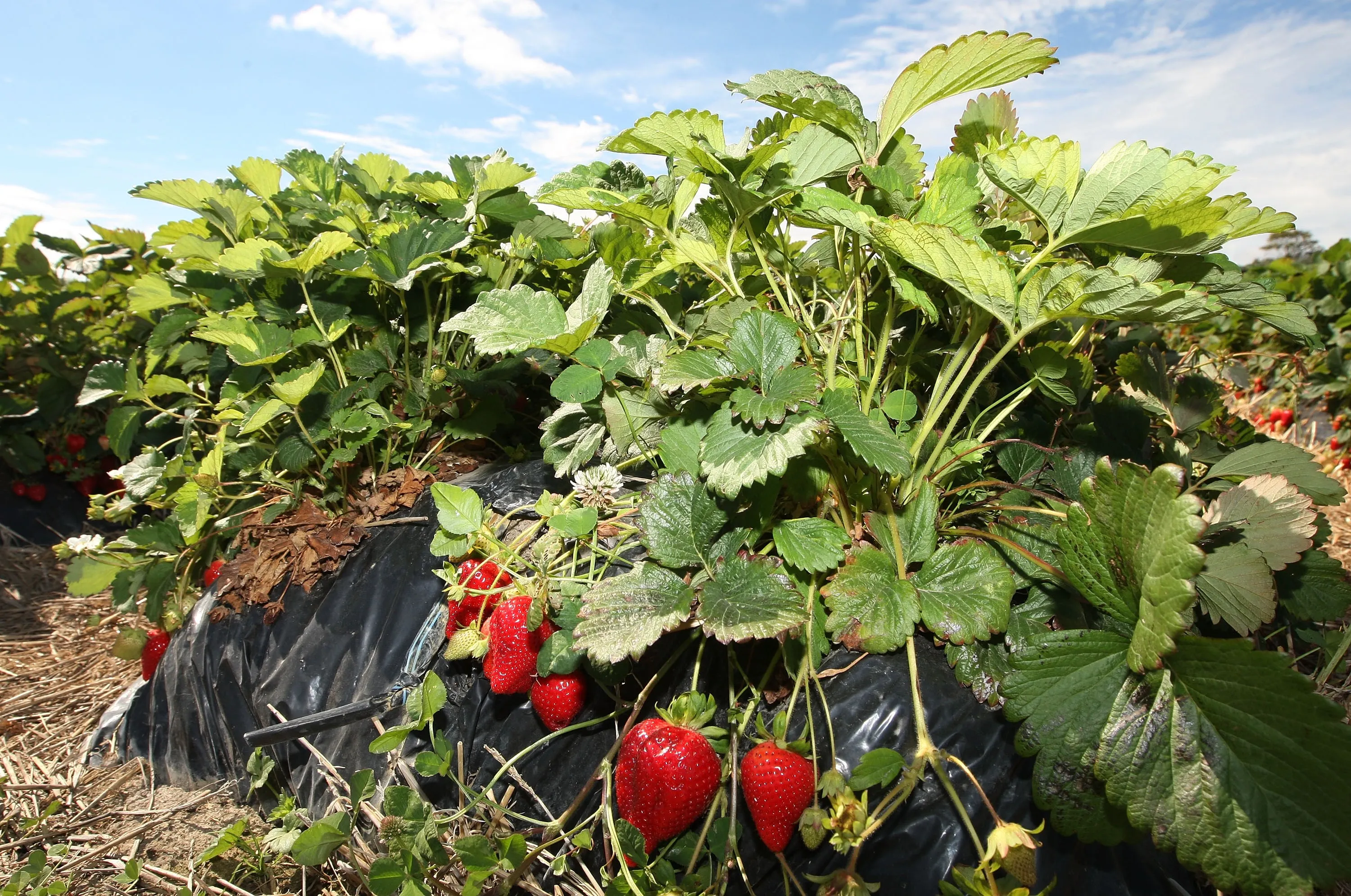
Favorable prices and low yields are marking this recent part of the strawberry season in Southern Italy. "Here in the Basilicata region, in about 40 days, the campaign will be over for many, referring to traditional cultivars like the Sabrosa-Candonga," says Maria Ferrara of the wholesale fruit and vegetable company Fe.Vi Frutta. "There's a high demand from all Italian markets, but we're recording a 50% decrease in yield compared to the same period in 2023."

"We are maintaining a good price," Ferrara adds. "For Candonga branded strawberries, for instance, we have never dropped below 3 euros/kg, even though we are in the peak of the harvest. While it's true that there have been anomalies since the time of transplanting for many varieties, on the commercial level, we can count on decidedly positive feedback."

Significant production peaks have thus never occurred, despite a rather mild weather pattern. Inspire and Sabrosa-Candonga are the two varieties that Fe.Vi Frutta is harvesting and marketing. The cultivation takes place in open fields and off-ground. The commitment is to guarantee constant supplies until the end of the season.

"We supply 50 wholesale markets daily, mainly located in Central-Northern Italy, such as Padua, Bologna, and Florence. We are scattering the quantity we ship: if last year we sent 256 packages per customer, now supplies do not exceed 96 units. We try to satisfy everyone, despite high transportation costs and reduced quantities. Generally, the weight reached at the moment for the type of fresh plant is estimated around 300 g. We do not foresee an extension of the campaign: the plants do not have many flowers. For the entire month of May, we expect production to be normal, so there will not be excessive quantities."

Source - https://www.freshplaza.com

05.05.2026

Climate change: challenges and opportunities for crop insurance in Canada

The pandemic we have just come out of reminded us of the importance of maintaining robust food sovereignty in our country, provinces and cities. 

05.05.2026

Azerbaijan, Uzbekistan hold talks on agro-industrial collaboration

On May 5, Minister of Agriculture Majnun Mammadov met with a delegation from Uzbekistan led by Minister of Agriculture Ibrokhim Abdurakhmonov, who attended the 19th Azerbaijan International Agricultural Exhibition (Caspian Agro Week), to discuss bilateral cooperation in the agricultural sector, Trend reports.

05.05.2026

Philippines - P6.69-million crop damage logged in Albay due to Mayon unrest

Damage to crops from Mayon Volcano’s unrest has reached P6.69 million, with ashfall affecting several farmers in Albay, authorities said Tuesday.

05.05.2026

Cyprus - Farmers in Karpasia seek compensation for crop damage caused by wild donkeys

Losses reported in Rizokarpaso and nearby villages as donkey population grows and destroys farmland.

05.05.2026

USA - USDA Risk Management Agency Upgrades Rainfall Data Source

The U.S. Department of Agriculture’s (USDA) Risk Management Agency (RMA) is upgrading the source for rainfall data used in several Federal crop insurance programs, moving from the National Oceanic and Atmospheric Administration’s Climate Prediction Center (CPC) to the National Centers for Environmental Information (NCEI). 

05.05.2026

Asparagus losses in Norfolk County, Canada reach 98 percent after frost

Frost events in Canada recently caused crop damage in Norfolk County, with asparagus production heavily affected. At Dalton White Farms, losses reached up to 98 per cent of the field.

04.05.2026

Bulgaria's Kyustendil cherry crop severely affected by frost for second consecutive year

Frosts have caused critical damage to cherry orchards in the Kyustendil region of Bulgaria for the second consecutive spring, with producers reporting near-total crop losses. 

04.05.2026

Vietnam - MoF moves to expand farm insurance support and eligibility

The Ministry of Finance has proposed sharply increasing agricultural insurance premium subsidies to up to 95 per cent and widening the pool of eligible beneficiaries to better share risks with producers, stabilise farm incomes, and strengthen climate resilience.