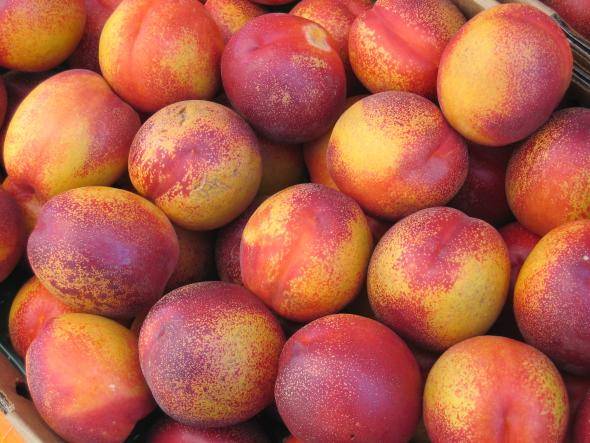
Spain - Extreme temperatures due to recent heat wave accelerated stone fruit ripening in Aragon

24.08.2021 1545 views

The high temperatures recorded last week in Spain due to the intense heat wave have accelerated the ripening of stone fruit in the region of Aragon, bringing the end of the campaign forward by up to two weeks in some areas. 

This is happening in a year with “acceptable prices” in general, although “not high enough”, given the lower production that has been obtained due to the frosts recorded in March, said the agricultural organization Uaga. This problem has affected the Bajo Cinca and Cinca Medio areas more intensely, with production falling by around 50% there compared to 2020. 

In these counties, about 20% of the harvest remains to be done, namely pears (Conference and Williams) and late varieties of peaches, apples and nectarines. “At the beginning of September there will be very little left on the trees,” says Óscar Moret, head of the fruit sector at Uaga. “It has been a bad year for these areas in Huesca,” taking also into account the fact that insurance only covers 70% of the losses caused by frost. 

In the rest of the fruit-growing areas of Aragon, the campaign has had a more normal development, with “reasonable” production volumes. In Calatayud, 50% of the fruit remains to be harvested, especially Blanquilla pears and other late varieties. In Jiloca and Valdejalón, more specialized in apples, there is also still a long way to go, while Caspe is also ahead of schedule. 

Cherries have been one of the fruits with the best performance this campaign in terms of volume produced; however, prices have not been up to par. Caspe, Ricla, La Almunia and Calatayud account for most of this crop’s production, and the region has become the main producer in Spain. 

The sharka-m threatens Mazaleón 

In addition to the consequences of the weather, there is an added factor that has hit stone fruit in the Zaragoza town of Mazaleón: the sharka-m virus. 

This virus is going to force the agricultural cooperative of the municipality to uproot 80% of the peach trees, or in other words, 105 hectares. The process has already started. “We will have to consider a restructuring of the sector with the support of the Government of Aragon”, says the representative of Uaga. 

In any case, they stress that the outbreak seems to be already under control and is only affecting this fruit. 


Source – https://www.freshplaza.com 

05.08.2026

Canada - Crop development on track in southeast despite weather, gophers

The Saskatchewan Ministry of Agriculture says the recent heatwave has led to the rapid development of crops, according to the latest weekly crop report. The heat also contributed to haying progress.

05.08.2026

Spain - The Government launches aid to boost agricultural insurance against climate risks

The Generalitat reinforces the Agricultural Insurance Plan 2026 with almost 29 million and greater subsidies to lower the premiums against climate risks.

05.08.2026

USA - USDA extends crop insurance premium terms, confirms 5% prevent plant buy up

Citing ongoing challenges to the U.S. farm economy, USDA’s Risk Management Agency (RMA) announced temporary premium payment flexibilities and reinstatement of the option to purchase additional 5% prevented planting coverage.

05.08.2026

India - Rajasthan tops country with over 10 million hectares under crop insurance

Rajasthan has emerged as the national leader in the implementation of the Pradhan Mantri Fasal Bima Yojana (PMFBY), providing financial protection to millions of farmers against crop losses caused by natural calamities and adverse weather conditions, officials said on Wednesday.

05.08.2026

USA - Webinar explains new forage revenue protection insurance program

For the first time, many forage producers have access to the Forage Production Revenue Protection insurance program, which provides protection against both yield and price losses. 

05.08.2026

India - Floodwaters recede in Balasore, damaged homes and crop loss reported

The situation across flood-affected regions of Balasore district remains critical even though the water levels finally receded after three days of inundation. Residents in affected areas have begun assessing the damage and attempting to repair their damaged homes.

04.08.2026

The rising cost of severe weather for South African farmers

Severe weather events across South Africa continue to expose the agricultural sector to escalating climate-related risks. While hail remains a major concern, farmers are increasingly having to contend with multiple weather hazards – from strong winds and heavy rainfall to localised flooding and unseasonal conditions – often during the same production cycle.

04.08.2026

Philippines - Go pushes expanded agriculture insurance

SEN. Bong Go urged the government to expand crop insurance, post-harvest infrastructure, and financing programs to protect the agriculture sector from mounting risks and ensure the country’s food security.