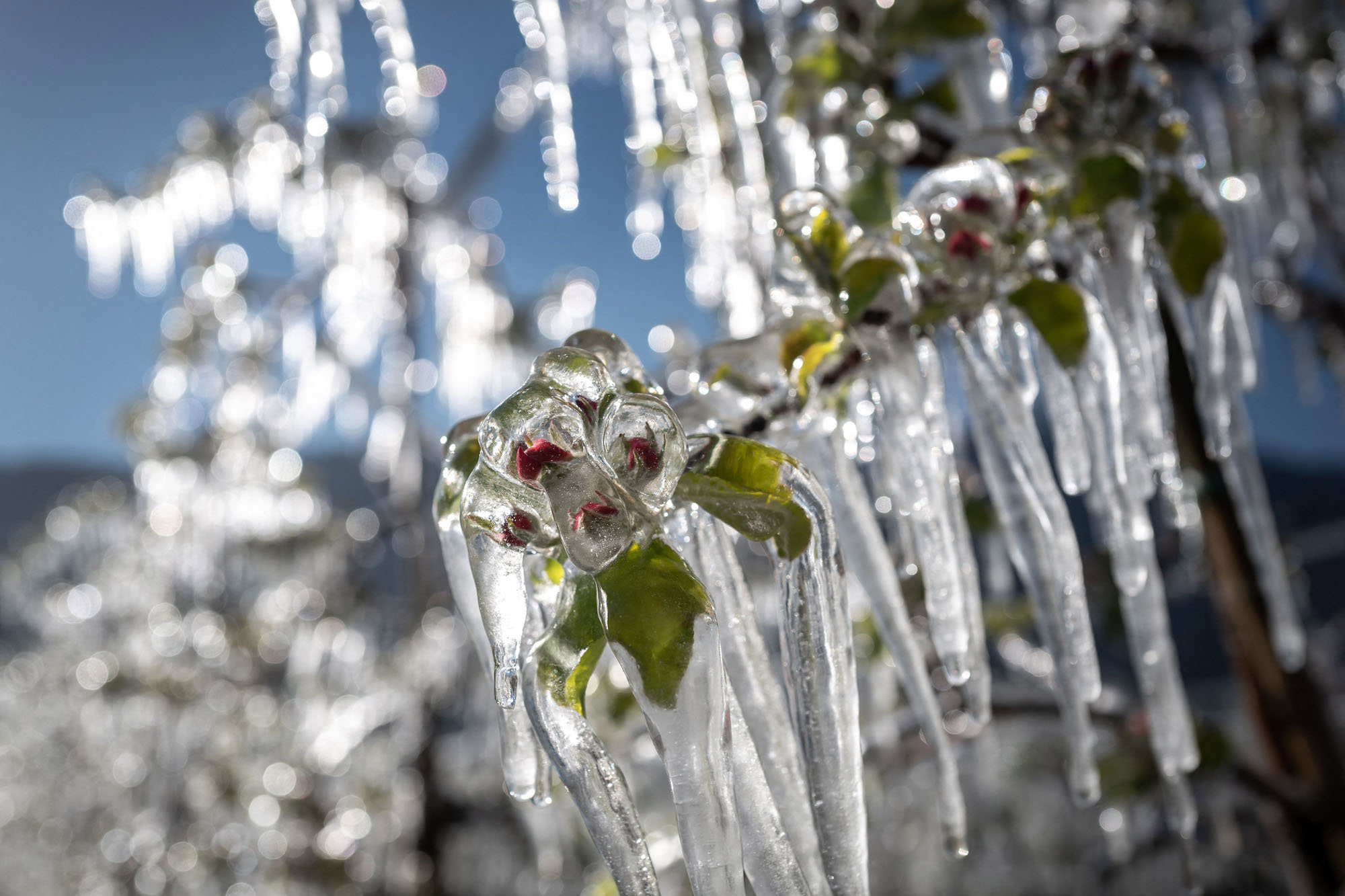
FruitVeB, the Hungarian Fruit and Vegetable Interprofessional Organization, has taken a look at the possible extent of damage to the coming apricot season due to some early spring frost, and provided an impromptu forecast of this year’s (2022) crop prospects. In general, frost damage was suffered almost exclusively by early varieties, and the current condition of the plantations promises, if not good, then at least moderate yields. A record apricot crop is not expected.
Exporters in Hungary reported while it is still too early to give exact expected volumes of apricots, the true effect of the spring frost will only be seen when it is closer to harvest time. This is towards the end of May or early June when harvesting is expected to start. These exporters reported that they were not able to export any early apricots from Hungary for the past two years due to severe frost damage. Usually, due to the frost, the very early varieties in Hungary are not good for exports to countries like Austria, Poland, Slovakia etc. This year the frost damage was much more limited as Márton Kocsis from FruitVeb reports further.
In the vicinity of Kisvejke in Tolna County, only early varieties (Tsunami, Spring Blush) lost yields, with a maximum yield of 40-50%, which is still better than in previous years. There is also some frost damage in the Mediabel and Pinkcot cultivars, but this is only significant in the more unfavorable, deeper plantations. The main varieties are generally expected to have a strong medium to normal harvest.
The condition of the plantations around Kecskemét is good, although branch destruction has been reported in several places. There are several varieties where full yield is expected and even needs to be severely thinned (Kyoto, Farbaly, Faralia). Here, too, the early ones (Pinkcot and Goldrich) are expected to be between half and a third of the crop, otherwise the fruits are in a normal phenological state.
In Somogy county and in the southern part of Transdanubia, according to the current conditions, a good harvest is expected, the condition of the apricots in the home gardens and the plantations is also good. This spring was mild, with only weak frosts, and the bees flew around the flowering blossom.
Everything is fine in Fejér county as well, compared to last year, the frost protection did not have to go over the top either. The plants are in a normal phenological state.
In Western Transdanubia and around Győr, on the other hand, the very early varieties were severely caught by the spring frosts, but the varieties maturing in July-August are expected to have a good average yield, although it is not yet possible to be sure until the first fruit drop in mid-late May. From a plant protection point of view, there is no particular problem, aphids are currently protected here as well. In the vicinity of Győr, the phenological condition of the plantations is 10-15 days behind the usual timing.
The county of Borsod has also avoided significant frost damage, not least because the most sensitive early varieties in this region are grown only sparingly.
In the spring of this year, just like the peaches, no significant frost damage occurred in apricots, which is good news for farmers after the last two years. According to the current state of the plantations, there will be Hungarian apricots on the market from June, so there is no need to fear a shortage of goods. However, due to the frosts that sting the early varieties, a record crop is not expected to shake the market.
Source - https://www.freshplaza.com