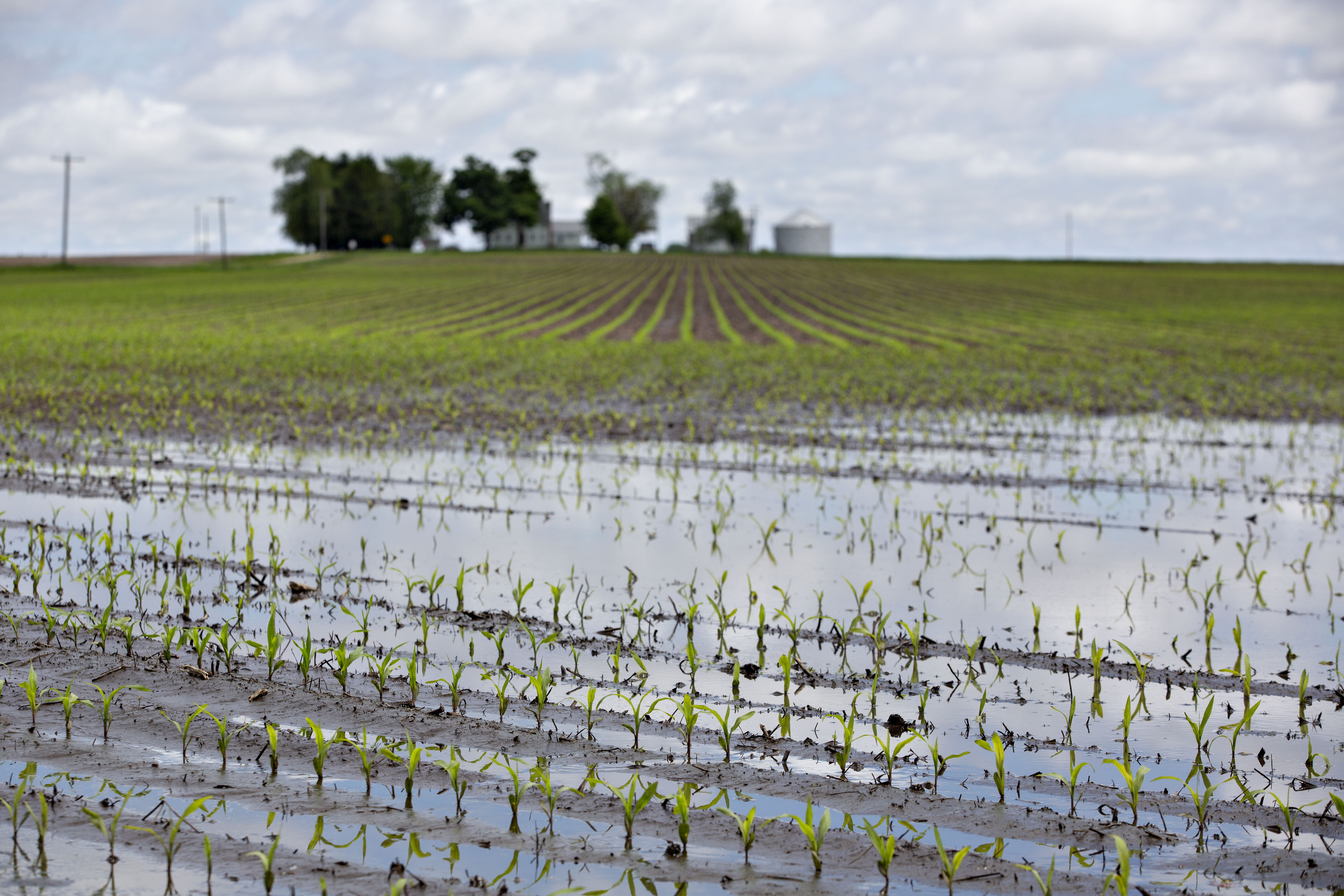
Many producers have been unable to work much in their fields this spring, making any last-minute pre-plant fertilizer applications difficult.
Ahead of rising prices this spring, Jay Fisher, agronomist for Nutrien Ag Solutions in eastern Iowa, said farmers were able to get out in the fall for most of their applications, but a wet spring may mean the need for additional supply early in the growing season.
“Most of the fertilizer was put on last fall, so we are ready,” he said. “Ninety percent of it was put on. If we can get some dry weather, we can get the rest on and get going.”
With many fall applications, Fisher said he expects most farmers to side-dress nitrogen this season. Despite the higher cost this spring, he said this isn’t the year to cut back on fertilizing.
“With crop prices the way they are, they aren’t going to cut back on getting more bushels,” Fisher said.
In anticipation of the higher prices, most farmers pre-paid for their product over the winter, and he isn’t expecting too many supply problems in his area.
While the start of the growing season has been slow, Fisher said this isn’t the time to adjust any plans significantly.
“I wouldn’t panic or change anything right now,” he said. “If it gets a few weeks into May, you could think about it, but I’m not worried.”
Eric Wilson, agronomy manager with Wyffels Hybrids, wrote in an April newsletter that the need for additional nitrogen will vary by field and will require some thought. Rainy conditions can cause significant denitrification, meaning less effectiveness for the crop. If that moisture continues as the temperatures warm up, N can move quickly.
When the soil temperature is between 55 and 60 degrees, being saturated for five days can cause a 10% loss of nitrogen applied. If saturated for 10 days, losses jump to 25%. When temperatures are between 75 and 80 degrees, three days of saturation can mean losses of up to 60%, with seven days of saturation jumping to 85%.
“Denitrification, in general, is more likely on fine textured, poorly drained soils where saturation is maintained for several days,” Wilson said.
Preventing nitrogen loss starts with finding ways to improve a soil’s drainage ability and making sure to apply ammonia in cooler temperatures. He also said products like urea are able to convert to nitrate much faster than ammonia. That is particularly effective in the spring if you can limit the amount of time between application and planting.
For those considering additional nitrogen applications, Wilson said to look at each field separately.
Research has shown if there is more than 16 inches of rainfall between March and June, an extra 20-50 pounds above normal application rates of nitrogen may be needed. He said to test soils to see if there is as much nitrogen carryover as expected as well.
“It would be smart to consider some added applications at some point over the growing season,” he said. “If you’ve had above-average rainfall, this will help against any nitrogen lost.”
However, he advised producers to stay smart in their applications. Nitrogen can be a costly input, and adding too much in places that don’t need it can dramatically hurt the bottom line.
“It’s a decision that needs careful attention,” he said. “It can be a costly mistake.”
Source - https://www.agupdate.com