NEWS
901
of 1224
News
23.12.2015

Canada - Elk creating havoc on Sask. farmers' fields this winter

It's been a bad year for Glen Crittenden. And herds of elk are making things worse. Crittenden farms near Hudson Bay, Sask., approximately 320 kilometres north-east of Saskatoon. Due to wet conditions this fall, much of his crop remains unharvested, and still in the field. "As the winter approaches, elk herd up into larger herds of 10, 20, 50, and they begin to graze on the available crop," said Crittenden. Crittenden plans to harvest his crop this spring, but worries about the foraging animals damaging the plants. "It is covered by crop insurance," he said. "Even in a field where you've got a lot of wildlife damage, determining the amount of loss by wildlife...if you can imagine 50 deer wandering out in a field, foraging and making trails and bedding down, trying to determine that loss is very hard to do." Ironically, Crittenden sees the elk as a bigger problem than a herd of 100 rogue bison wandering the area. It's not clear who owns the animals or when they will be recaptured. Source - http://www.cbc.ca

23.12.2015

Philippines - Gov’t subsidies surge as funds channeled to aid agriculture

Releases to government-owned and -controlled corporations (GOCCs) stood at P6.48 billion for the month, much higher than the P729 million it handed out in September after a rise in allocations to the National Irrigation Administration (NIA), the Philippine Crop Insurance Corp. (PCIC), and the Philippine Rice Research Institute (PRRI). Based on Treasury data, the national government raised its subsidies to the NIA by P2.55 billion in October, a sharp rise from the P271 million it released to the agency a month earlier. PCIC, a state-run firm that gives loan credits and insurance cover for farmers of rice, corn, livestock, and high-value crops, also received P831 million in subsidies after two months without any funding support from the state, while the PRRI -- a research unit of the Department of Agriculture -- got hold of an additional P182 million. It was in October when typhoon Lando, internationally known as Koppu, lashed parts of palay-rich Northern Luzon. This was also a month into the “severe” El Niño expected to hit the country until mid-2016. The National Electrification Administration also received P1.69 billion, the second biggest allocation for the month. Other firms that received additional subsidies in October were the train operator Light Rail Transit Authority with P530 million, the agency’s biggest so far for the year; private sector pension Social Security System at P375 million; the National Power Corp. at P86 million, and the Philippine National Railways at P65 million. The October subsidies brought year-to-date releases to P62.3 billion, down slightly from the P63.64 billion seen a year earlier. The Philippine Health Insurance Corp. has received the biggest subsidies so far at P32.62 billion, making up more than half of the total. Subsidies form part of public expenditures, which were at P1.82 trillion as of end-October. The government plans to release a total of P118.62 billion in GOCC subsidies for 2015. Source - http://www.bworldonline.com

23.12.2015

USA - Kentucky investigation targets alleged fraud in federal crop insurance payments for burley tobacco

Federal crop insurance is supposed to be a safety net for farmers, but an ongoing Central Kentucky investigation suggests that a few are defrauding the system to harvest thousands and even millions of dollars. The investigation focuses on growers who were paid twice: once by claiming losses on a tobacco crop and then receiving an insurance payment, and then receiving another payment when they sold the supposedly damaged burley to tobacco companies. In papers filed in U.S. District Court in Lexington, investigators say they think several people have filed fictitious insurance claims and committed conspiracy, mail fraud, wire fraud and money laundering. In one case, a Nicholas County farmer was paid $1.5 million for his alleged tobacco losses from 1994 to 2014, according to records filed in court. In 17 of those 20 years, he received insurance payments for crop losses. That’s an incredible string of bad luck that investigators find suspicious. That same farmer, whom the Herald-Leader is not naming because he has not been charged or indicted, was known as “an insurance farmer,” that is, “someone who farms land just to claim insurance on crops,” according to court records. For example, this farmer in 2011 claimed to have harvested just 11,221 pounds of tobacco from his fields even though he was able to nearly fulfill his contract with Philip Morris International tobacco company for 100,000 pounds. The farmer claimed an insurance loss and received an indemnity payment of $141,186 that year. The next year, the same farmer claimed to have harvested 15,144 pounds of tobacco but was able to nearly fulfill his Philip Morris contract for 150,000 pounds. The farmer claimed an insurance loss and received an indemnity payment of $98,713. This particular farmer also was suspected of claiming losses on fields that were never planted in crops, as well as planting a crop with the intention of allowing it to fail. In one case, he claimed a loss on a field that investigators said was too steep and too shaded by forest to grow burley or anything else. If true, that’s a troubling discovery because a claims adjuster is supposed to go out to a field to determine whether a loss actually happened. This and the alleged fraud that went undetected for 20 years raise questions about oversight of the crop insurance program. It’s this kind of alleged abuse that makes honest farmers angry — and happy that the FBI, Internal Revenue Service and U.S. Department of Agriculture are looking into the situation, said Hampton “Hoppy” Henton, a Woodford County farmer and former USDA official. “There was a general ‘Hurray!’ from growers that I know” after federal authorities searched tobacco warehouses and an insurance agent’s office in Mount Sterling on Dec. 9, Henton said. “There was a clapping of hands by most every tobacco grower that I know and in my circle of friends.” Source - http://www.kentucky.com

23.12.2015

Zurich buys American agricultural insurance company

The company will acquire RCIS for $1 billion The Swiss company Zurich Insurance Group AG will pay $1.05 billion for the purchase of American agricultural insurance company at Wells Fargo & Co. Zurich will buy Rural Community Insurance Services (RCIS) for $675 million, plus additional capital on the closing date, which is now estimated at a maximum of $375 million. Wells Fargo announced an auction for RCIS with $2.1 billion gross premium subscription in 2014 after he suffered losses associated with extreme weather in recent years, analysts said. The purchase by the company of this Zurich business includes a share of $3 billion of free cash Swiss insurance company has undertaken to use for small acquisitions, and payments to investors. At the beginning of this year the company has given up its more ambitious proposals of the British company RSA Insurance Group Plc. The purchase of the RCIS will increase the range of risks General insurance business, strengthening the agricultural sector, which has a low correlation to the rest of the portfolio company, announced the company's management. RCIS insures every sixth American farmer was reported by Zurich, risk management providing a yield of more than 90 million acres. Despite the Zurich statement that the purchase business insurance will help diversify their own risks, analysts said that the American insurance company suffered losses associated with recent extreme weather. Over the past four years the profitability of the purchased business had average gross combined ratio of 102.2% and average loss of $26 million, analysts said DZ Bank AG. Partly this was because of unusually high damage to crops caused by the drought. This acquisition can be useful strategically, but given the recent results of the RCIS, it is expensive. A ratio above 100% means that the insurance company pays more than it receives. In addition to extreme weather, including drought and floods, low interest rates also contributed to the establishment of agricultural insurance companies, less attractive to banks. The agreement is expected to be completed at the end of the first quarter of 2016. Source - http://agro2b.ru

23.12.2015

8 Useful Crop Insurance Links You'll Want to Bookmark

Got crop insurance questions? If so, you’re not alone. With corn prices below $4, soybeans hovering around $9 and wheat below $5, many producers are looking closely at costs and wondering what type of coverage they can afford in 2016. Here are some useful links to help you in your decision-making process. USDA explains the various risk management programs provided by the government to producers here. Purdue University’s Center for Commercial Agriculture has a special section on managing farm risk. Crop insurance decision tool from USDA's Risk Management Agency (RMA). You’ll obviously want to talk to your agent, but this interactive tool provides a starting point for discussion on commodity crops like corn, cotton, sorghum, wheat, rice, barley and soybeans. Considering a relatively new Whole-Farm Revenue Protection policy? RMA has a Q&A on this new coverage. Interactive price discovery tool from RMA. It’s a little involved, but this online tool will give you some sense of projected prices for various crops in different counties around the country. The team of agricultural economists at farmdoc Daily provides analysis and crop insurance tools here. Wondering if you should add yield exclusion (YE) to your crop insurance policy? RMA explains how YE works here. Farm Credit Services of America, which sells crop insurance policies, has a number of helpful resources for growers, including key dates, list of acronyms, trigger yield charts for corn, wheat and soybeans; crop insurance news, and more. Source - http://www.agweb.com

23.12.2015

USA - House budget chief promises to try to bail out farmers

The chairman of the House budget-writing committee said Tuesday he plans to propose aiding the state’s farmers who are facing a lean year or even bankruptcy after historic rains and floods in October wiped out their crops. Funding details are still being worked out on the Palmetto Farm Aid bill that Rep. Brian White, R-Anderson, plans to file when the Legislature returns in January to address the $376 million hit the agriculture industry took. “Agriculture is our number one industry and our farmers are in desperate need,” White said. “There may be some federal government assistance available, but these measures fall far short of preventing many of our farmers from losing their farms and livelihoods.” Even with U.S. Department of Agriculture low-interest loans available to farmers, many are unable to take on new debt after losing their profits and even their up-front costs to summer drought and fall flooding. Under the 2014 farm bill, crop insurance changed from a guaranteed direct payment system to one based on private crop insurance, underwritten by the government and commodity programs triggered by market prices or countywide average yields. “Crop insurance is not true insurance and many crops are not insurable, so while it will cover some of the losses, it is an insufficient mechanism for insuring against catastrophic loss arising from a natural disaster,” White said. Republican Gov. Nikki Haley rejected calls to ask Congress for direct assistance for the state’s farmers, saying it was their responsibility to make sure they were adequately insured. “What the Farm Bureau has asked for is direct cash payments from the federal government to farmers who chose to be under-insured, something that no other industry in the state is asking for or will be receiving,” Haley’s spokeswoman, Chaney Adams, said earlier this month. Hundreds of farmers rallied for aid in the Statehouse lobby earlier this month after a Senate flood committee meeting at which S.C. Agriculture Commissioner Hugh Weathers said farmers don’t have the option of being fully insured. “If every farmer in South Carolina picked the best crop insurance options available at that time, the crop insurance proceeds still would not cover the basic costs,” Weathers said on Dec. 7. Source - http://www.postandcourier.com

22.12.2015

Africa - Drought worsens in some parts of SA

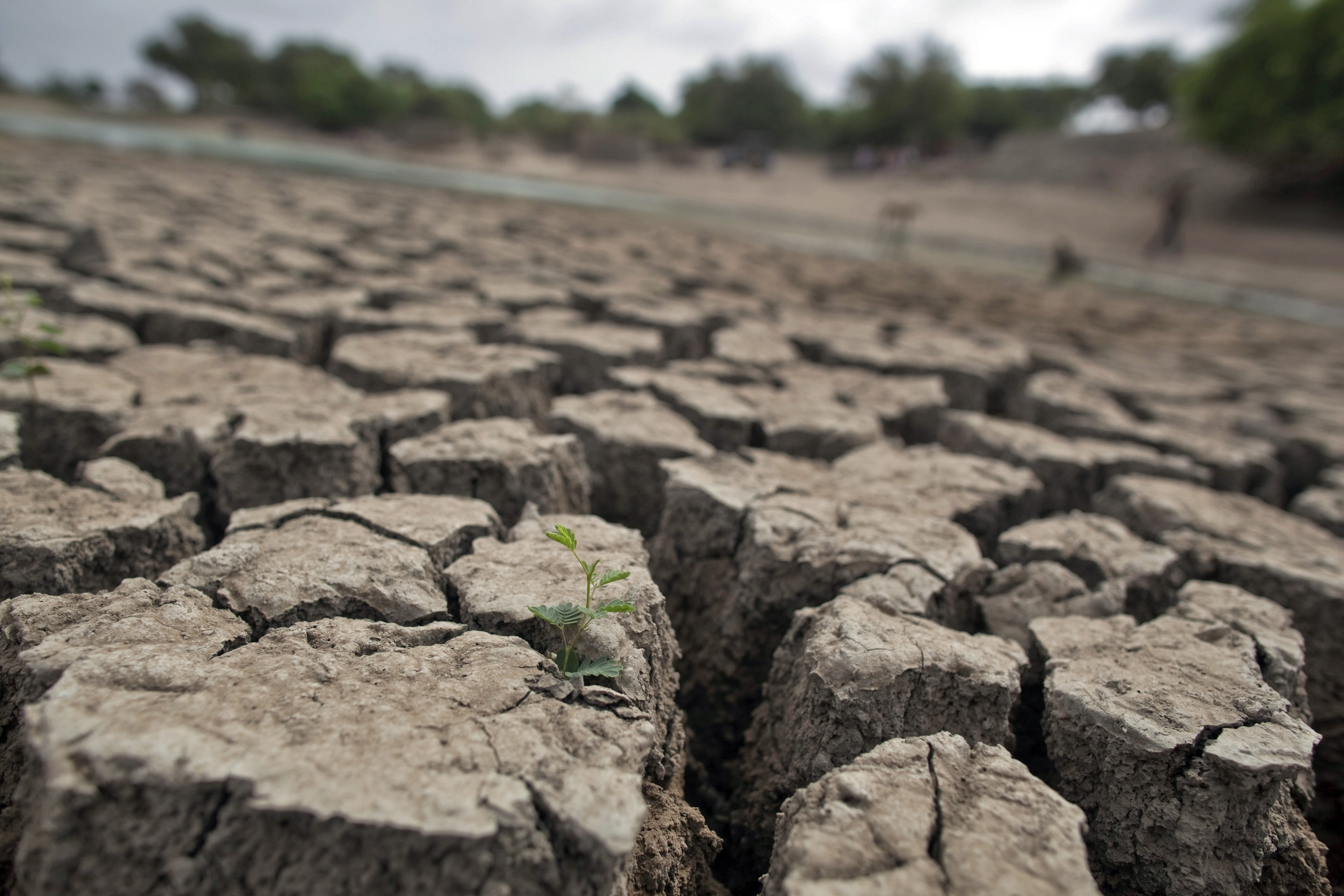
The drought in the central Free State, North West and the Northern Cape has reached a critical stage. No rainfall has been forecast for the rest of the year and water supplies in Bloemfontein and other towns in the province are under increasing pressure. Land meant for maize planting in the central and western Free State can be seen to be sun-scorched and barren. Some relief was delivered over the past weekend when Bloemfontein had 5 millimetres of rain and Welkom 19 millimetres and Bothaville 12 millimetres, respectively. However, this is still insufficient for grain farmers to prepare the land. Chief Executive Officer of Grain South Africa Jannie de Villiers says, "We have finished planting in the east, the rain is patchy, the heat is tremendous and not good for the crop in the west that produce most of our white maize, and the heart of our production is the Free State and North West. I don't think farmers planted 20% of what they intended. This is going to leave South Africa with a big shortage." Municipalities are appealing to residents to use water sparingly. Mangaung Metro Municipality spokesperson Qondile Khedama, says, "We have enough water for the festive season but we are asking all residents to use water sparingly and abide to the imposed water restrictions." Source - www.sabc.co.za

22.12.2015

Ukraine - Crop condition is much worse than a year ago

In general, winter crops are in the state of light winter dormancy. Considering the fact that winter cereals condition improved in November it still remains rather difficult and is estimated as much worse than last year. Last year at the end of autumn vegetation plants emerged almost all over the seeded area (96.5%), but this year due to the drought they emerged at 86% of the seeded area (6100.4 Th ha). At the area of 991.6 Th ha plants did not emerge. Condition of the emerged sowings is much worse compared to last year. 29.8% of the sowings are in good condition (2014 – 40.7%), 37.4%  are in satisfactory condition (2014 – 41.0%), weak and sparse are – 32.8% (2014 – 18.3%). Source - www.blackseagrain.net

22.12.2015

USA - Wild bee decline threatens crop production

The first national study to map U.S. wild bees suggests they’re disappearing in many of the country’s most-important farmlands. If losses of these crucial pollinators continue, the new nationwide assessment indicates that farmers will face increasing costs – and that the problem may even destabilize the nation’s crop production, said Michigan State University’s Rufus Isaacs, co-author and leader of the Integrated Crop Pollination Project, a USDA-funded effort that supported the new research. The findings were published in the current issue of the Proceedings of the National Academy of Sciences. The research team, led by Insu Koh at the University of Vermont, estimates that wild bee abundance between 2008 and 2013 declined in 23 percent of the contiguous U.S. The study also shows that 39 percent of U.S. croplands that depend on pollinators – from apple orchards to pumpkin patches – face a threatening mismatch between rising demand for pollination and a falling supply of wild bees. In June of 2014, the White House issued a presidential memorandum warning that “over the past few decades, there has been a significant loss of pollinators, including honey bees, native bees, birds, bats and butterflies.” The memo noted the multibillion dollar contribution of pollinators to the U.S. economy – and called for a national assessment of wild pollinators and their habitats. Researchers didn’t have a national mapped picture about the status of wild bees and their impacts on pollination – even though each year more than $3 billion of the U.S. agricultural economy depends on the pollination services of native pollinators like wild bees, Koh said. The new study identifies 139 counties in key agricultural regions of California, the Pacific Northwest, the upper Midwest and Great Plains, west Texas and the southern Mississippi River valley that have the most worrisome mismatch between falling wild bee supply and rising crop pollination demand. These counties tend to be places that grow specialty crops – such as almonds, blueberries and apples – that are highly dependent on pollinators. Or they are counties that grow less dependent crops – such as soybeans, canola and cotton – in large quantities. Of particular concern, the study shows that some of the crops most dependent on pollinators – including pumpkins, watermelons, pears, peaches, plums, apples and blueberries – have the strongest pollination mismatch, with a simultaneous drop in wild bee supply and increase in pollination demand. “By highlighting regions with loss of habitat for wild bees, government agencies and private organizations can focus their efforts at the national, regional and state scales to support these important pollinators for more sustainable agricultural and natural landscapes,” Isaacs said. The model’s confidence is greatest in agricultural areas with declining bees, matching both the consensus of experts’ opinions and available field data. However, the study also outlines several regions with greater uncertainty about bee populations. This knowledge can direct future research, especially in farming areas where need for pollination is high. Source - msutoday.msu.edu

22.12.2015

India - Rain catches farmers unawares

Farmers in Odisha have barely recovered from crop loss due to drought this year when a spell of unseasonal rain during the past 24 hours has damaged their ready-to-harvest crops in hundreds of acres of land in the State. Keonjhar, Bargarh, Debgarh, Angul, Khurda and Dhenkanal have received unseasonal rainfall during the past 24 hours. In districts like Keonjhar, Debgarh and Dhenkanal, farmers made desperate attempts to complete crop cutting and take yields to safer places. Rain has flattened ripened paddy crop in some areas of Keonjhar and Debgarh. Farmers are foreseeing more misfortune as the Bhubaneswar Meteorological Centre has predicted more sporadic rains in different parts of the State till December 23. While harvesting of crops has been completed in major parts of the western Odisha district, it is still on in coastal and central Odisha. In Bargarh, supply department authorities and farmers were caught unawares by the untimely rain and lack of sufficient tarpaulin sheets added to the extent of damage. Harvested paddy stocks have dampened, diminishing their market value. Farmers, who had harvested paddy, faced a tough time protecting the crop from dampening. Paddy crop in kharif season had suffered extensive damage due to lack of rain during June and September. In 25 of 30 districts, farmers could not continue their normal paddy operation due to drought condition. Source - www.thehindu.com

22.12.2015

Macedonia - Gov launches project to adapt agriculture to climate change

The Macedonian Agriculture Ministry on Monday announced a 400,000-U.S.-dollar project to protect the country's agriculture from climate change starting from 2016. "By 2050, the average temperature in Macedonia is expected to rise by three degrees Celsius," said Agriculture Minister Mihail Cvetkov. Experts in Macedonia say that the government can adapt its agriculture production to climate change, thus protecting it to a certain extent. Producers are increasingly aware of the effects of climate change, seeking professional support and cooperation toward protecting crops. Activities are focused on irrigation, with 200 million euros (around 218 million U.S. dollars) to be invested in the coming decade. Analyses of the effects of climate change have shown that economic losses among strategic agriculture crops would reach 50 percent. Povardarie is considered the most vulnerable region, while grapes the most vulnerable crop. Furthermore, livestock in Macedonia is expected to drop as a result of the temperature stress effect on the animals, while local breeds are to be more resistant to the projected drier and warmer climate conditions. New diseases and pests in crops and livestock are projected as the highest risks from climate change in the next two to three decades, reported the Macedonian International Agency. Source - www.globalpost.com

22.12.2015

New Zealand - Tasman apple growers count cost of hail

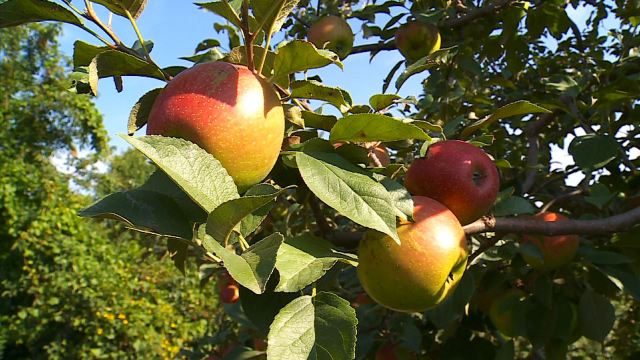
The hail which tore across Tasman horticultural land was three times as bad as the storm which hit Riwaka last November, says Simon Easton. The Motueka Fruit Growers Association chairman said his family lost around a third of their orchard's production in last Wednesday's hail storms. The impact would flow through to the local economy, he said. Growers would this week be assessing  the damage and deciding which blocks could still be picked for export and which would be abandoned. We are looking at the good and the bad fruit. If the damage is too high the cost of getting it into the box will be too high." Growers had to make the tough calls now so they could move forward, he said. "You can't make the call if you don't have a crack at the fruit now." Easton said the  angle and velocity of the hail storms meant the damage was significant on affected blocks. Growers aiming to produce fruit on less damaged trees would have to extensively summer prune so the lower fruit  could colour. There was likely to be no change to orchardist's staffing because of the level of extra work required to get some of the fruit to class one export grade. Easton said the impact of  the hail would flow through to the local economy mid next year when the fruit losses were reflected in growers' returns. "But it's going to be worse than last year,"  he predicted. He encouraged affected growers to talk to  fellow orchardists. "We try to help each other mentally more than anything." Growers had come off a good season so most were currently okay financially, he said. "But it's still going to be a financial blow and insurance will be on a case by case basis. "The hard decision is when you have a 50 to 60 per cent loss on  commodity fruit— do you thin it or walk away? "If it's high value fruit you are more inclined to have a crack." Easton said the region's agricultural consultants were  well placed to help  growers plan their way forward. He said the  region's apple crop had looked "beautiful" before the hail storms. "Everyone had a really good crop —  it was heavy with no disease." Pipfruit NZ business development manager Gary Jones said at this stage crop estimates from Tasman were similar to last year's. The region's estimated gross crop last year was140,000 tonnes and it exported 84,000 tonnes. This year's gross estimate was 139,000 tonnes and the export crop had been estimated at 90,000 tonnes. Figures around the loss to last week's hail would  be known this week, but at this stage he did not expect the production figures to be too different to last season. "The damage is largely localised and there is still a lot of fruit out there." Jones said  the global fruit market  looked positive for New Zealand  pipfruit in the coming season. "The US crop is down significantly on last year, Europe and China are down slightly and the exchange rate has begun to slide. Asia's now taking half the crop whereas nine years ago it took 12 per cent." Jones said New Zealand could not supply all of  Asia's apple needs. Asia's  GDP and middle class continued to grow and with it the desire  to eat more apples, which  were viewed as a high-end  fruit. "And New Zealand sits in that space." Source - www.stuff.co.nz

21.12.2015

India - Crop insurance or deficiency payments?

During the past few months, there has been a highly contested debate on the merits, viability and feasibility of crop insurance in India given the large number of small farmers and the large amount of subsidy involved that is not being effectively used as the coverage of area and farmers remains small. Some policy analysts have proposed a state-subsidized (both Union and provincial) crop insurance mechanism to achieve economies of scale on the patterns of China and the US, while others have proposed alternatives like a calamity relief fund and deficiency payments to insure farm incomes. Now, there are reports that states like Punjab and Maharashtra are already attempting deficiency payments in some crops that have a minimum support price (MSP) provision. Maharashtra has proposed it in cotton and Punjab in maize. In this context, it is important to examine the merits of some of the arguments and their implications if deficiency price payments are implemented in India. The recent socio-economic and caste census data show that only 30% of the rural households have farming as the source of their income, while 51% derive their livelihoods from manual casual labour. Another 2.5% are involved in part-time or full-time domestic service, 1.6% in their own non-farm enterprises and the rest 14.6% in other occupations. In states like Andhra Pradesh and Tamil Nadu, landlessness is as high as 73% each, which means only 27% rural households own land. This is followed by Kerala and West Bengal with 72% and 70% rural households being landless, respectively. Even Punjab, with 65% rural households being landless, ranks fourth in this aspect. This clearly shows that first, farmers are not the major segment of the rural population anymore and many of them may not depend solely on their farm income. On the other hand, there is a vast majority as mentioned above who are mostly landless and depend on casual labour to earn a livelihood. In this situation, asking for a minimum income insurance for only farmers smacks of lobbying for a dominant rural group at the cost of other stakeholders in the farm economy. Everyone is aware how the Mahatma Gandhi National Rural Employment Guarantee Act (MGNREGA) was criticized for hurting agriculture supposedly on the ground that it created a labour shortage and led to higher wage costs for farmers. This, despite the fact that a rural household could claim only 100 days of work for one person at minimum wage, and that, in practice, was, on an average, only for about 50 days amounting to a benefit of just Rs.5,000 in a year for a rural landless or marginal land-holding household. Therefore, now when the more resourceful of the rural population are being projected for their poor plight due to natural and market risks, is it fair and equitable that those who own land should be ensured minimum income while those completely resourceless should not be talked about at all as if they have no stakes in farming? It is to the credit of the recent agitation by farmers’ and workers’ unions in Punjab that for the first time, while demanding compensation of Rs.40,000 per acre for landowners for cotton crop failure, there are was also a demand for compensation of Rs.20,000 per family for landless farm households who depended on cotton for livelihood. It is important to remind ourselves that even the amended land acquisition law provided for compensation to landless if they suffered a loss of livelihood due to land acquisition in a given area. Further, it is debatable whether the country can afford such income insurance when even MGNREGA was being targeted for wastage of money despite the fact that some public work was being carried out and millions of rural livelihoods were being supported. What public benefit such an income insurance will bring is difficult to understand other than the damage it will bring to agriculture in that once a farmer is assured of a minimum income, he need not work hard as any deficiency in income from crop farming arising out of below average yields and below average or minimum prices will be met by the state. Further, when India has been opposing the domestic support subsidies in developed countries and is herself under constant attack for crossing the mandated Aggregate Measure of Support (AMS) levels, how can it go for deficiency payments? It is almost giving farmers cash subsidies or paying them for not producing efficiently. This is a sure way of killing whatever enterprise is left in agriculture. Besides, there are millions of tribal households in many states who have no land titles, which will make them ineligible to avail of minimum income support if it is implemented. Further, it is known that a large part of the farm lands are leased out or are sharecropped. These real farmers (sharecroppers or leasees) will not get the income insurance if the erstwhile Andhra Pradesh experience of giving licences to such cultivators is any indication. There, it was scuttled by all involved, including landowners and banks. This will lead to further raising income inequalities in India, which have grown during the past decade due to the opening up of markets. It is proposed by the proponents of income insurance that Agricultural Produce Market Committees (APMCs) can be used by farmers for registering their produce for availing of minimum income, but it is forgotten that the government is already undoing APMCs under agricultural market reforms as it is perceived that there was a monopoly of APMCs in agricultural markets. First of all, it is a complete lie that a farmer cannot sell outside APMC markets as today there are lakhs of farmers in India who are undertaking contract farming or selling to food supermarkets and other buyers directly without contract, under the amended APMC Acts. If there was an APMC monopoly, how was this possible? Incidentally, Bihar abolished the Act altogether in 2006. In a situation where there are no or a few APMCs, where will the farmer register his produce for minimum income support, especially when much-needed private wholesale markets have not come up anywhere at all? A farmer will have to submit a copy of the APMC receipt as proof of selling below MSP, his land records, and estimated yield of his farm as a record to avail of the benefit under the deficiency direct payment system. This will certainly exclude sharecroppers and also create rent-seeking in so many other ways for local officials. Further, if a farmer undertakes contract farming or sells directly to a buyer, how would that produce be registered? Finally, the proposed income insurance does not seem to include allied occupations like dairying, fisheries, non-timber forest produce or poultry as that produce does not come to the APMC market, but they face price and market risk like any other crop farmer and thus, the benefits would reach only a small fraction of the farming community. Making deficiency payment based on MSP alone is not about income assurance as it would leave out the yield component and, therefore, cannot be a replacement for crop insurance and MSP backed by procurement. But, the most glaring implication of the proposed deficiency payment mechanism is that it makes the state give up its responsibility of intervening in markets by undertaking procurement at MSP and, therefore, sending signals to other buyers and creating competitive conditions for farmer benefit. Once the MSP is not backed by procurement, it would leave the market to the private players who may not even buy at MSP, especially in major and high-value crops like cotton. Therefore, it is better to have multiple mechanisms of agricultural risk management, some of which are already available like MSP (backed by more effective procurement across most MSP crops), Market Intervention Scheme (MIS) in states like Karnataka and Himachal Pradesh, which is implemented by Union-state partnership when demanded/needed in crops that have no MSP, contract farming, warehouse receipts system, and, of course, better implemented crop insurance with some state subsidy for commercial crops that matter for farmer livelihood and can also help achieve desired diversification in cropping pattern. Source - http://www.livemint.com

21.12.2015

Venezuela - Delay in delivery of potato seeds to affect 25% of production

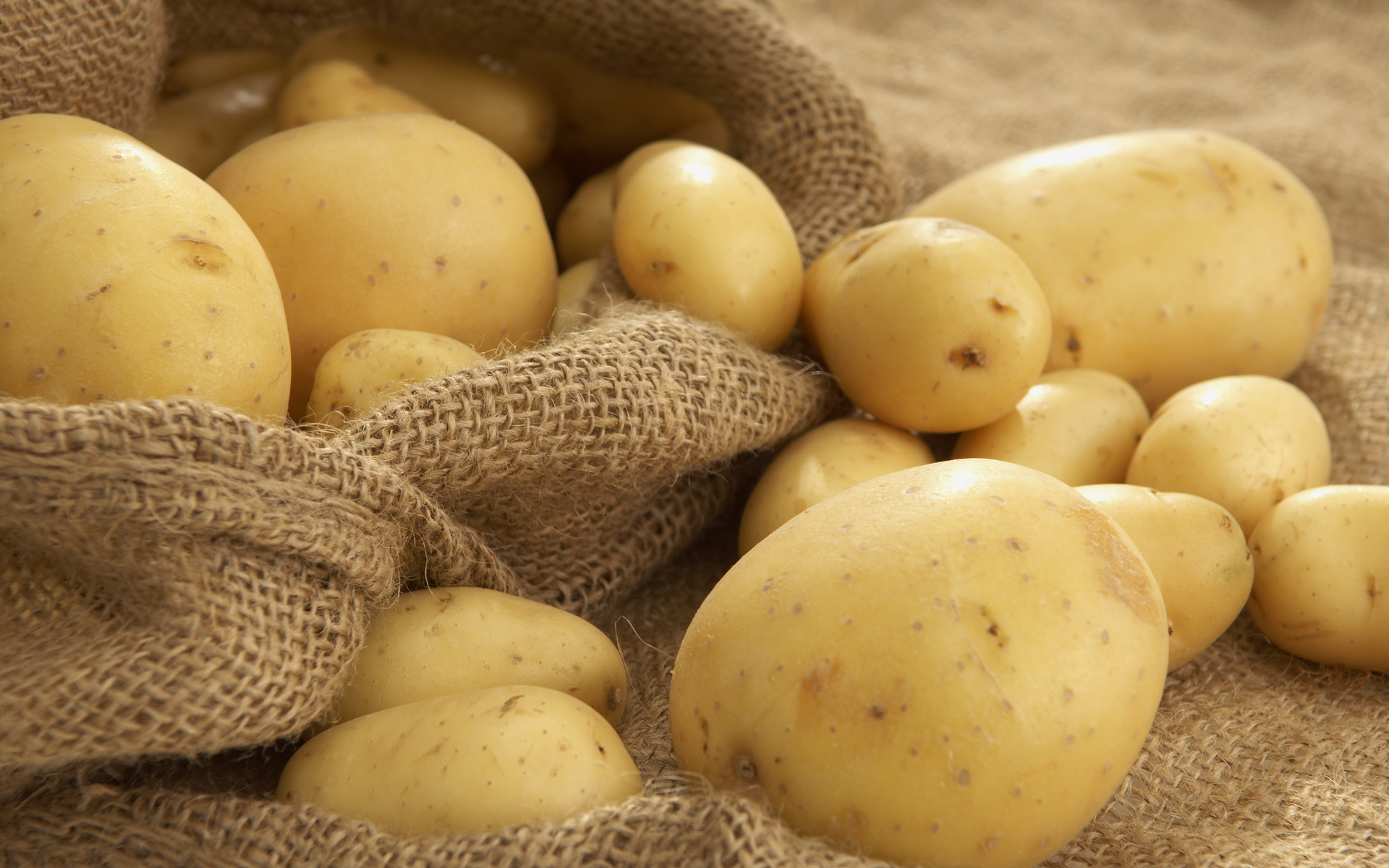
The potato planting should have started already in December; however, the first shipment of seeds from Canada, which promised to yield a production of 17,000 tonnes of potatoes in the first quarter of 2016, has yet to arrive. Julio La Cruz, director of the National Federation of Potato and Vegetable Growers (Fenaprohort), assured that Aragua and Carabobo have missed the planting cycle, which should have started in the first week of December. "The arrival of the seeds is estimated for 26 December, which means that planting will start in January; consequently, there will be high risks involved and insurance will be needed, since the harvest will start when already into the rainy season (April-May)," explained La Cruz. Source - http://www.freshplaza.com

21.12.2015

USA - Crop Insurance Resources Available for Iowa, Minnesota, and Wisconsin

USDA’s Risk Management Agency (RMA) announced that updates are now available for all commodities and insurance plans with a November 30 contract change date for the 2016 crop year in Iowa, Minnesota, and Wisconsin. Producers, insurance agents, and insurance company employees are encouraged to use these resources to reference important insurance changes for the 2016 crop year. Recently updated information includes details on program expansions and deletions, date changes, map changes, as well as, changes made to the crop special provisions in the Saint Paul Region, which includes Iowa, Minnesota, and Wisconsin. Additional information for the most current commodity report by county can be found on the Actuarial Information Browser page on the RMA website. Crop insurance is sold and delivered solely through private crop insurance agents. A list of crop insurance agents is available at all USDA Service Centers and online at the RMA Agent Locator Source - http://www.minnesotafarmguide.com

21.12.2015

India - Crop loss compensation sanctioned

The government had sanctioned compensation for crop loss over 95.98 hectares in Tirumangalam and Kallikudi areas of Madurai district, said Collector L. Subramanian on Friday. Addressing farmers at the monthly grievance redress meeting here, the Collector said that Rs.13,500 sanctioned per hectare of crop loss would soon be disbursed to farmers. Farmers from Kottampatti and surrounding areas demanded that water be provided to the extension areas of the Periyar canal system. However, the Public Works Department officials said that 11 tmc water was needed for covering the extension areas but only 8 tmc of water was presently available of which around two tmc would be used for drinking water purpose. Source - http://www.thehindu.com

901
of 1224