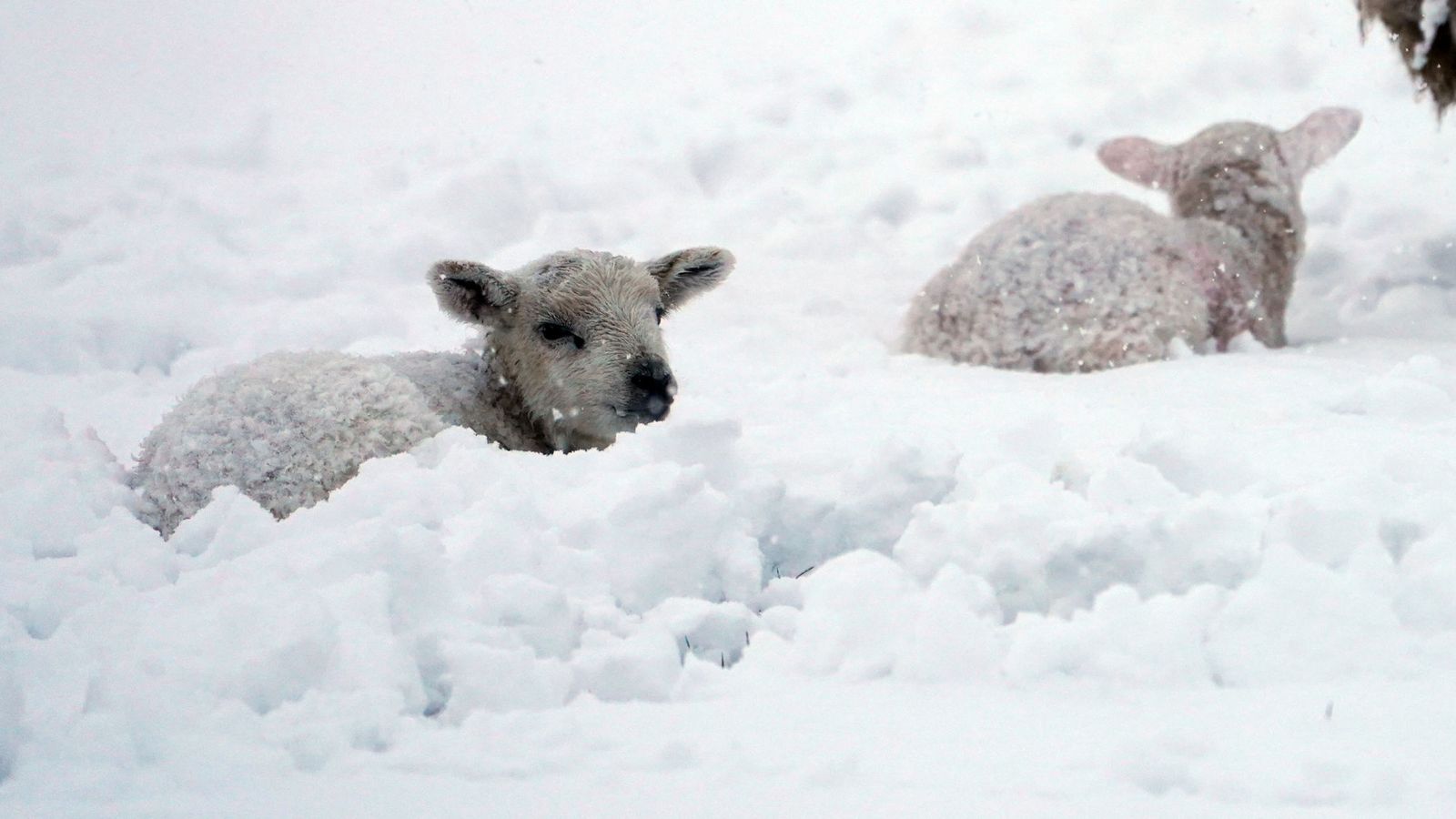
Farmers are worried about the effects a spring snowfall and cold weather snap will have on livestock during lambing season.
A cold weather snap bringing snow and ice to parts of the UK this week has raised concerns for farmers trying to protect their newborn lambs from the elements. Lambing season, which is recognised by many as the start to spring, is a significant event in British farming calendars. But the wintry weather during this season's peak has roused worries over the newborns' ability to survive. Cumbrian shepherdess Hannah Jackson posted videos to Twitter on Wednesday, showing her trudging through several inches of snow in search of her new lambs. "It's like being in a winter wonderland… in April," she noted. "It's getting a bit silly now that they're being born in this weather." To combat the adverse conditions, Ms Jackson then dressed the lambs in made-to-measure jackets, while taking weaker newborns into a barn to shelter them from the cold.


ScaleAgData Stakeholder Engagement Event
22.10.2024The ScaleAgData project is pleased to invite you to our second stakeholder event. Building on the discussions and connections formed during our first webinar, this event will focus on fostering collaboration among stakeholders, providing updates on our project’s progress, and outlining future opportunities for engagement.
Moldova - May frosts caused heavy damage to fruit orchards
10.05.2026The first frosty nights of May have significantly worsened estimates of damage to Moldova's fruit sector from spring frosts. According to initial assessments by fruit market operators, between a quarter and a third of the country's total orchard area was seriously affected.
Canada - Crop development on track in southeast despite weather, gophers
The Saskatchewan Ministry of Agriculture says the recent heatwave has led to the rapid development of crops, according to the latest weekly crop report. The heat also contributed to haying progress.
Spain - The Government launches aid to boost agricultural insurance against climate risks
The Generalitat reinforces the Agricultural Insurance Plan 2026 with almost 29 million and greater subsidies to lower the premiums against climate risks.
USA - USDA extends crop insurance premium terms, confirms 5% prevent plant buy up
Citing ongoing challenges to the U.S. farm economy, USDA’s Risk Management Agency (RMA) announced temporary premium payment flexibilities and reinstatement of the option to purchase additional 5% prevented planting coverage.
India - Rajasthan tops country with over 10 million hectares under crop insurance
Rajasthan has emerged as the national leader in the implementation of the Pradhan Mantri Fasal Bima Yojana (PMFBY), providing financial protection to millions of farmers against crop losses caused by natural calamities and adverse weather conditions, officials said on Wednesday.
USA - Webinar explains new forage revenue protection insurance program
For the first time, many forage producers have access to the Forage Production Revenue Protection insurance program, which provides protection against both yield and price losses.
India - Floodwaters recede in Balasore, damaged homes and crop loss reported
The situation across flood-affected regions of Balasore district remains critical even though the water levels finally receded after three days of inundation. Residents in affected areas have begun assessing the damage and attempting to repair their damaged homes.
The rising cost of severe weather for South African farmers
Severe weather events across South Africa continue to expose the agricultural sector to escalating climate-related risks. While hail remains a major concern, farmers are increasingly having to contend with multiple weather hazards – from strong winds and heavy rainfall to localised flooding and unseasonal conditions – often during the same production cycle.
Philippines - Go pushes expanded agriculture insurance
SEN. Bong Go urged the government to expand crop insurance, post-harvest infrastructure, and financing programs to protect the agriculture sector from mounting risks and ensure the country’s food security.