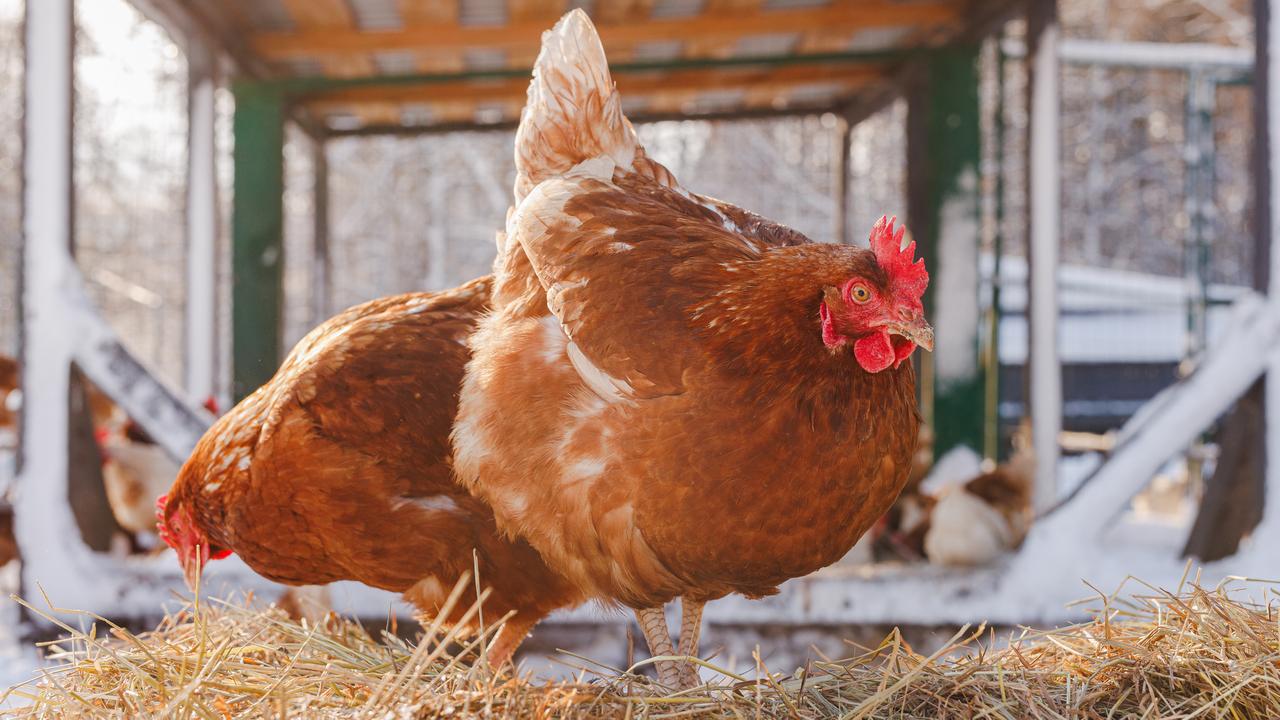
The spread of H5 bird flu to a third Australian state has focused industry attention on a structural feature of the country’s animal-disease risk model that matters to underwriters and brokers: government compensation for avian influenza reimburses culled birds but excludes the business-interruption losses that often exceed them, leaving a coverage gap that the private market fills only partially and, brokers say, on tightening terms.
The framework that pays, and what it leaves out
Avian influenza is a nationally notifiable emergency animal disease managed under the Emergency Animal Disease Response Agreement (EADRA), a cost-sharing deed between the Commonwealth, state and territory governments, and 14 livestock industry groups administered by Animal Health Australia. H5 and H7 avian influenza in poultry are categorised such that governments cover 80% and affected industries 20% of eligible response costs, with the Commonwealth initially underwriting the industry share and recovering it through producer levies, according to Animal Health Australia.
Compensation under the agreement is set by state and territory legislation and is based on the farm-gate market value of birds destroyed or lost at the time of detection. Animal Health Australia states that compensation “is not designed to cover broader financial losses, such as lost income or market access,” and that cost-sharing principles do not apply to consequential loss. That distinction defines the private-market opportunity. Broker Lockton notes that government compensation “does not typically cover losses related to business interruption,” and that insurance for livestock mortality, culling costs, and business disruption is “limited and not always available in all regions, due to the severity of losses following outbreaks and restricted number of underwriters who provide capacity in the sector.”
Standard farm packages reflect the same limits. Achmea Farm Insurance states that avian influenza is excluded from its All-in-One Farm Pack, while retaining the right to review individual claims. Specialist brokers market all-risks mortality and standalone business-interruption programs to sit alongside the EADRA arrangement, covering loss of gross profit from quarantine and restocking delays, per Agripro Insurance Brokers.
Capacity, pricing, and structure
The available cover carries structural constraints that shape how it is written. Lockton states that bird flu cover is often sub-limited, providing only a proportion of the full limit as a means for insurers to cap exposure given the scale of potential losses, and that cover becomes severely restricted once an outbreak occurs, prompting the broker to advise producers to secure protection before the virus reaches their region, The broker also notes that following an outbreak, farmers may face reduced capacity and higher premiums as insurers adjust to the higher risk profile. Coverage for commercial livestock is typically triggered by a government order to slaughter an infected premise, per Agripro.
What the last outbreak cost
The H7 outbreaks that ran across Victoria, New South Wales, and the Australian Capital Territory from mid-2024 into early 2025 provide a recent loss benchmark. H7 was declared eradicated by July 2025, but containment required culling more than 10% of Australia’s egg-laying flock, or roughly 2.4 million birds, University of Sydney poultry health lecturer Jose Quinteros wrote in The Conversation. Egg production fell and prices rose. Those events remained geographically contained yet still produced supermarket purchase limits and shortages, illustrating how quickly disruption reaches retail and hospitality clients.
Howden argues the current H5N1 strain presents a different risk profile because the global Clade 2.3.4.4b strain has become established in wild bird populations across multiple continents and spreads through migratory pathways, creating repeated spillover opportunities rather than isolated events. The broker points to Japan, which continues to record recurring outbreaks despite established surveillance, as a model for a prolonged operating environment.
A second gap in the dairy sector
The exposure extends beyond poultry. H5N1 has infected dairy cattle overseas, and Dairy Australia states that production losses such as milk drop are treated as consequential losses that are not eligible for cost-sharing under the EADRA. The Victorian Farmers Federation notes that an incursion into dairy herds could cause a steep, prolonged drop in milk production, with recovery taking more than two months and flow-on effects for the supply chain and exports. That places milk-production loss in the same uninsured-by-government category as poultry business interruption, widening the addressable gap across livestock classes.
The current detections
As of 9am AEST on July 7, Australia had seven confirmed H5 cases in wild birds, five in Western Australia and one each in South Australia and New South Wales, according to the Department of Agriculture, Fisheries and Forestry. New South Wales became the third state to confirm a case after a giant petrel found near Hawks Nest returned a positive result, Reuters reported on July 5. State Agriculture Minister Tara Moriarty said in a statement: “The positive test is the first confirmed detection of H5 in New South Wales,” adding there was no detection in commercial poultry flocks or captive birds.
Western Australia classified a giant petrel found in the Whitfords-Mullaloo beach area as a “presumed positive” after CSIRO testing confirmed an H5 subtype but could not complete viral sequencing, the state government said on July 6. Acting chief veterinary officer Katie Webb said: “This does not change our response in WA. We are treating this the same as a positive case based on the available epidemiological and laboratory evidence.”
South Australia submitted a second potential case for testing after a suspected detection in a giant petrel at Hardwicke Bay, the ABC reported on July 7. PIRSA chief veterinary officer Skye Fruean said: “We’re confident we’re dealing with an infection of bird flu. We just don’t know if it's the H5 bird flu that we’re really concerned about.” Primary Industries Minister Clare Scriven said the state had received 1,200 reports being triaged.
Exposure beyond agriculture
The Commonwealth has committed more than $113 million to surveillance, preparedness, and response, according to DAFF. There are no commercial poultry outbreaks in Australia and no poultry-export trade restrictions, per Animal Health Australia. For insurers, Howden identifies egg supply as likely to be affected earlier than chicken meat due to flock-replacement timeframes, and flags exposures spanning food manufacturing, retail logistics, hospitality, and nature-based tourism. Wildlife mortality is already documented: researchers estimate more than 13,000 southern elephant seal pups were lost to bird flu on Heard Island in late 2025 and early 2026, the Australian Marine Conservation Society reported.
Source - https://www.insurancebusinessmag.com