Farmers across the NSW North Coast have reported damages of $17 million as they continue to take stock of the impact of ex-Tropical Cyclone Alfred.
The NSW government expects the figure could rise further in the days and weeks ahead, as primary producers are able to fully assess the fallout.
While many are breathing a sigh of relief — having prepared for a repeat of the catastrophic 2022 floods — other farms have seen pastures, crops, infrastructure, fences and roads damaged, and in some cases completely wiped out.
There have also been reports of livestock deaths.
Horticulture businesses were the hardest hit with strong winds causing widespread damage in orchards, including tree, plant and crop loss.
Damaged trees were lined up at Tony Flick's macadamia plantation at Broken Head. (ABC Rural: Kim Honan)
Tony Flick farms at Broken Head, south of Byron Bay, and said he lost up to 1,000 trees on his young orchard which was about to deliver its first crop.
"Alfred had a bit of a sting in his tail," Mr Flick said.
"We had a bit too big of lush top on them so they caught a fair bit of wind.
"They're talking 120 kilometres per hour but when you see some of the trees torn up, there would've been gusts well beyond that I'd say."
He estimated an $800,000 loss and said financial assistance would be a "game changer".
The NSW and federal governments are still assessing whether special disaster grants will be considered.
'Scary' winds cause damage
Ron and Mel Caccianiga estimate they have lost up to 500 trees in their macadamia orchard. (ABC Rural: Kim Honan)
Mel and Ron Caccianiga had 450 to 500 trees damaged on their farm at Tregeagle, on the Alstonville Plateau near Lismore.
"Branches snapped off, a lot of trees have split; they're still standing but there's a big split," Mr Caccianiga said.
A damaged macadamia tree from the Caccianigas' orchard at Tregeagle. (ABC Rural: Kim Honan)
Ms Caccianiga said a number of power lines were brought down in the wild weather.
"Our neighbours were losing the roof of their shed, we were helping tie that down," she said.
"When wind is coming up through that gully, it is scary."
The Cacciangias estimate 450-500 trees were damaged on their Tregeagle farm. (ABC Rural: Kim Honan)
It was a similar story at a coffee plantation at Newrybar, where strong winds stripped trees that were loaded with coffee cherries.
"We've lost branches; beautiful young fruit that were meant to hold on to October spring harvest," Rebecca Zentveld said.
These young coffee cherries on a plantation at Newrybar will be lost. (ABC Rural: Kim Honan)
"It's hard to estimate the financial loss. It could be up to 20 per cent; that's across the mature plantation."
Pecans, vegetables, flowers, bananas, custard apples, avocadoes and blueberries were among the other horticultural crops affected.
Soybeans smashed
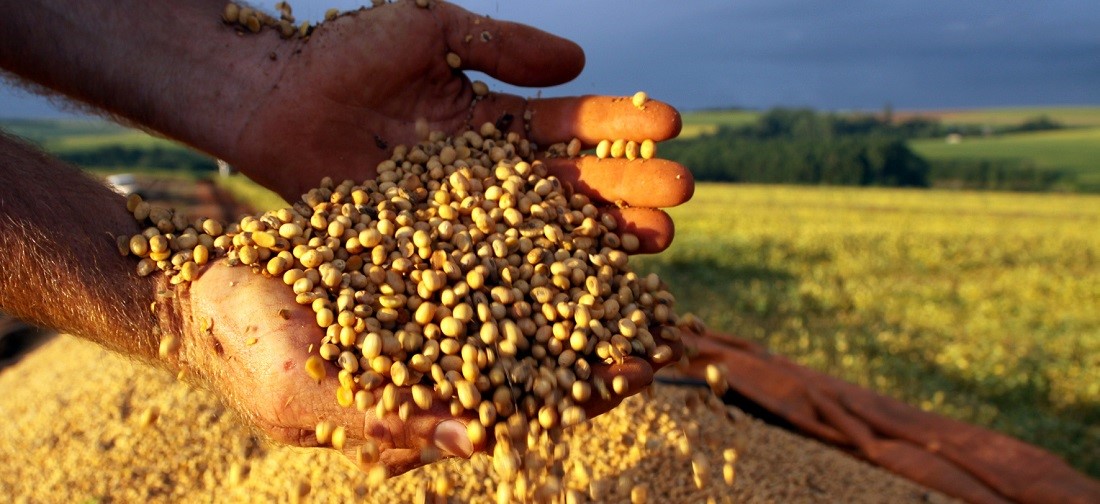
Soybean and cane crops were also severely impacted in some areas.
Marty Walsh has soybean and cane crops on five farms across the Richmond River floodplain, with one property still inaccessible.
"It's definitely going to take a toll, that's for sure," he said.
"We're at 80 to 90 per cent loss of soybeans all over, so a huge hit."
He estimated the financial loss of the soybeans at $200,000 and said it was too early to assess the floodwater damage to his sugar cane crops.
$1m cost to dairy co-op
There's also been a significant impact on the dairy industry with farmers across the region being forced to dump thousands of litres of milk.
Norco chief executive Michael Hampson estimated ex-Tropical Cyclone Alfred had cost the farmer-owned dairy cooperative more than $1 million.
"We've had to close an ice-cream factory [in South Lismore] for five days of production," he said.
"We've had to pull it apart and put it back together, implement the flood mitigation plans that we ran.
"On a precautionary basis we closed our Labrador [milk] facility just for the health and safety of our people as the cyclone hit the Gold Coast Friday afternoon, that reopened on Saturday evening under generator power."
He said the cost of lost milk alone was around $400,000.
"So far there's been about 375,000 litres of Norco farmer milk that's been dumped due to access issues: not being able to get tankers into properties due to floodwaters and condition of some of the roads and landslips,"
he said.
'Better to be safe than sorry'
The beef cattle industry has also taken a hit with numbers dropping to 250 at the Northern Rivers Livestock Exchange in Casino, down from a regular yarding of up to 2,000.
Steuart McPherson trucked cattle to the saleyards last Friday, preparing for major flooding like in 2022.
"All the cattle got lost and we only found 11 in the last flood… we sat in a boat and watched them all float away," he said.
He said it was better to be safe than sorry.
"The forecast was that we were still going to get another 800mm of rain after the first day of rain, but that didn't eventuate," he said.
"I sold about 50 weaners today, which I would've held off a bit longer if we didn't get the flood and I brought up about 60 cows that I'll take home."
The region's commercial fishing and aquaculture sectors, including oyster farmers, have also been affected by the natural disaster.
Relief for rice farmers
But it's not all devastation, one crop that will thrive in the rain is the dryland non-irrigated rice planted on the flood plains across the region.
Natural Rice Company general manager Steve Rogers said the rain had been welcomed after a dry start to the year.
"A lot of the crops were looking for this rain so they're actually going to thrive in all this water logging," he said.
"At this stage we're probably May harvest, the crop has welcomed this rain event that's for sure, we needed it, we'll take it with a grain of salt."
Call for cash grants
NSW Agriculture Minister Tara Moriarty said for special disaster grants to be considered it was critical for affected farmers to report damage.
"It's a decision between the state and federal emergency services ministers, so every bit of detail that we can get will help me to feed that in," she said.
"It's really helpful for me to be able to see all of this firsthand and hear directly from the farmers going through it."
At the current Category B natural disaster declaration in NSW, primary producers are only able to apply for low interest loans of up to $130,000 and transport subsidies of up to $15,000.
They can not access disaster grants, which only come in Category C, where the impact is classed as severe.
NSW Nationals leader Dugald Saunders has called for immediate cash grants for farmers to assist in the recovery process.
"I think it has to be a bare minimum of $25,000, that's normally where things start," he said.
"In 2022 we tripled that and went to $75,000, and it was a joint state and federal government critical producer grant."
Source - https://www.abc.net.au