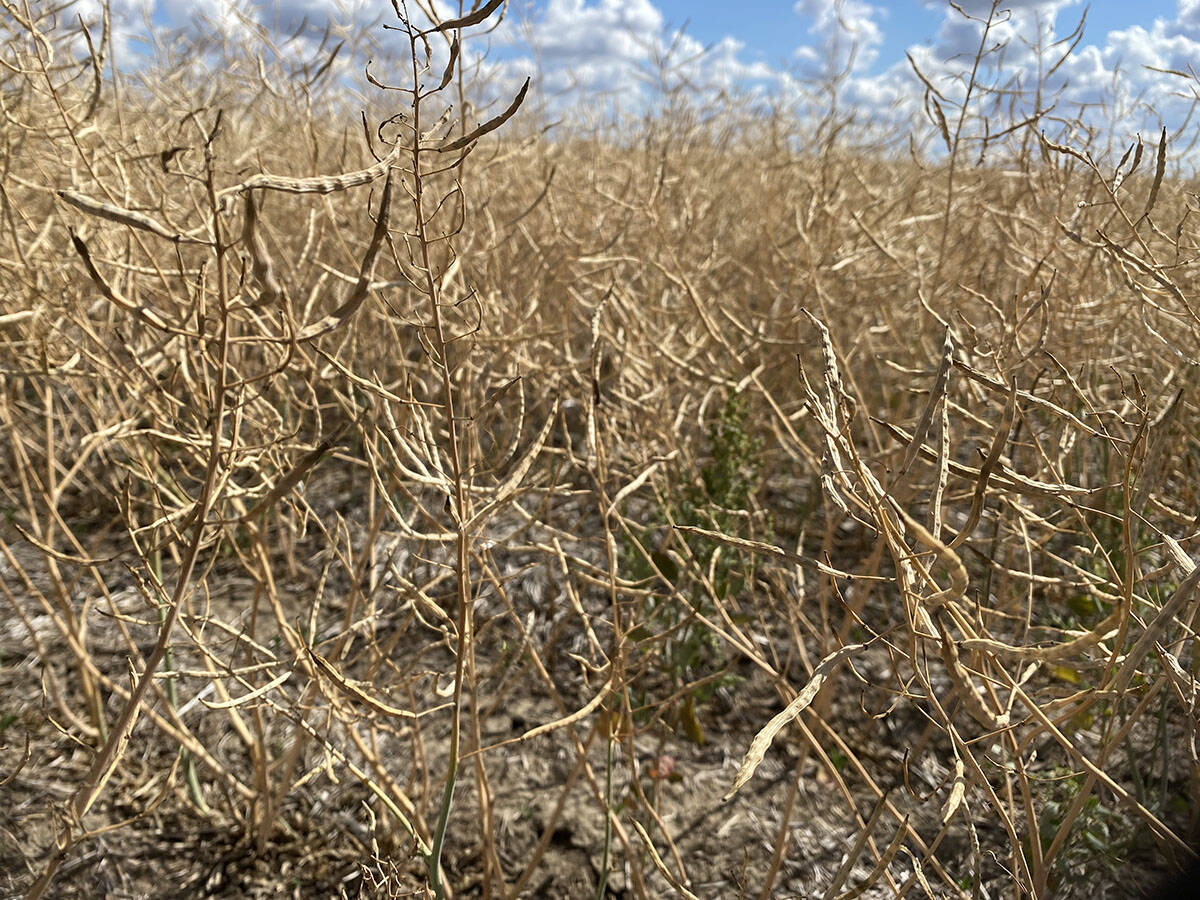
A powerful storm that moved through southwest Saskatchewan Sunday night brought heavy rain, strong winds and hail, leaving a trail of crop and property damage in the Swift Current area.
Shannon Chant, Crop Extension Specialist with the Saskatchewan Ministry of Agriculture, says some of that damage occurred just north of Swift Current.
"There was a few canola fields in a row that, unfortunately, were cut down there," Chant said.
According to Chant, some canola fields were reduced to approximately a foot in height, with limited prospects for recovery given the current stage of crop development.
Damage Extends Beyond Canola
The storm's impact was not limited to canola fields. Chant observed flattened peas and lentils in some locations, while cereal crops also experienced lodging.
While some fields suffered extensive losses, neighbouring fields escaped with considerably less damage.
"The majority of the damage seemed to be north of Swift Current," she noted, adding that conditions appeared to improve within a few kilometres of the hardest-hit areas.
Patience Important Before Final Assessments
Chant says producers should avoid making immediate judgments on crop survival following a hail event.
"We usually suggest that producers wait a few days before assessing what's going on," she said.
With warmer weather expected this week, some crops may recover better than initially anticipated. Canola, in particular, has a strong capacity to compensate and regrow following moderate damage if growing conditions remain favourable.
Peas and lentils may also rebound in certain situations because growing points are often located close to or below the soil surface.
The extent of hail damage can vary significantly depending on crop type and stage of development.
Chant says cereal crops are generally most vulnerable when stem damage occurs during the milk stage. However, neighbouring fields can be at different developmental stages, meaning hail may affect yields differently even within the same area.
Watch for Disease and Lodging Issues
Even crops that survive a hailstorm may face additional challenges later in the season.
Damage to plant tissue can increase vulnerability to diseases, including blackleg in canola. Lodged crops may also create harvest difficulties later this fall.
Chant says producers should monitor recovering fields closely for signs of disease development and uneven maturity.
Feed Potential Requires Careful Evaluation
For crops that are unlikely to produce a viable grain harvest, livestock feed may be an option.
However, Chant stresses the importance of testing for nitrate accumulation and verifying that any pesticides or insecticides previously applied are approved for livestock feed use.
She recommends consulting the Guide to Crop Protection and product manufacturers before utilizing damaged crops for cattle feed.
Hail Reported Across Saskatchewan
While the Swift Current area appears to have received some of the most intense hail over the weekend, Chant says reports from crop specialists indicate storm damage was scattered across numerous Saskatchewan regions.
Areas near Maidstone, Hafford, Prince Albert, Humboldt and Hodgeville all reported some hail activity, suggesting the weekend storm system caused widespread but highly localized damage across the province.
For producers assessing losses, Chant says to allow several days for crops to respond before making final management decisions.
Source - https://www.swiftcurrentonline.com