By leveraging advanced convolutional neural network (CNN) architecture and intelligent optimization algorithms, an AI-powered model significantly surpasses conventional techniques, offering enhanced accuracy and reduced computational costs.
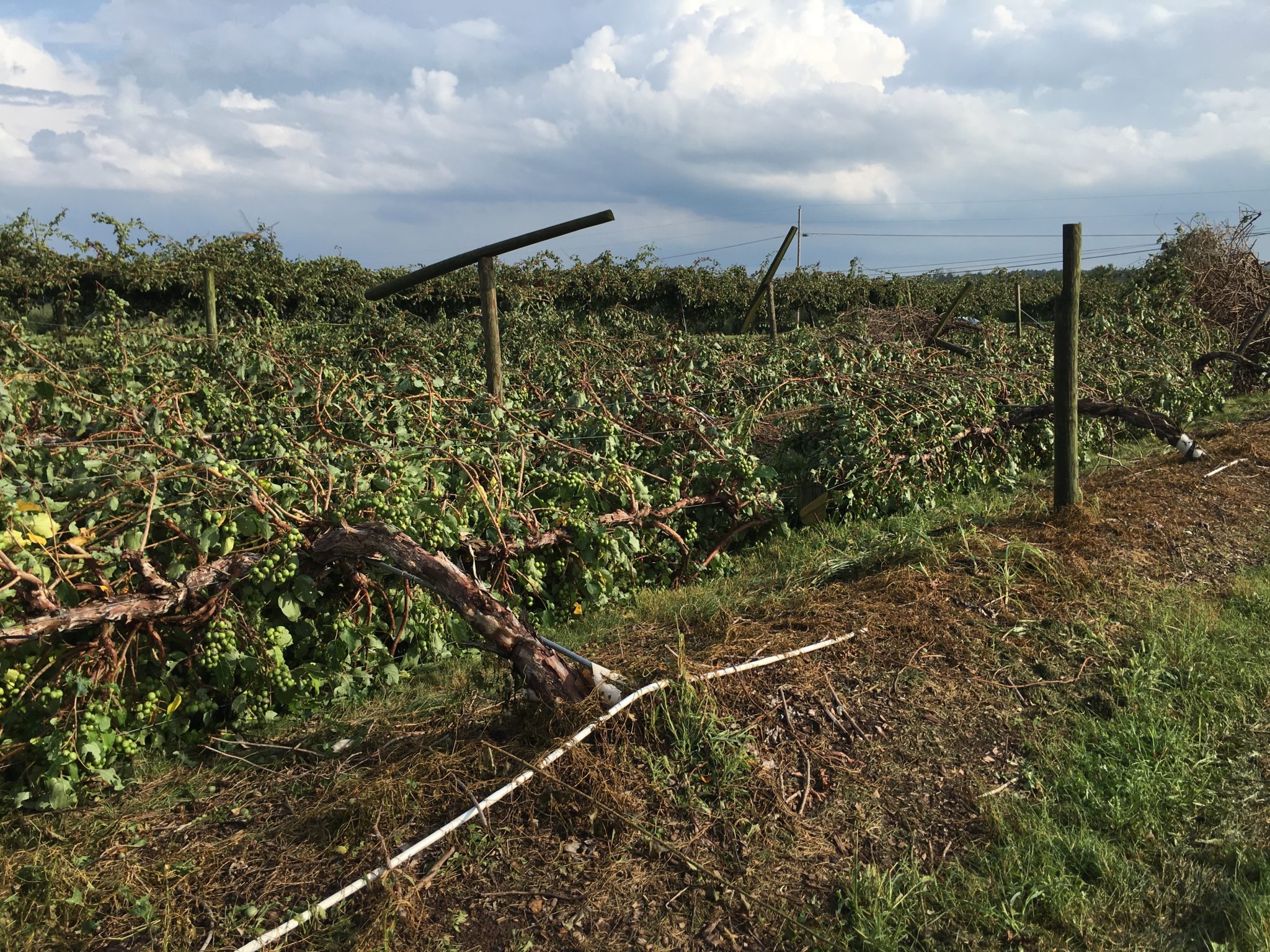
Rice lodging, the bending or falling of crops caused by environmental factors like wind or rain, poses a substantial threat to crop productivity. It hinders photosynthesis, complicates harvesting, and increases vulnerability to pests, making it crucial for farmers and researchers to monitor and predict lodging effectively.
Traditional methods, including visual inspection, mathematical modeling, and satellite remote sensing, are often labor-intensive and imprecise, lacking the scalability and immediacy required for large-scale agricultural assessment.
A study published in Plant Phenomics can guide timely remedial actions, such as adjusting irrigation or pest control strategies, to mitigate potential yield losses.
The AAUConvNeXt model, developed through multi-objective optimization using the AFOA-APM algorithm, offers an enhanced version of the UConvNeXt CNN architecture for segmenting rice lodging. The research method involved optimizing the number of channels in the model's convolutional layers to improve performance and efficiency.
Unlike the conventional approach where channels increase or decrease in a fixed pattern, the AAUConvNeXt model strategically adjusts channels, increasing them in layers that require high feature learning while reducing them in less critical layers to balance complexity and resource use.
The results from extensive experiments highlight the superiority of AAUConvNeXt over existing models. The optimized architecture achieved a Pixel Accuracy (PA) of 96.3%, Mean Pixel Accuracy (MPA) of 96.3%, and a mean Intersection over Union (mIoU) of 93.2%, outperforming other models like DeepLabV3+ and HRNet.
Additionally, AAUConvNeXt reduced parameter count and computational complexity by 8.66%, making it more resource-efficient.
The model's advanced feature extraction capabilities contributed to high segmentation accuracy, especially in distinguishing challenging rice lodging categories, including full, partial, and non-lodged states.
Ablation studies confirmed that combining AFOA with APOM significantly improved segmentation metrics, with AAUConvNeXt outperforming its predecessors. Furthermore, targeted channel adjustments optimized model complexity, allowing efficient learning of both early-stage and refined features.
According to the study's senior researcher, Dr. Xiaobo Sun, "By integrating deep learning with intelligent optimization, our model provides a powerful tool for efficient crop lodging monitoring. This advancement holds immense potential to transform rice farming practices by offering timely, reliable, and cost-effective solutions."
The AAUConvNeXt model represents a significant advancement in agricultural technology, combining deep learning with intelligent optimization for efficient rice lodging monitoring. Its integration into farming practices could revolutionize crop management, offering a promising pathway to improved productivity and sustainability.
Source - https://phys.org