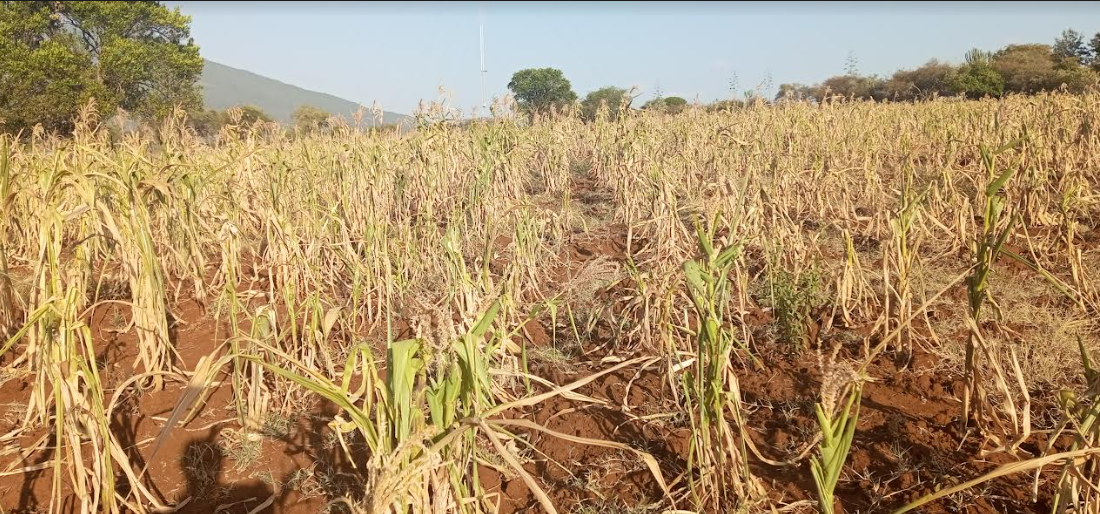
As droughts and erratic weather disrupt farming seasons, more Kenyan farmers are turning to crop and livestock insurance to cushion themselves against losses.
Agriculture experts and financial sector players say expanding affordable insurance solutions could help protect livelihoods, strengthen food security and support climate-smart agriculture across the country.
Jared Ochieng, agriculture finance lead at Financial Sector Deepening Kenya (FSD Kenya), said insurance will play a critical role in building resilient food systems in Kenya and across Africa.
He spoke during a media interview ahead of the Financing Agri-Food Systems Sustainably 2026 summit scheduled for next month. “Insurance is key. Design of it is instrumental,” Ochieng said.
The Ministry of Agriculture says climate-related shocks continue to cost Kenya billions of shillings annually through crop losses, livestock deaths and damage to agricultural infrastructure.
The World Bank estimates that climate change could reduce Kenya’s agricultural productivity by up to 30 per cent by 2050 if mitigation and adaptation measures are not strengthened.
Smallholder farmers, who produce nearly 75 per cent of the country’s food, are among the most affected due to limited savings and lack of financial protection during disasters.
For some farmers, however, insurance has already proven useful in recovery after extreme weather events.
John Kamau, a maize farmer in Nakuru county, said crop insurance helped him recover after drought destroyed most of his harvest.
“I had invested heavily in seeds and fertiliser and almost lost everything because of drought. The insurance payout helped me prepare my land again and plant for the next season,” he said.
In Kajiado county, livestock farmer David Sankei said livestock insurance helped his family recover after drought wiped out part of their herd.
“We lost several cows during the dry spell, but the compensation we received helped us buy animal feed and save the remaining livestock,” he said.
Despite the growing climate risks, insurance penetration in agriculture remains low.
Institutions such as the Agricultural Finance Corporation and the Kenya Livestock Insurance Programme have attempted to expand coverage, particularly in arid and semi-arid regions.
However, uptake remains limited due to high premiums, low awareness and delays in compensation.
Agriculture and Livestock Development Cabinet Secretary Mutahi Kagwe has said the government is working with partners to expand crop and livestock insurance to protect farmers from climate shocks and encourage investment in agriculture.
"Insurance is becoming necessary for farmers because climate change has made farming more unpredictable. We want more farmers to access affordable insurance products that can help them recover quickly after losses,” he said.
Ochieng said that financial institutions and development partners are now exploring innovative insurance models that offer faster and more reliable compensation.
One of the approaches being promoted is index-based crop insurance, which uses weather and climate data instead of physical farm inspections to trigger payouts.
“Right now, we are thinking about parameterising insurance. It is basically looking at parameters that, if triggered, then payout happens instantaneously rather than relying on physical checks which sometimes can be misleading,” he said.
Under index insurance, farmers receive automatic payouts when specific conditions such as drought, low rainfall or extreme temperatures are recorded in a given area.
The model is expected to reduce delays and disputes associated with traditional claims processes.
Ochieng said the United Nations Development Programme, together with partners, will hold discussions at the upcoming summit on how financial institutions can scale climate-resilient financing through insurance.
The International Livestock Research Institute is also expected to contribute to discussions on bundled index insurance and the use of climate data in designing financial products.
“In that conversation, the role of data and financial solutions design on weather and climate information services will be discussed,” he said.
Source - https://www.the-star.co.ke