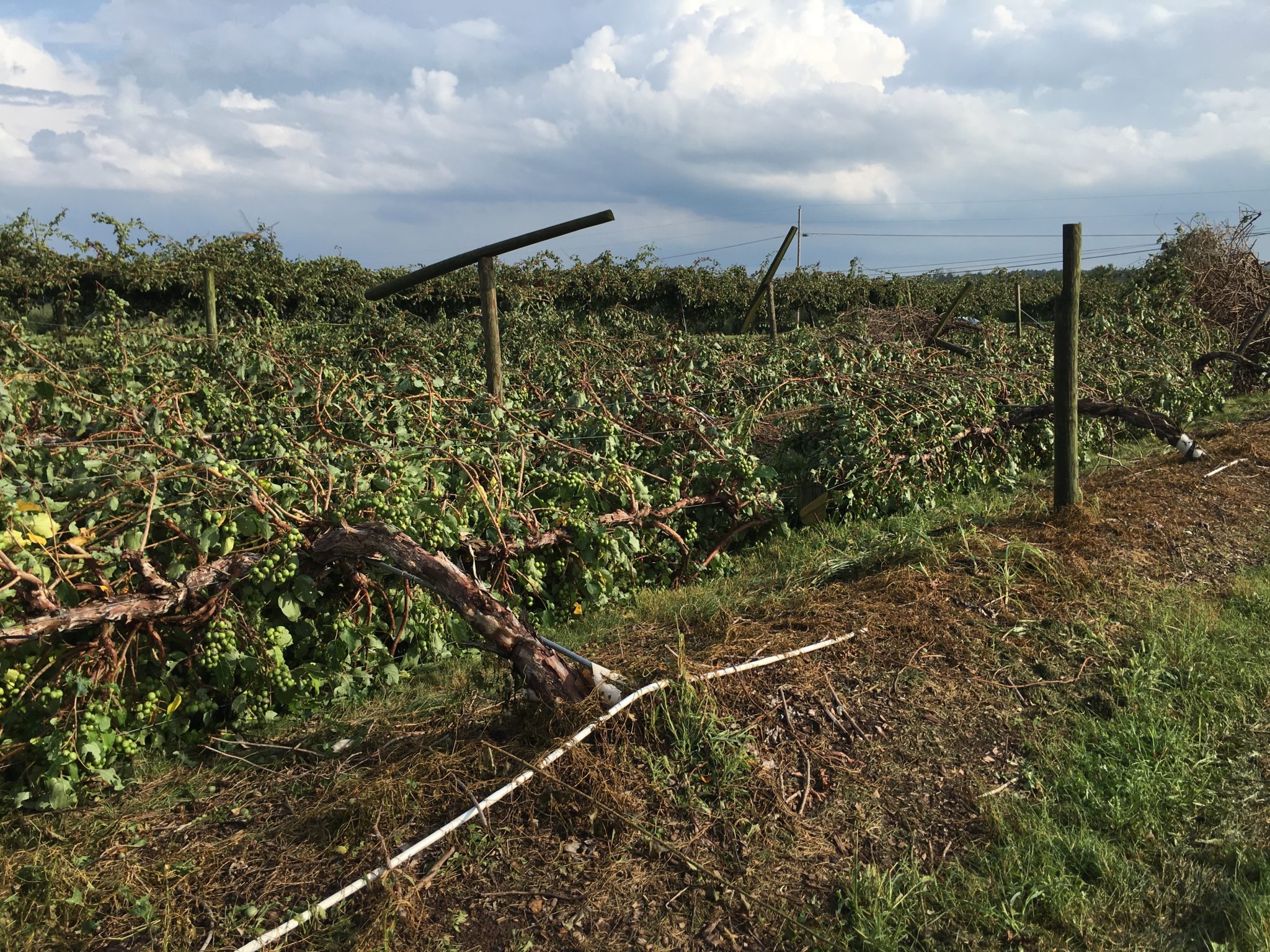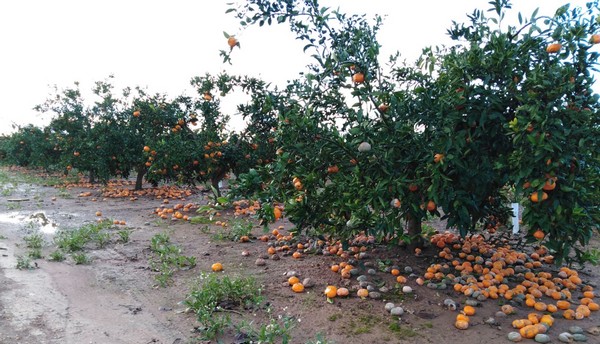
Georgia farmers have suffered over $6 billion worth of losses due to Hurricane Helene, according to preliminary estimates released on Thursday, October 10, 2024. The full extent of the damage is still being assessed, and the numbers could increase further.
Farmers in Georgia have suffered approximately $6.46 billion in losses due to Hurricane “Helene,” according to preliminary estimates by the University of Georgia College of Agriculture and Environmental Sciences (CAES). Georgia’s agriculture contributes over $83 billion annually to the state’s economy, making it the state’s leading industry.
The estimates provided by CAES include direct crop losses, losses to businesses supporting agriculture and forestry, impacts on workers in related industries, and projected recovery and restoration costs that agricultural businesses will face.
This estimate is based on projections by University of Georgia commodity analysts, Georgia Forestry Commission foresters, and a model of the Georgia state economy and should be interpreted as preliminary, as it will take months to understand the full scope of Helene’s damage due to the widespread nature of the damage.
“Helene is the third named storm to hit the State of Georgia in the past 13 months, and it could not have come at a worse time for Georgia farmers and producers, who were already facing economic hardship caused by inflation, high input costs, and depressed commodity prices,” CAES said in a press release.
Prior to Helene, US Net Farm Income was projected to drop by $6.5 billion in 2024, following a decline of $35.6 billion in 2023.
Blueberry crops have been the hardest hit, while cotton, peanuts, and the pecan industry have sustained comparatively lesser but still significant damage.
Clay McKinnon, a farmer in Douglas City, suffered extensive damage to his blueberry, peanut, and cotton crops due to the storm. He is estimated to have lost approximately $3.5 – $4 million in farm infrastructure.
“We’ve lost around $3.5 to $4 million in infrastructure and crops. On a farm, you handle millions of dollars a year, but a very small fraction of that is yours to keep. We’re already about $1.5 million out of pocket just for rebuilding,” McKinnon said.
Georgia Agriculture Commissioner Tyler Harper said the future is uncertain for thousands of Georgia farmers and farm families who were devastated by Helene.
Governor Brian Kemp called a conference on Thursday, October 10, to allocate federal disaster relief funds to affected farmers. In addition, 40 agricultural industry organizations have joined forces to create a farmers’ relief fund to provide assistance.
“Following the immense losses caused by Hurricane Helene, and with Hurricane Milton possibly bringing further impacts to our state, I’m urging all of our local, state and federal partners to join efforts in bringing them relief,” Governor Kemp said. “That’s why we’re calling on the federal government and Congress to act quickly in appropriating relief funds and helping them rebuild their livelihoods.”
“I have seen the devastation first-hand in visits to the affected regions, and I have heard of the struggles our friends and neighbors have faced since Hurricane Helene,” said UGA CAES Dean Nick Place. “From significant losses in the agricultural sector to challenges meeting basic needs like food and water, it has been a difficult time for Georgians.”
“We’ve seen agricultural producers across the state dealing with power loss and property damage, both of which have short- and long-term effects on their crops and livelihood. In the coming weeks and months, it will be critical that we do all we can to support Georgia producers as they navigate lost income and determine the next steps forward in their operations.”
The $6.46 billion in agricultural and forestry losses from Hurricane “Helene” represents a substantial hit to Georgia’s economy, particularly as agriculture is the state’s top industry, contributing over $83 billion annually.
This loss impacts key crops like peanuts, cotton, and pecans, among others, and adds recovery costs. While Georgia has a prominent role in U.S. agriculture, the damage will not only affect the local economy but could also have wider repercussions on national agricultural supply chains.
Source - https://watchers.news