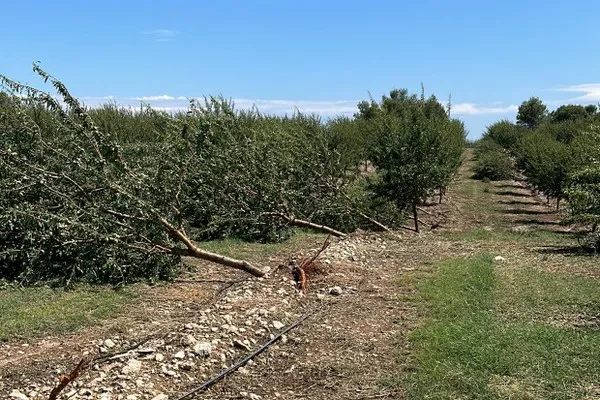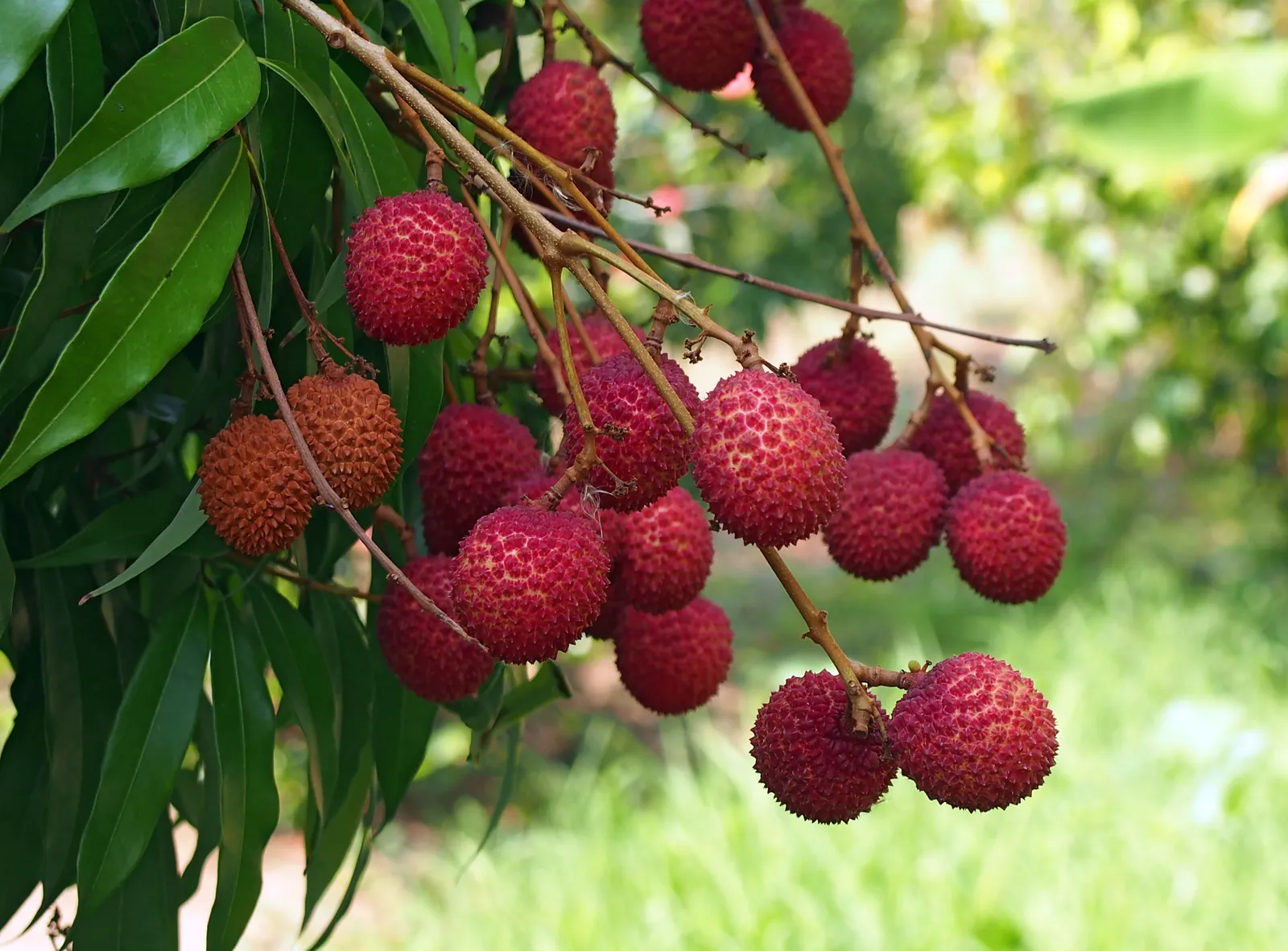
Scientists say unusual weather between November 2025 and April 2026 affected flowering, fruit setting and fruit drop, leaving many Bihar orchards with only 30% to 40% of the usual crop.
Sweet and juicy summer litchis have been badly hit this year in Bihar by climatic variations, weather abnormalities and damage caused by the pest flower webber.
Litchi farmers in Muzaffarpur district and the neighbouring districts of Vaishali and West Champaran, the main hubs of litchi production, are reporting losses of up to 70 per cent.
Litchi farmers, horticulture experts and climate change scientists are blaming unfavourable weather conditions between November-December 2025 and March-April 2026 for the poor harvest. They say a sharp decline in litchi production is increasingly linked to climate change, with unusual weather affecting the crop year after year.
Hundreds of orchards across Muzaffarpur, known as the land of litchi, are witnessing one of the worst production seasons. “This year, orchards are yielding only 30 per cent of their usual produce. We are facing huge losses,” Bachcha Singh, a litchi farmer and president of the Bihar Litchi Association.
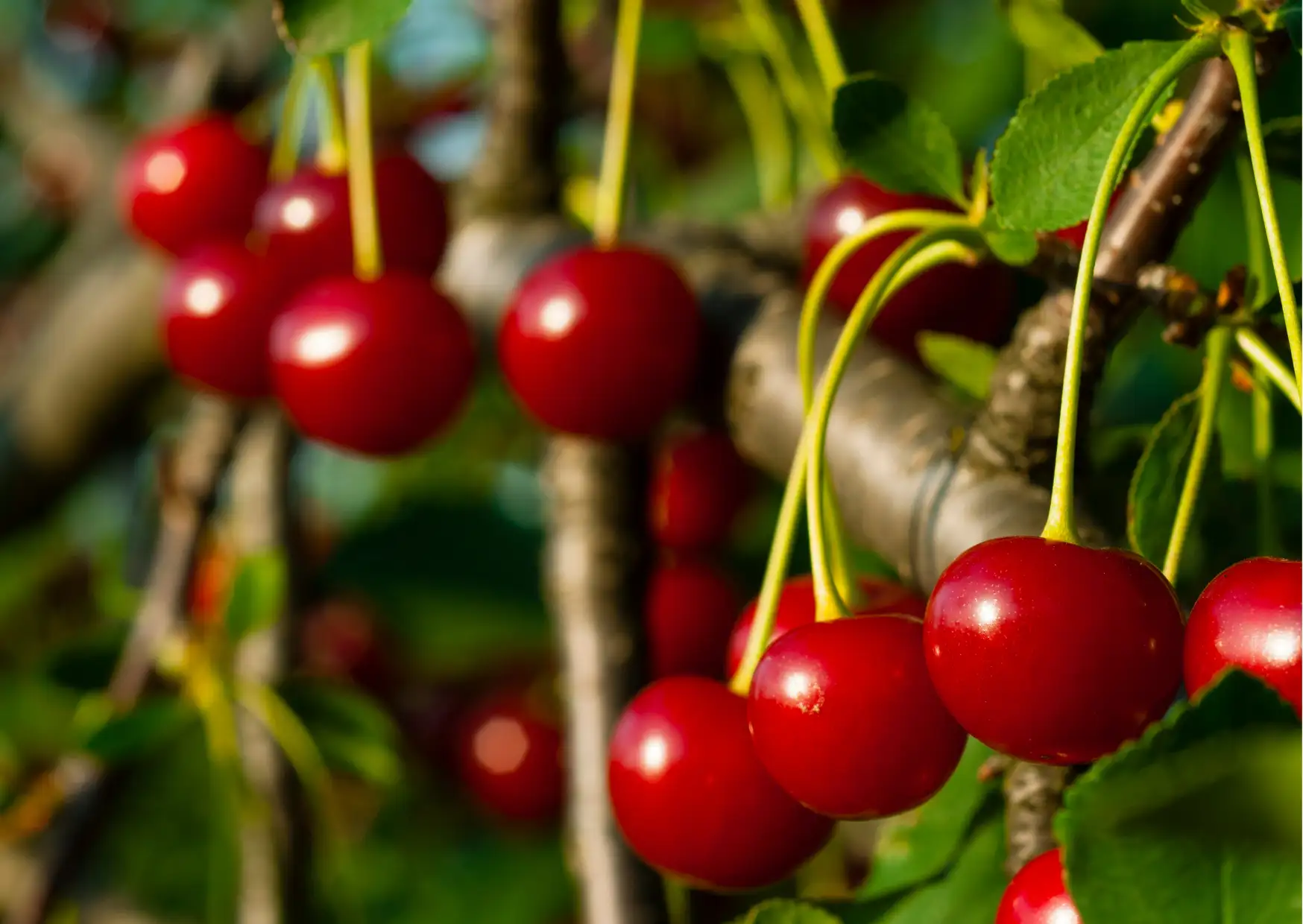
Another litchi farmer, Suresh Choudhary, said farmers were facing heavy losses because the deep pink and red ripe litchi fruits usually seen hanging among green leaves were missing from trees in orchards. “Litchi harvesting in orchards is poor and far less than we expected. This has disappointed us. It is due to adverse weather conditions,” he said.
Bhola Nath Jha, a large litchi farmer associated with the Litchi Utpadak Sangh, said the situation had turned from bad to worse for litchi growers in Muzaffarpur.
“If a farmer was producing 25,000 boxes of litchi in a 40 to 50-acre orchard, this year the number has been reduced to 7,000 to 8,000 boxes. It is clear that litchi production has been hit hard by weather variations,” he said.
Weather hits flowering
Bikash Das, director of the Muzaffarpur-based National Research Centre on Litchi, or NRCL, told Down To Earth that litchi crop losses were heavy this year because of climatic abnormality. “As of now, it appears that there are around 30 per cent to 40 per cent litchis in orchards. It will result in a heavy decline in total production,” he said.
Das said weather variations affected litchi flowering, fruit setting and fruit drop.
Because of inadequate chilling in November-December 2025, new leaves emerged instead of flowers. According to official data for the past 25 years, the minimum temperature in November 2025 was 1.8 degrees Celsius (°C) higher than the normal chilling level, while it was 0.8 °C higher in mid-December.
“This resulted in less emergence of flowers on litchi trees,” Das said.
After that, during flowering in February-March, cloudy weather and untimely rainfall led to an attack of flower webber, which severely damaged flowers, affected fruit setting and contributed to crop loss, he said.
Das said temperatures in April were higher than normal, resulting in fruit drop, or the premature shedding of flowers or developing fruits from a plant before they are fully ripe.
“These three factors mainly worked against litchi production this time. As far as attack and damage by litchi sting bug is concerned, it was reported in selected pockets, as happens every year,” he said.
Abdus Sattar, a senior scientist at the Centre for Advanced Studies on Climate Change at the Pusa-based Rajendra Prasad Central Agricultural University in Samastipur district, said litchi was a highly sensitive fruit in terms of temperature, rainfall and humidity.
He said litchi production and quality this year had been hit hard by unexpected climate or weather variations. But, he added, the problem was not limited to this year.
During the past few years, hot weather and unexpected climate conditions have affected litchis, he said.
“Due to frequent thunderstorms during April and May, the litchi crop has been severely affected. High winds associated with thunderstorms in Bihar caused severe fruit drop in litchi orchards, impacting the fruit yield significantly,” Sattar said.
Wider impact on growers
Thousands of litchi lovers outside Bihar may miss the fruit’s unique aroma and taste this summer because of heavy crop losses in Bihar, especially in Muzaffarpur, linked to climate change.
Das said Bihar produces 43 per cent of India’s total litchi output. This amounts to about 300,000 metric tonnes of litchi grown over 32,000 hectares. Of this, Muzaffarpur alone has litchi orchards spread across around 12,000 hectares. Muzaffarpur’s Shahi litchi earned a geographical indication, or GI, tag in 2018, further cementing its significance.
Litchi is a sub-tropical fruit and requires a specific climate. Fluctuations and variations in climate affect it.
Mohammad Feza Ahmad, a horticulture and fruit scientist at Bihar Agricultural University, Sabour, in Bhagalpur district, said a number of variations caused by off-season rain and unexpected temperature fluctuations had affected litchi production.
Ahmad said litchi is grown under specific micro-climatic conditions. During this period, the temperature should be neither too low nor too high for its natural growth.
Climate variations also affect sugar assimilation, resulting in poor-quality litchis as well as mangoes, he said.
Source - https://www.downtoearth.org.in