The Department of Agriculture & Farmers’ Empowerment (DA&FE), Government of Odisha, recognised IRRI for its efforts to strengthen drought resilience in Balangir district.
The recognition comes from IRRI’s research interventions through the State Disaster Mitigation Fund (SDMF) project, particularly its work in promoting drought-tolerant rice varieties, enabling farmers to diversify income sources, and linking growers to drought coping mechanisms such as crop insurance through a convergence approach.
The honor was presented by Deputy Chief Minister Kanak Vardhan Singhdeo in the presence of District Magistrate Gaurav Shivaji Isalwar during the Balangir edition of the Krushi Mela (Agriculture Fair).
In a district where erratic rainfall and repeated dry spells often push small farmers into distress, these efforts have made a visible difference. Seed-based interventions under the project have enabled farmers to harvest more, even during water stress conditions.
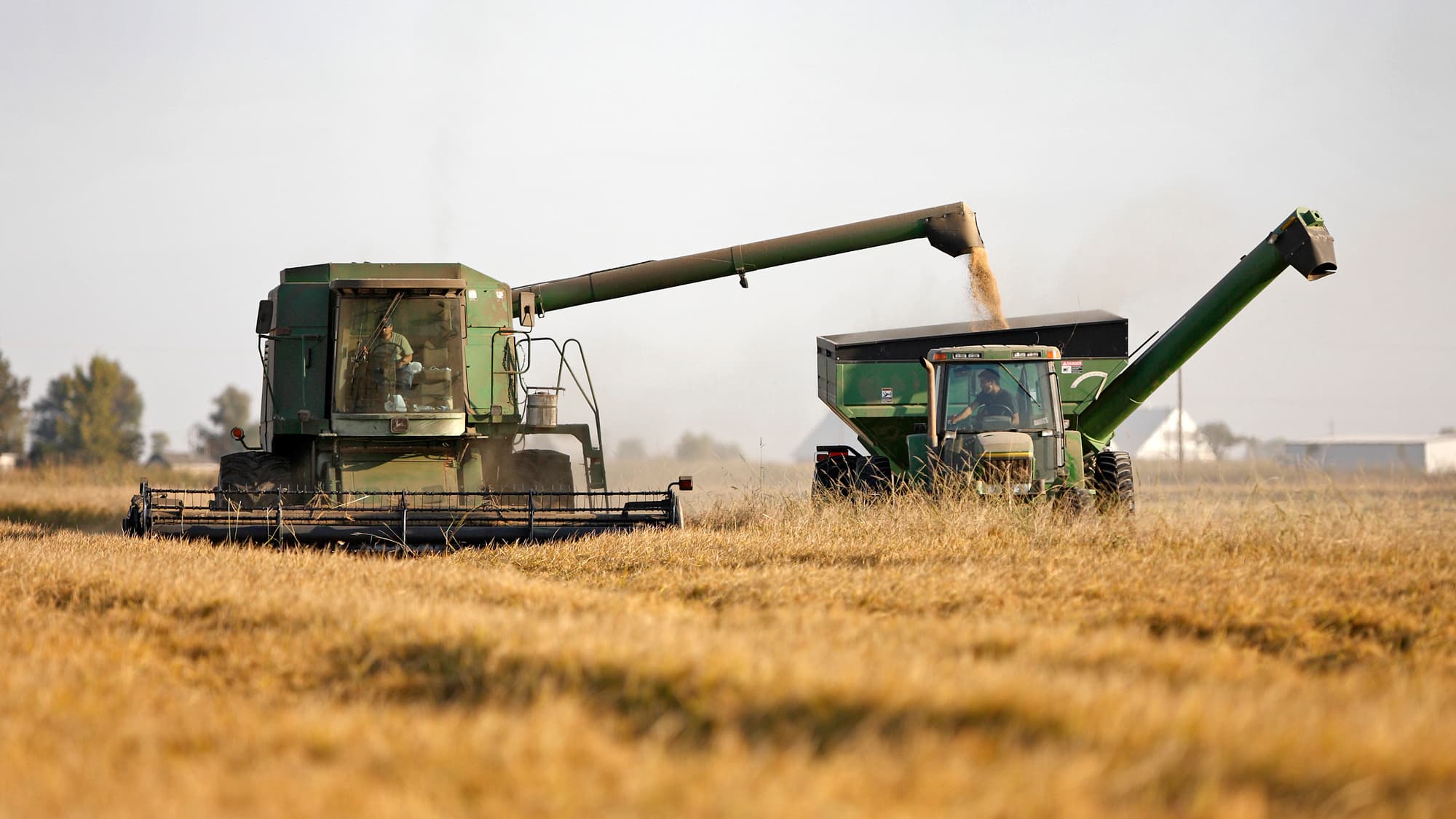
For example, BRRI Dhan 69, a low-input variety, has produced a yield advantage of 1.8 t/ha. Climate-smart practices such as mechanised direct-seeded rice (DSR) reduced cultivation costs by ₹3,920–4,420 per acre compared to puddled transplanted rice and broadcast methods. Additional income came from crop diversification, fallow land use, and livestock rearing, while women’s SHG-led seed production and nutrition gardens improved household income and diet diversity. The recognition also acknowledged the deeper impact of consistent field engagement, close coordination with government departments, and the trust built with farming communities.
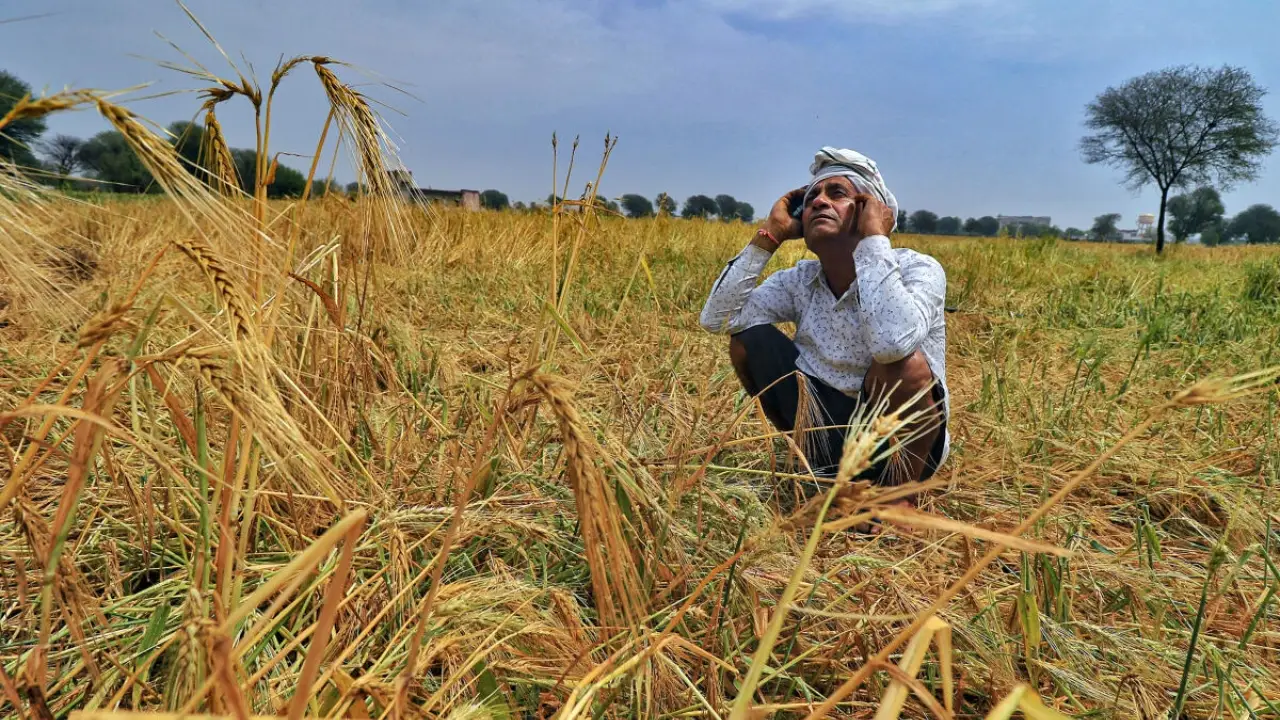
Odisha frequently faces climate shocks, and Balangir has long struggled with drought-related challenges. Crop losses due to poor rainfall often force families to take loans or migrate in search of work. The SDMF project was designed as a practical response to this reality, bringing together improved crop varieties, better farming practices, crop diversification, and stronger local seed systems to reduce risk and increase income stability.
In response to the recognition, Dr. Swati Nayak, IRRI Scientist and Principal Investigator of the project, said, “With support from DAFE, IRRI is accelerating the validation and deployment of cutting-edge technologies for rice-based agri-food systems in Odisha. Through close engagement with farmers, especially smallholders, we aim to strengthen resilience and drive sustainable agricultural transformation.”
A key focus of the project has been the introduction and validation of drought-tolerant rice varieties through community-managed clusters. Rather than limiting trials to research stations, IRRI worked with local partners and public line departments to test these varieties directly in farmers’ fields, allowing communities to observe their performance through real conditions.
Farmers, Village Agriculture Workers (VAWs), and progressive cultivators actively participated throughout the process. The initiative demonstrated locally suitable drought-resilient varieties and supported seed production through multiple channels, including the state-owned seed corporation. It also strengthened community capacity to produce quality seeds through access to basic seed and training. Varieties such as Swarna Shreya, Swarna Shakti, BRRI Dhan-69, BRRI Dhan-75, and Sahabhagi Dhan were selected for their strong performance under water-scarce conditions.
Recognising the persistent challenge of seed access, IRRI facilitated institutional linkages with the National One Rice Breeding Network (IRRI-Indian Council for Agricultural Research for 254 tons of breeder seed of stress-tolerant rice varieties to the Odisha State Seed Corporation and private seed agencies for multiplication and scaling in the seed system.
In addition, 23 acres of model seed production plots were supported while being managed by 20 local farmers, helping build practical expertise and community-based seed availability.
Even with better systems and improved farming practices in place, smallholder farmers still worry about income security if their crops fail. As resilience needs approaches beyond technological interventions, crop insurance schemes remain critical for reducing the risks. Though crop insurance is available through the government, in many villages, only a few farmers have enrolled. The reasons were simple: low awareness, paperwork hassles, difficulty in accessing digital platforms, and fear that the process would be too complicated.
To address this, in convergence mode, the initiative adopted a community-focused approach, guiding farmers step by step and resolving their concerns collectively. With coordinated support and hands-on facilitation, the villages were able to achieve 100% crop insurance coverage, giving farmers much-needed confidence and financial security.
Dr. Mosharaf Hossain, Scientist at IRRI, while accepting the special felicitation, highlighted the importance of collaboration for greater impact, “Working closely with government line departments, complementary programmes, enabling policy and partner institutions helped us bundle the innovations better and turn into broader livelihood benefits for farm families.”
In support to the recognition, Balangir Chief District Agricultural Officer (CDAO) Dhirendra Singh Bariha said, “IRRI is supporting us with climate-resilient and healthier rice varieties, along with quality seeds, which are helping strengthen farmers’ resilience and improve their livelihoods.”
He further reaffirmed the comprehensive drought mitigation efforts under the SDMF project as a model to replicate and scale.
As climate uncertainties continue to intensify, the success seen in Bolangir highlights the need to scale up similar initiatives across other drought-prone districts of Odisha. By strengthening partnerships, promoting resilient technologies, and keeping farmers at the centre of planning and decision-making, the state can move steadily toward a more secure and climate-resilient agricultural future.
Source - https://www.irri.org