Italy - Fears of a cold and rainy spring after a mild winter

22.02.2024 881 views

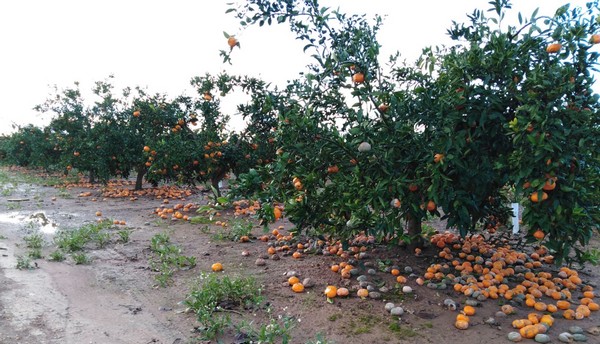
There continues to be concern about the climatic conditions that have marked this Sicilian citrus campaign, with temperatures high for the seasonal average and the alarming prospect of a cold spring full of atmospheric precipitation. Some concern comes from the Di Pasquale brothers, known as the founders of the Donnalia brand.

The production
"We are in the middle of the harvesting campaign for the PGI Sicilian Blood Orange," say Angelo and Vincenzo Di Pasquale. "The product is once again characterized by excellent organoleptic qualities; however, the weather has strongly influenced the gauge, which in our case has led to a very high percentage of waste in the selection, in order to satisfy our business partners. We wanted to come as close as possible to the usual standards in our deliveries, even if for the most part they are still lower, by making ourselves bear the burden of supporting that part of the merchandise that does not conform. In fact, the aim is to give continuity to the good reputation of a brand like Donnalia, which does not take any shortcuts when it comes to reliability."

Marketing
"This is a very special year," continue the two brothers, "but our product has excellent coloration, both inside and out, and an excellent Brix level. Certainly, Donnalia is doing its part again this year by marketing a product that performs very well in terms of appearance and taste. Thanks to the strong demand from large retailers, we are also able to sell the smaller sizes, with prices ranging from €0.80 to €2.00 for the larger sizes."

Worries about summer fruit
"If the commercial citrus season continues for us without any major hiccups," conclude Donnalia's founders, "in the coming weeks we will see the first blossoming of our fruit production, which we await with some concern. The risk is that we will experience exactly what happened last year in our area, that is to say that we will end up with cold and rainy weather in late spring, and perhaps some unfortunate hailstorms, so that part of the harvest will be compromised."

Source - https://www.freshplaza.com

30.08.2026

Serbia's Drought Halves Crop Yields, Few Farms Insured

Drought in July and August 2026 cut yields by more than half in parts of Serbia, but only 15 percent of farmland is insured. A corn policy costs about 4,500 dinars per hectare.

30.08.2026

India - Maharashtra Approves ₹23.33 Crore Aid For 17,245 Farmers Hit By Crop Damage

The Maharashtra government has sanctioned ₹23.33 crore in relief for 17,245 farmers whose crops were damaged by floods, excessive rainfall, cyclones and hailstorms. 

30.08.2026

South Korea - Daedong launches soybean-specialized combine DSF85 to cut cracking, crop loss

Daedong has unveiled a new full-feed combine focused on reducing soybean cracking and crop loss during harvest.

30.08.2026

UK drought tightens its grip on potatoes, but scale of crop losses remains uncertain

England and Wales are experiencing an exceptional drought, with potato growers facing reduced tuber growth, irrigation restrictions and increasingly difficult harvesting conditions. The evidence supports serious concern—but not every alarming headline can yet be translated into a national crop-loss figure.

30.08.2026

India Overhauls Farm Insurance Scheme with AI and Satellite Tech

India is upgrading the Pradhan Mantri Fasal Bima Yojana (PMFBY) using AI, drones, and satellite mapping to accelerate insurance claim settlements. 

30.08.2026

Kenya turns to digital livestock IDs to improve animal health, traceability

The system will capture information including an animal’s origin, ownership, health status, vaccination history and movements.

27.08.2026

Crop Insurance Add-Ons Surge as U.S. Farmers Expand Subsidized Coverage Nationwide

U.S. farmers sharply expanded area add-on crop insurance in 2026 after federal subsidies rose to 80%, reshaping coverage and federal costs.

27.08.2026

China grain imports in focus as crop damage hits key producing regions

Extreme heat, heavy rain and flooding across key Chinese farming regions are putting global grain and cotton exporters on alert, as markets assess whether crop damage could increase China’s import needs.