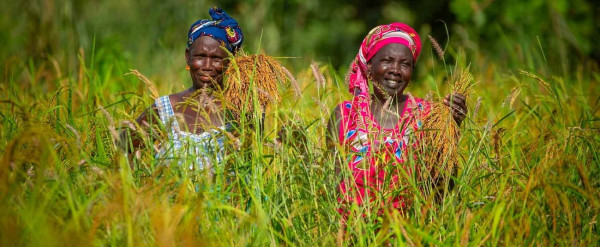
Agriculture is vital for Myanmar and its people, providing work and food security for millions. After declines in 2021 and 2022, agriculture was the best-performing part of the country’s economy in 2023. However, in 2024, challenges have grown, including labour shortages caused by conscription-induced migration, controls on some farmgate prices, suspension of some agricultural loans, and widening conflict. This was further complicated by flooding in September, which affected an estimated 1 million people, including many farmers, across 70 of Myanmar’s 330 townships. These developments raise concerns about the agriculture sector’s prospects in both 2024 and beyond and the sustainability of its albeit modest 2023 growth.
Myanmar’s agricultural sector grew 2 per cent in 2023, besting manufacturing and services, while agricultural households saw smaller consumption declines than non-agricultural households. There were numerous drivers of this, including higher farmgate prices for rice, increased labour inputs, and greater chemical fertiliser usage. It also reflected a strategic choice of Myanmar’s military regime to prioritise agriculture, including steps to reduce input prices, notably fertiliser, and coerce compliance with retail price controls.
Expectations for agriculture in 2024 are high. The World Bank expects continued growth, driven by “higher export and farmgate prices, and some moderation in input costs”. The US Foreign Agricultural Service forecasts slight growth in rice production this year due to higher domestic prices and lower input costs. The regime has announced plans to import 1.6 million tonnes of fertiliser in 2024 and declared that rice exports are expected to surpass US$1 billion. Myanmar’s broken rice is now the most price competitive among major Asian exporters, about 4 per cent less expensive than its closest competitor, Pakistan.
However, recent developments and a closer look at growth drivers raise questions about this optimism, and concerns about agriculture’s trajectory. Lower fertiliser prices, for example, were driven by global price declines (after the spike caused by Russia’s invasion of Ukraine) and the regime’s allocation of artificially cheap foreign exchange to fertiliser imports. The regime also fixed domestic prices for fertilisers, including urea, at levels that would be highly unprofitable if imports were funded with foreign exchange obtained at the market rate. Without the implicit subsidy from artificially cheap foreign exchange, prices could be 70 per cent higher. Nonetheless, fertiliser prices and availability vary due to local transport charges and conflict, with isolated reports of fertiliser scarcity or unavailability at the needed time in the crop cycle.
The expansion of conflict, rising input prices, increasing price controls, and anecdotal evidence of reduced planting suggest challenges ahead for Myanmar’s farmers and agriculture sector.
While farmers benefit from controlled fertiliser prices, they suffer another price control — on farmgate prices for some crops, notably rice. The reference price for lower-quality emata rice was set at 1.3 million kyats (US$620) to 1.5 million kyats in 2023. However, in October 2024, it was set at just 960,000 kyats. The regime’s Ministry of Commerce controls retail rice prices and notes that overpricing or other types of “non-compliance” will result in “fines, taxation and prosecution”. The regime arrested 11 people, including a Japanese executive from Myanmar supermarket Aeon Orange, for selling rice at prices above the regime’s set levels. The regime also sets reference prices for palm oil. Despite threats and arrests, wholesale and retail price controls are regularly circumvented, and shortages of commodities at the regime’s reference prices are common.
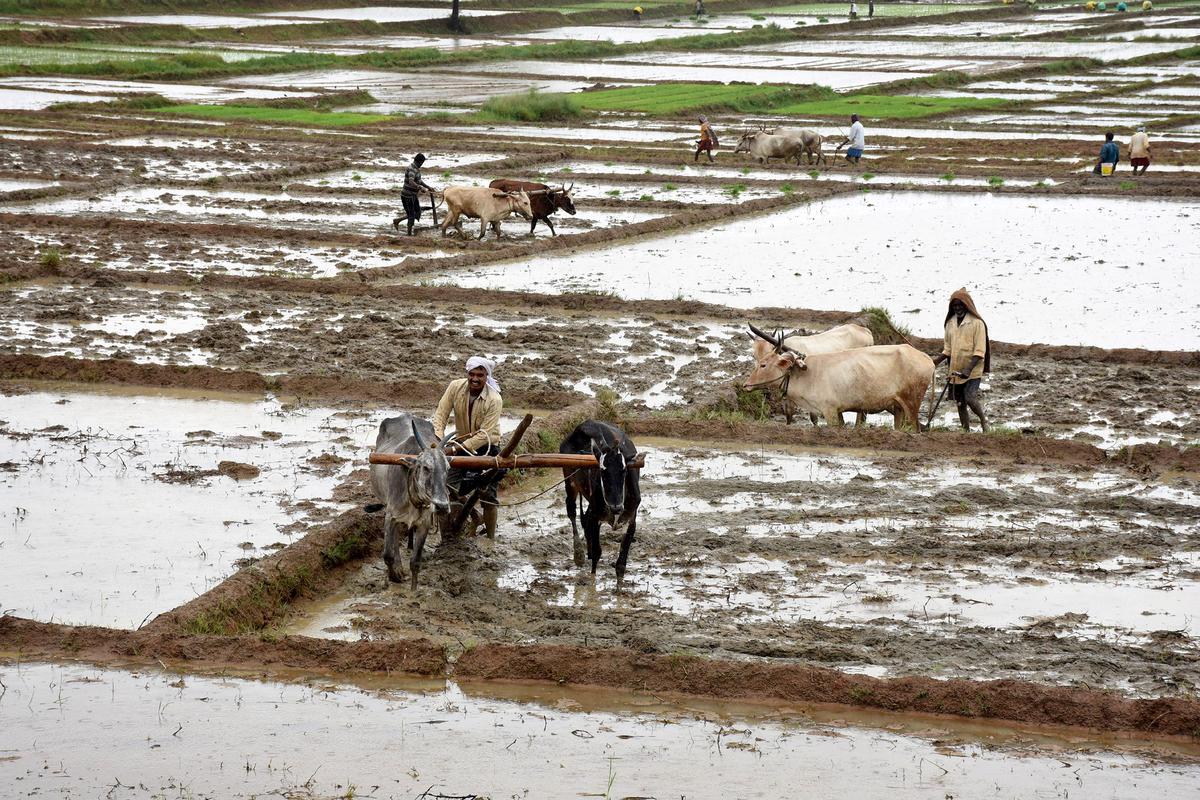
Price controls affect the way that farmers think about planting. Rice takes about four months from planting to harvest — a duration long enough to create significant uncertainty about future prices. There is anecdotal evidence of some farmers planting fewer hectares this year because they worry the regime will fix rice prices, causing them to lose money — a concern that may have been prescient. There is also evidence of higher wage costs and labour shortages, especially in the wake of the conscription law. Local media reported significant daily wage increases, from 8,000 kyats to more than 20,000 kyats in the Magwe region and from 10,000 kyats to up to 25,000 kyats in Mon State. These changes are pushing some farmers to reduce the amount of land they cultivate and switch to less labour-intensive farming methods.
Challenges are especially acute in conflict areas, including Rakhine State. The Myanmar military implemented trade and transportation blockades of Kyaukphyu in December 2023, and, more recently, barred transport of food from the Ayeyarwaddy delta into southern Rakhine State. This has contributed to significant cost increases. For example in parts of Rakhine, fertiliser prices have tripled. Fuel prices have also risen. These tactics have significant but relatively localised effects. A Rakhine agricultural association noted that the state’s planted acreage fell by half — or by around 200,000 hectares — compared to 2023. This was worsened by floods, which caused some crop losses. In northern Rakhine State, some farmers were concerned about a looming food shortage because heavy conflict resulted in insufficient rice being planted. Some in Karen State also shared those fears. Besides reducing rice planting, some farmers have switched to fruit trees and perennials, which are low-cost and can turn a quick profit.
The expansion of conflict, rising input prices, increasing price controls, and anecdotal evidence of reduced planting suggest challenges ahead for Myanmar’s agriculture sector. According to industry sources, sentiment about Myanmar’s rice sector “remains weak due to challenges related to export licences, payment issues and high container freight rates”. While some prices, like fertiliser, have remained more stable, this comes at a cost to those forced to sell foreign exchange at undervalued rates. This applies especially to exporters. The regime is effectively forcing some parts of the economy to subsidise others. If Myanmar’s agricultural sector mustered only 2 per cent growth in 2023 despite the tailwinds, it is unlikely that 2024 or subsequent years will fare much better. This will have implications for exports, food security, and migration but, perhaps most importantly, for Myanmar’s farmers and workers.
Source - https://fulcrum.sg