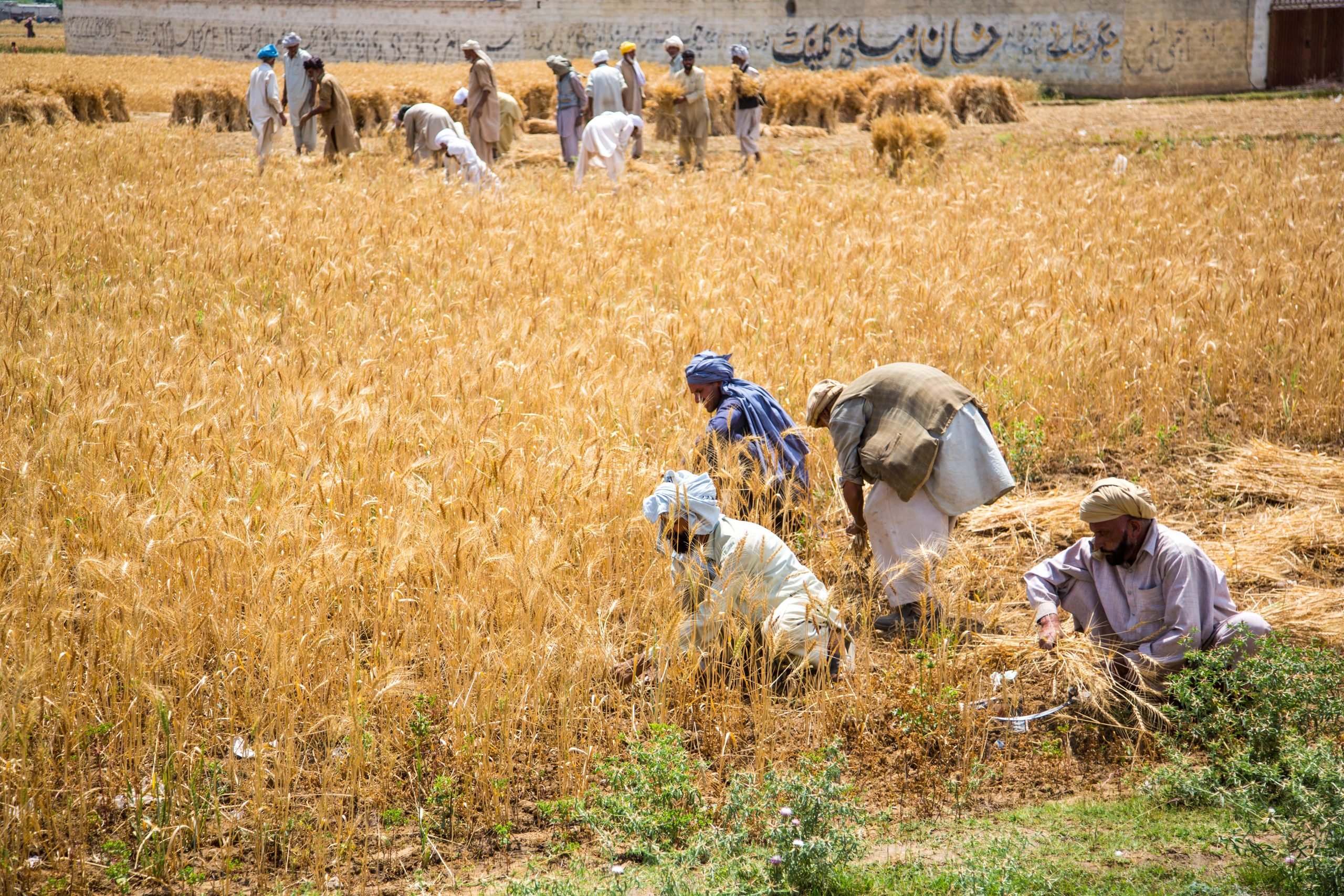
The State Bank-led initiative combines collateral-free loans, digitised land records, warehouse financing, crop insurance and risk-sharing measures to widen formal credit access for underserved farmers across the country.
The government has stepped up efforts to expand access to formal agricultural credit for small and underserved farmers across Pakistan through digital lending, targeted financing, crop insurance and alternative collateral arrangements, as part of a broader initiative led by the State Bank of Pakistan (SBP), in coordination with federal and provincial governments, to reduce lending risks and improve the flow of funds to the agriculture sector.
A key initiative in this regard is Zarkheze – Asaan Digital Qarza, launched on October 14, 2025, to provide collateral-free crop financing to small and subsistence farmers. The facility offers loans of up to Rs1 million to eligible landowners and Rs500,000 to tenant farmers, repayable within 12 months.
To ensure that financing is used for agricultural purposes, 75 per cent of the loan amount is disbursed in kind through a verified network of agricultural merchants for the purchase of essential inputs, while the remaining 25pc can be provided in cash.
The government has also stepped up agricultural financing under the Prime Minister’s Youth Business and Agriculture Loan Scheme, allocating Rs65 billion to 21 banks for the agriculture sector during FY2025-26. By June 30, 2026, banks had disbursed Rs63.46bn, representing around 97.6pc of the allocated amount.
Another major initiative is the Electronic Warehouse Receipt Financing facility, which enables farmers and commodity traders to secure bank loans against agricultural produce stored in accredited warehouses.
Initially introduced for maize and rice, the facility was subsequently extended to wheat. Since its launch in February 2022, it has facilitated more than Rs15bn in financing. During FY2025-26 alone, banks disbursed Rs5bn to 864 borrowers under the mechanism.
The SBP is also promoting the integration of digital land records with banking systems to simplify ownership verification and accelerate agricultural loan processing.
In Punjab, 30 banks have been connected to the Punjab Land Records Authority's system. Between July 2025 and June 2026, the system generated 143,583 land ownership documents, commonly known as fards, and created 43,786 charges, enabling banks to access digitised land records when processing agricultural financing applications.
The SBP has advised banks to integrate their agricultural lending branches with the provincial land records system by October 2026. Meanwhile, the Punjab Land Records Authority introduced the Green Property Certificate through its Land Management Portal in June 2026, with its integration into banking systems currently underway.
Alongside expanding access to credit, the government has strengthened insurance protection for farmers through the revised Crop Loan Insurance Scheme Plus, launched on April 20, 2026.
The revised scheme extends insurance coverage to potatoes, introduces technology-based assessment of natural calamities through the Space and Upper Atmosphere Research Commission (SUPARCO), and establishes a co-insurance consortium to strengthen the sector's capacity to settle claims.
It also provides one-time income-loss support of Rs15,000 for male farmers and Rs17,500 for female farmers. Personal accident coverage has been increased to Rs250,000 for male farmers and Rs275,000 for female farmers.
The federal government bears insurance premium costs for eligible borrowers under the relevant crop and livestock insurance arrangements. During FY2025-26, the Ministry of Finance reimbursed Rs1bn in insurance premium claims under the Crop Loan Insurance Scheme and Rs140 million under the Livestock Insurance Scheme for Borrowers.
Climate resilience is another focus of the government's agricultural financing strategy. The SBP has engaged the Alliance for Financial Inclusion for technical assistance under an initiative launched in 2025.
The initiative seeks to promote climate-smart farming practices, develop climate-risk profiles for agricultural lending, assess green banking guidelines and build the capacity of banks to incorporate climate considerations into their financing decisions.
To further encourage banks to lend to small farmers and underserved areas, the SBP has introduced a Risk Coverage Scheme for Small Farmers and Underserved Areas.
Under the scheme, banks receive first-loss risk coverage of up to 10pc on agricultural loans extended to small farmers in Punjab and Sindh and to all farmers in the remaining provinces.
Banks are also eligible for a subsidy of Rs10,000 per borrower, linked to the net annual increase in their agricultural borrower base, to help offset the cost of bringing new farmers into the formal banking system.
The three-year facility will remain effective from FY2025-26 to FY2027-28.
Together, these measures reflect a broader shift in agricultural financing policy, combining digital lending, targeted credit, technology-based land verification, warehouse-backed financing, insurance protection and climate-risk management to improve farmers' access to formal financial services while encouraging banks to expand lending to a traditionally underserved sector.
Source - https://www.urdupoint.com