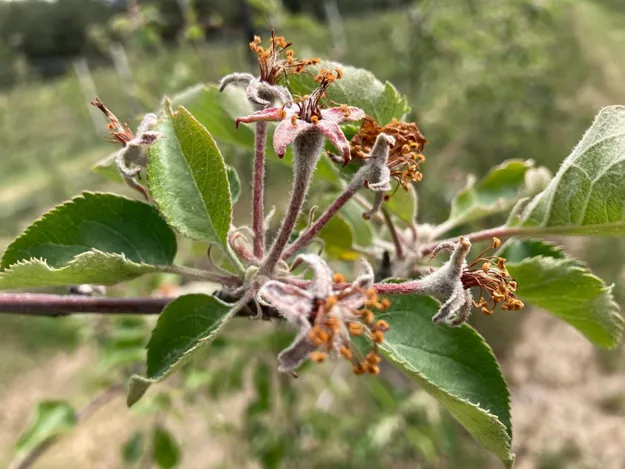
Polish apple growers have had to deal with spring frosts during the nights, says Mohamed Marawan, owner of Polish apple exporter Sarafruit: "The weather in Poland over the last week was warm during the day, but it's the frosty nights that caused some damage to certain areas with apple orchards in Poland. Fruits, garden plants and agricultural crops grown in Poland exhibit wide variations in terms of their sensitivity to frost, particularly those that occur in early Spring. In the case of frost, generally, the yield and quality are reduced, and sometimes entire plants can be destroyed as a result."
The damages are regional and although the estimates are not yet in, Marawan doesn't expect major issues for the upcoming season. "There has been icy weather in Poland for the past two weeks, with temperatures dropping below freezing at night and not exceeding 10 degrees Celsius during the day. This is causing pollination problems for apple orchards that are in bloom, potentially affecting the yield. This also depends on the location of the orchard, because some of the apple orchards have not been damaged at all. At this point, I can't estimate the damages, because it's still very early. However, I think everything is going to be clear in a few weeks from now. That being said, in my opinion, the situation will not be that bad in the upcoming season. I do think that there will be more frosty nights this month."
Although there are multiple ways for growers to protect their orchards against frost damages, Marawan states that these options are often too expensive: "For growers, there are actually many methods of protection against the frost, but each of these methods is very costly to implement. For example, using air movement and a big ventilator setup in the orchard. Another option is to use a water-based frost protection systems, which use temporary overhead irrigation systems with high output to supply the water. Finally, there's also the possibility of using heat by installing small heaters in the orchards, which will warm the area around the trees, protecting it against advection and radiation freeze," he concludes.
Source - https://www.freshplaza.com