The advance of wild boars across Brazilian territory worries the countryside due to economic loss, threat to biodiversity, and sanitary risk to livestock, especially in regions where crops and livestock are vulnerable to the species’ movement.
More than 500,000 wild boars were culled in Brazil in just 8 months, according to a survey released by Brasil61 based on SIMAF, a system operated by Ibama. Even so, the invasive species continues to concern rural producers, environmental agencies, and animal health specialists for causing damage to crops, herds, fences, springs, and natural areas.
The most solid data is in the management records. According to the survey, 511,466 wild boars were culled in the country by August 2025. The number shows the extent of control already carried out, but also reinforces that the pressure of the species remains a challenge for agriculture, biodiversity, and sanitary surveillance.
In addition to official culling records, the sector related to management states that control needs to advance. In an interview with Compre Rural, Rafael Salerno, president of the association Aqui Tem Javali, cited the estimate of more than 1.25 million wild boars as a warning about the pressure of the species in the field. The number does not appear as an official census consolidated by Ibama, MAPA, or Embrapa, but helps to gauge the concern of entities monitoring the animals’ advance.
An Introduced Animal Became a National Threat
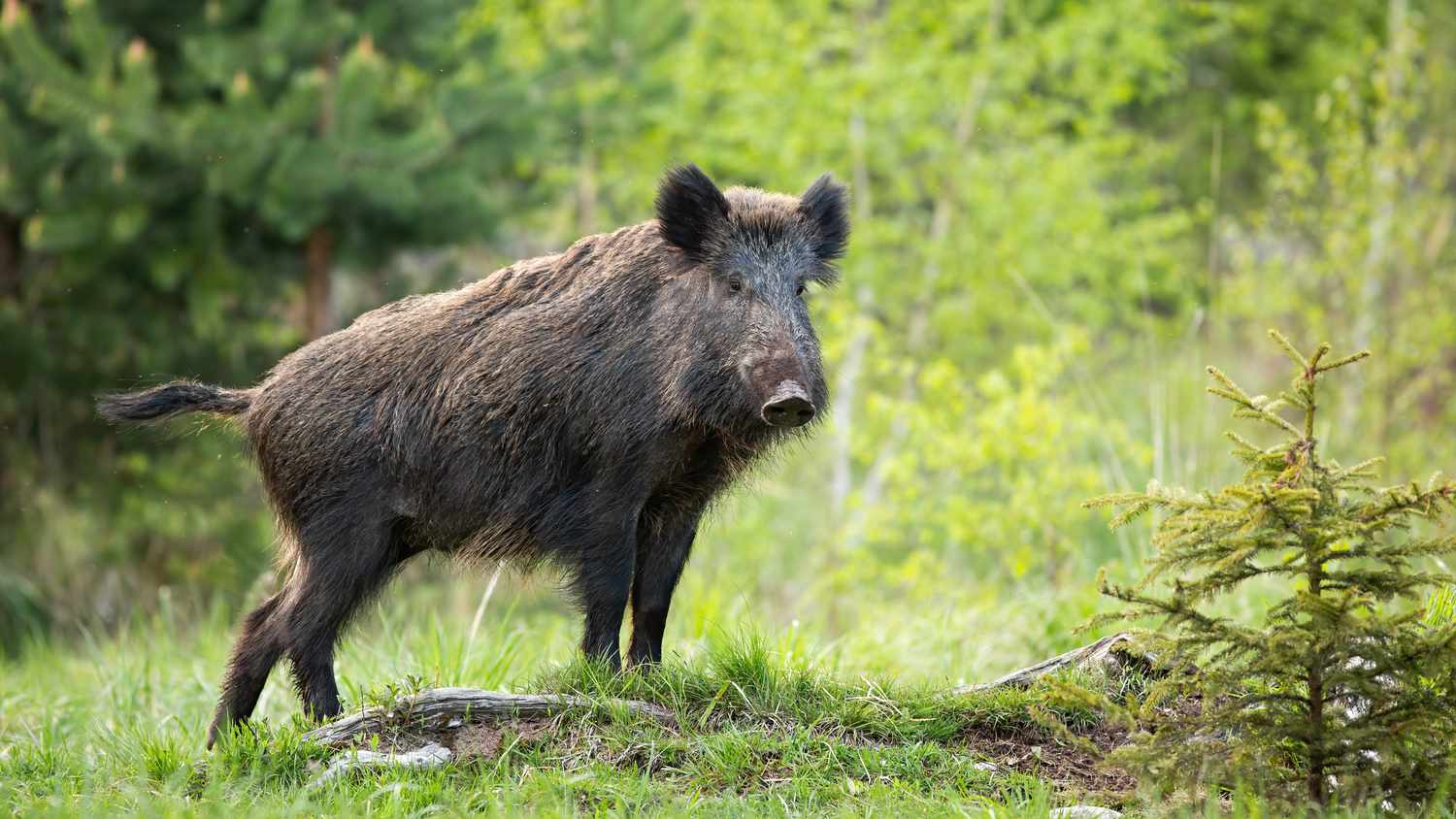
Group of wild boars evidences the advance of the invasive species in Brazil, where management records indicate more than 500,000 animals culled in just 8 months, amidst damage to crops, herds, springs, fences, and natural areas.
The wild boar, scientifically named Sus scrofa, originates from Europe, Asia, and North Africa. In Brazil, it was introduced decades ago, mainly for meat consumption, and found favorable conditions to spread.
Over the years, the presence in the wild has become an environmental and productive problem. Embrapa points out that the species has already been detected in 1,152 municipalities. The same technical group cites records of slaughter in more than 2,000 municipalities in Ibama’s wildlife management system.
This advance shows that the issue has gone beyond the gates of isolated properties. Today, the wild boar appears as a public policy challenge, involving producers, state governments, Ibama, MAPA, Embrapa, and agricultural defense agencies.
The figure of 1.25 million appears in a report by Compre Rural from an interview with Rafael Salerno, president of the association Aqui Tem Javali. As there is no official consolidated census on the national population of wild boars, the data should be presented as an estimate from an entity linked to management, and not as a definitive government number. Even so, it reinforces the perception that current control does not keep up with the speed of the species’ expansion.
Crops, herds, and springs feel the impact
In the field, the damage appears in various forms. Wild boars churn the soil, invade crops, break fences, damage pastures, reach preservation areas, and can destroy springs.
Among the most affected crops in technical and productive reports are corn, soybeans, wheat, rice, sorghum, vegetables, cassava, sugarcane, and pastures. In Mato Grosso do Sul, a technical circular from Embrapa Pantanal cites reports from producers in Rio Brilhante with damages that can reach 30% in some plots.
The problem also reaches herds. There are records of attacks on smaller animals, in addition to competition for food with native species and the degradation of sensitive environments.
For small producers, this impact can be even heavier. Damage to crops, fences, or breeding areas does not only represent environmental loss. Often, it means a direct reduction in income for properties that already operate with tight margins.
Wild boars advance over crops and leave a trail of destruction in the field, a scenario that helps explain the alert from specialists after records indicated more than 500,000 slaughters in 8 months in Brazil.
Sanitary risk concerns Brazilian pig farming
The advance of wild boars also raises a health alert. Embrapa explains that, within the One Health concept, the species is concerning because it can move between wild environments and productive areas, carrying or transmitting pathogens.
The risk is especially sensitive for pig farming. Since wild boars and domestic pigs belong to the same species, they can infect each other under certain conditions. Therefore, MAPA includes feral pigs, a group that encompasses wild boars, free-living domestic pigs, and hybrids, in its health surveillance plan.
Among the diseases monitored are Classical Swine Fever, African Swine Fever, and PRRS. The World Organisation for Animal Health, WOAH, defines African Swine Fever as a highly contagious viral disease of domestic and wild pigs, with mortality that can reach 100%. It does not pose a risk to human health but can cause a strong economic impact.
Classical Swine Fever is also on the radar. According to WOAH, it is a contagious viral disease that affects domestic and wild pigs, with transmission through direct contact and the possibility of virus survival in refrigerated or frozen pork products.
Santa Catarina discusses payment for culled wild boar
In Santa Catarina, the topic has gained political and health significance. The state has Law No. 18.817/2023, which authorizes the population control and management of wild boars. However, this regulation is challenged in the STF through ADI 7808.
The PGE-SC argues that the measure seeks to reduce environmental, economic, and health damages caused by an invasive species already considered harmful by Ibama.
According to PGE-SC, data from IMA, Cidasc, Embrapa, and Ibama indicated the presence of wild boars in 60% of Santa Catarina’s municipalities. For a state with strong pig production, this number helps explain the urgency of the debate.
The case in Santa Catarina shows how the advance of wild boars has ceased to be just a complaint from isolated producers. The presence of the species has begun to require a response from environmental agencies, agricultural entities, and state governments, especially in areas where animal production has significant economic weight.
Control is allowed, but follows rules
The control of wild boars is permitted in Brazil, but it does not function as free sport hunting. The Normative Instruction No. 3/2013 of Ibama declared the species harmful and authorized population control in the wild throughout the national territory.
In practice, management requires registration, authorization, registration in the corresponding system, and submission of reports. The official Ibama page also mentions IN 12/2019, which established SIMAF, and the Interministerial Ordinance No. 232/2017, responsible for the National Plan for Prevention, Control, and Monitoring of Wild Boars.
This point is central to avoid confusion. What the legislation allows is management with environmental and sanitary purposes, within specific rules. It is not a broad release for uncontrolled slaughter.
The problem does not fit into a simple solution
Experts argue that the response needs to be integrated. The Wild Boar Plan gathers actions of legality, prevention, monitoring, impact mitigation, control, research, training, communication, and awareness.
This means that authorized culling can be part of the strategy, but it does not solve the issue alone. Monitoring, sanitary surveillance, technical guidance, protection of sensitive areas, and cooperation between producers and public agencies are pieces of the same board.
The advance of wild boars shows how a species introduced for human use can become a problem on a national scale. What started as a rural presence now threatens crops, biodiversity, livestock, and the sanitary security of one of the most important chains of Brazilian agribusiness. Controlling the expansion is no longer just a demand of the affected producer. It has become a larger dispute over environmental protection, food production, and the country’s ability to act before the damage becomes even more difficult to contain.
Source - https://en.clickpetroleoegas.com.br