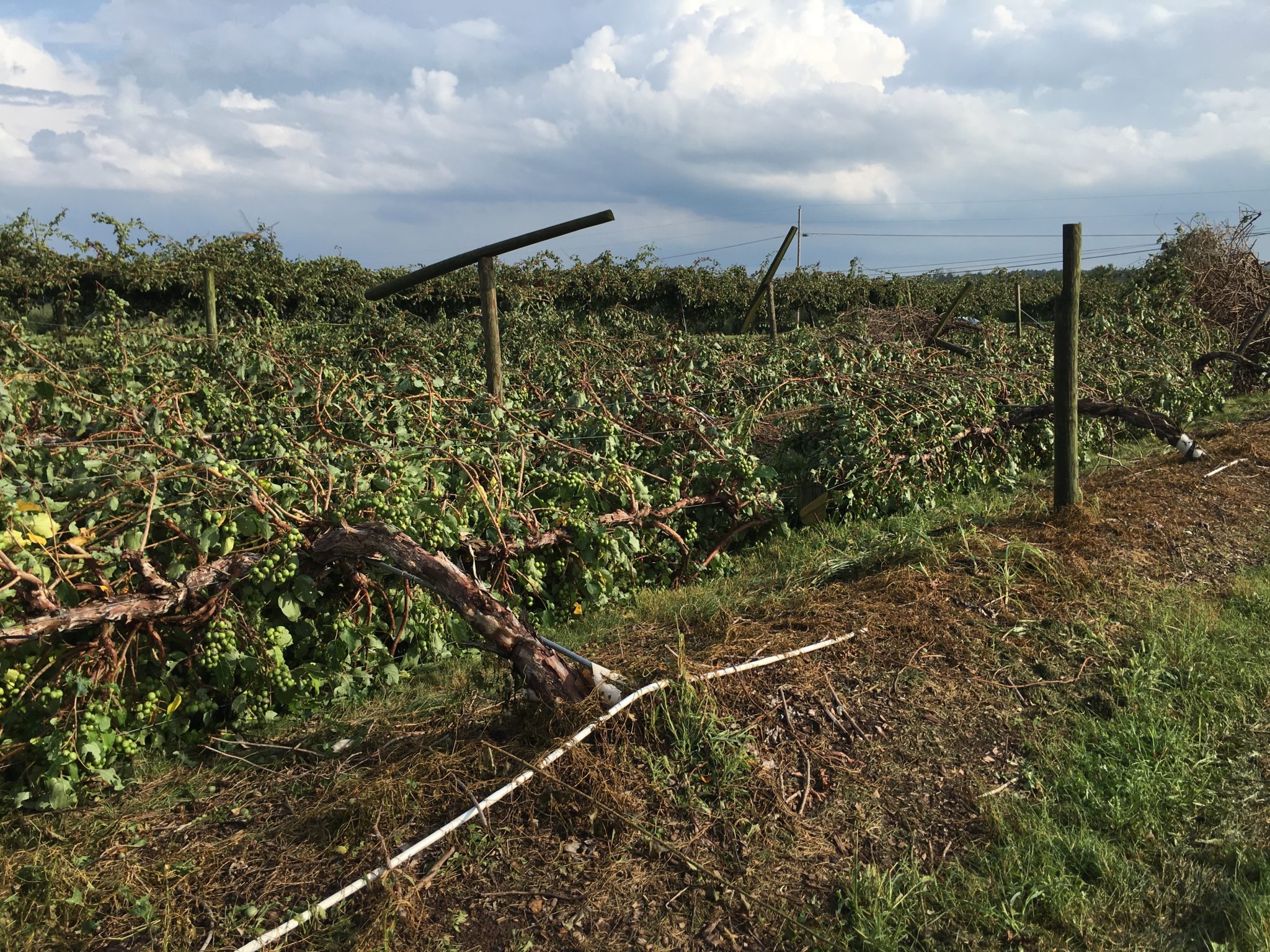
In 2024, Swiss hail recorded an average to good loss year. The loss ratio on the Swiss market of 73% is above expectations. Thanks to diversification into foreign markets, the overall loss ratio will improve to 65%. Hail, frost and snow pressure caused damage to arable crops, vegetables, wine, fruit and berries across Switzerland in 2024 amounting to CHF 38.6 million (including the cost of estimating the loss).
Expected damage balance Swiss market 2024
| Expected number of claims (plant insurance) | 7,609 |
| Expected amount of damage to insured crops (including damage assessment costs) |
CHF 38.6 million |
| Distribution of damages by risk: Hail Frost Snow pressure Flooding Storm Other natural damages |
52.8% 21.9% 9.7% 5.7% 5.1% 4.8% |
Climatic developments and government support for farmers
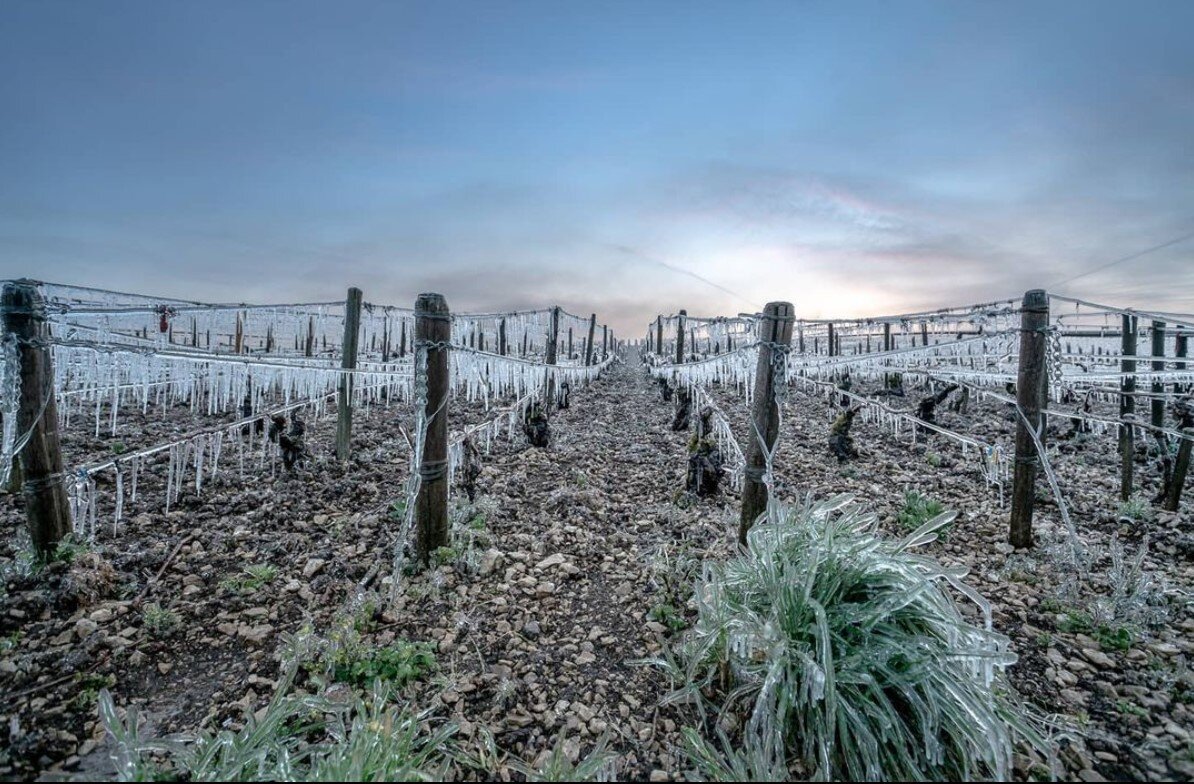
Agriculture is increasingly facing challenges from more extreme weather events, exacerbated by climate change. Frequent and prolonged dry periods, often accompanied by intense heat, such as in Switzerland in 2022, place severe stress on plants and soils. In addition, heavy rainfall is increasing in intensity and frequency, as was evident this year in Austria, France and Spain. Frost periods also pose an increasing risk, as plants sprout earlier due to changing growing seasons and are thus more vulnerable to late frost, as the example of Geneva in 2024 shows. Finally, hail events and supercells, which can cause enormous damage, are occurring more frequently, such as in northern Italy in 2023. All of these events highlight the need to prepare for increasing weather extremes and make farms more resilient.
In order to provide targeted support to farmers, the federal government will be granting premium reductions of 30% for insurance against frost and drought risks for the first time from 2025. These subsidies are intended to help more companies use insurance solutions against the increasing extreme weather. The financial relief applies to areas within Switzerland and is initially limited to eight years. The premium is reduced by 30% directly and without administrative effort for the insured. The discounts granted are reimbursed by the federal government at the end of the loss year and after all receipts have been submitted. For the Swiss Hagel, this results in a financial zero-sum game.
Extended insurance options for targeted coverage
As part of this 30% premium reduction, Schweizer Hagel is adapting its insurance products to be able to offer farmers even more flexible solutions: from 2025, drought can be insured separately for arable crops, as can frost protection for wine, fruit and berries. This more flexible structure strengthens targeted protection against extreme weather and enables tailor-made coverage.
Increasing demand for animal disease insurance
In 2024, Swiss Hagel recorded an increasing demand for insurance solutions against animal diseases. The increasing spread of African swine fever abroad is also increasing the risk for Switzerland and making protection against animal diseases increasingly important. In view of these threats, farmers are recognizing the value of targeted insurance to ensure animal health and the economic stability of their farms. Swiss Hagel is responding to this need and has expanded its animal disease portfolio with insurance solutions for dairy cattle and suckler cows.
Schweizer Hagel relies on climate-resilient agriculture
In addition to insurance solutions, Schweizer Hagel is committed to climate-adapted agriculture that promotes resilience and sustainability. Insurance alone is not enough. Site-adapted agriculture, the use of drought-tolerant crops and varieties, soil-conserving cultivation methods and efficient water management form the basis for future-oriented practice. Schweizer Hagel supports these measures and promotes innovative projects and technologies to prepare agriculture for the challenges of climate change and create a resilient agricultural economy.
Source - Hagel.ch