It’s been nearly a year and a half since Congress passed disaster relief for small and midsized farmers, and the long-awaited federal block grant is “at the finish line for Connecticut,” according to Agriculture Secretary Brooke Rollins.
Rollins provided the latest update at Thursday’s House Appropriations subcommittee hearing where she came to testify about the U.S. Department of Agriculture’s budget for the upcoming fiscal year.
U.S. Rep. Rosa DeLauro, the ranking member of the full committee who championed the creation of the Farm Recovery and Support Block Grant program, pressed Rollins about the status of the $53 million that was awarded to Connecticut. The state’s allocation is about a quarter of the overall $220 million program.
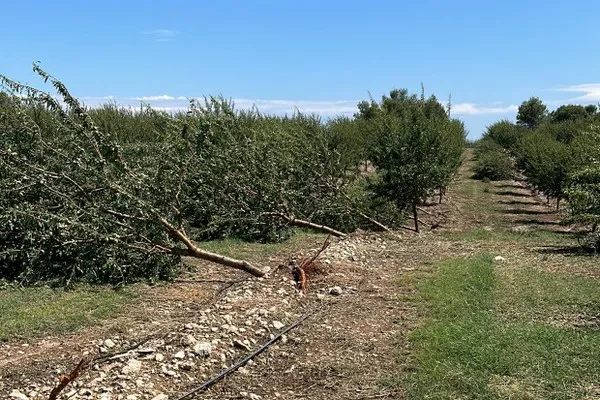
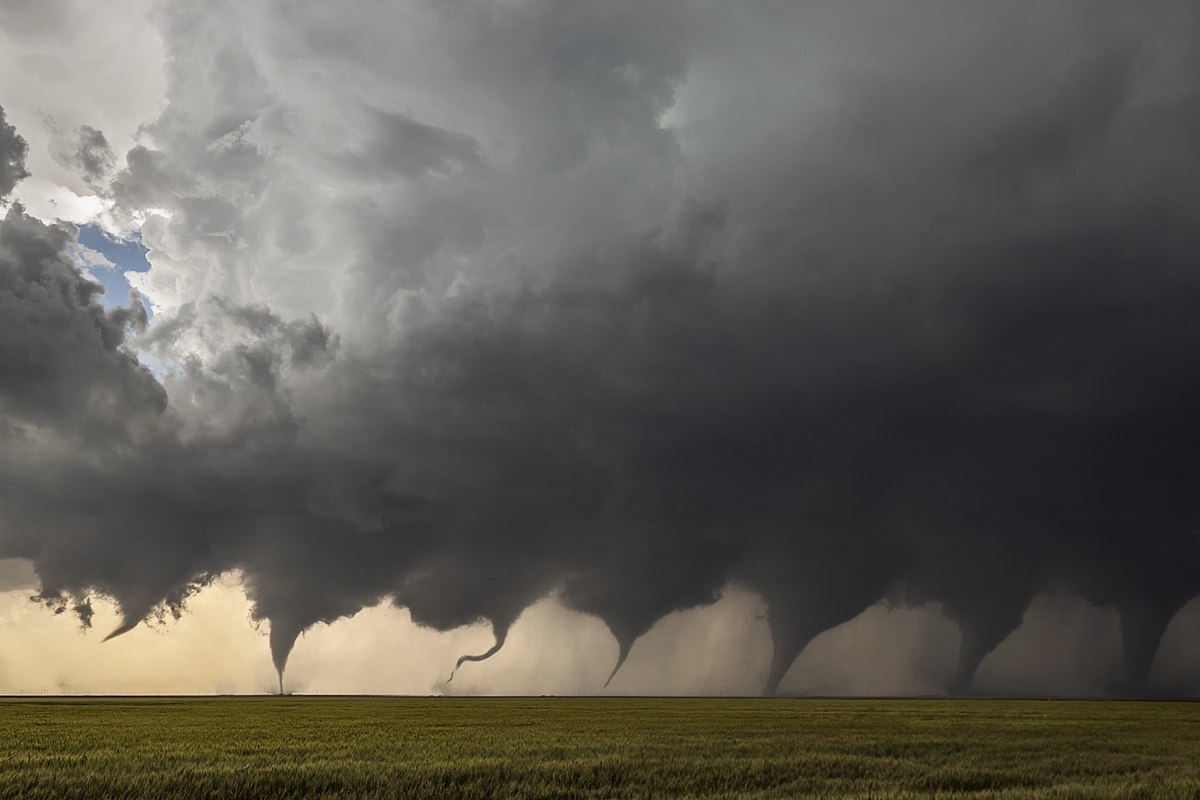
Connecticut famers have been awaiting access to federal relief after experiencing damages caused by disasters and extreme weather events in 2023 and 2024. Every state in New England plus Hawaii and Alaska was eligible for the funds. The program was geared toward smaller farming states that grow more specialty crops and don’t typically benefit from federal aid in the same ways as larger commodity producers.
The state and federal agriculture agencies have been in regular discussions to finalize the contract that would allow Connecticut to open up applications for farmers to get a piece of the $53 million. The implementation of the program hit some snags since it was enacted into law in late 2024, and negotiations were interrupted during last fall’s government shutdown. Now, DeLauro wanted some answers about where things stand.
“It’s now been 16 months since the block grant was created, and to my knowledge, not a single dime has been allocated to the eligible states,” DeLauro said as she asked Rollins whether providing aid to smaller and specialty crop farmers is a priority for the Trump administration.
“It is, and I checked this morning. I think we are at the finish line for Connecticut after 30 meetings and a lot of back and forth,” Rollins responded. “But yes, ma’am, we’re moving on that.”
DeLauro followed up to ask about the timeframe.
“It should be very soon. I literally rode the elevator with Undersecretary [Richard] Fordyce and he said, ‘We’re at the finish line,'” Rollins said.
DeLauro thanked her for the response, reiterating the urgency of getting the $53 million out the door to Connecticut farmers. Rollins said she has her number to get updates, but repeated that “my understanding is it is moving.”
This wasn’t the first time DeLauro publicly pressed Rollins for answers about the block grant. But Thursday’s exchange was a much more cordial one.
Last spring, the congresswoman and agriculture secretary got in a heated back-and-forth as DeLauro asked Rollins about the status of the program. But at the time, the block grant was only a few months old.
In the 16 months since it was established by Congress, the Farm Recovery and Support Block Grant program has hit a few delays.
DeLauro helped with the creation of the program in December 2024 that was attached to the government funding package. One of the influences behind establishing it was William Dellacamera, a farmer in North Branford and one of her constituents.
A 13-minute hail storm destroyed Cecarelli’s Harrison Hill Farm in August 2024. A month later, Dellacamera traveled to Washington, D.C., on his tractor to push for help from the federal government. As months went by with little developments and ongoing negotiations, he came back to the nation’s capital to ask about the status of the farm block grant. He met with Rollins on two occasions last spring as he made his plea for the quick rollout of the money for small and midsize farmers.
A couple of months after that, disagreements emerged over the rollout of the disaster aid block grant.
Last summer, USDA gave eligible states two options. They could run their own crop loss program by using the block grant tailored for them, but they wouldn’t get access to a larger pot of supplemental disaster aid — the option that Connecticut ultimately chose. Or they could go with the latter, run by the federal agency, but face limits on what gets covered by the block grant.
Connecticut decided it would develop a state-run program using the federal block grant. That meant the state won’t get access to the $21 billion Supplemental Disaster Relief Program.
The state’s Department of Agriculture believed the block grant option would give the state more flexibility for specialty crop operations, especially since the supplemental disaster funds might not cover many of the farmers and producers in Connecticut.
Discussions between the Connecticut Department of Agriculture and the U.S. Department of Agriculture had stalled during the 43-day government shutdown last year. Once it reopened in mid-November, talks picked up to hammer out the final details.
Late last year, Connecticut officials gave a loose timeline of wrapping up negotiations and finalizing the state’s contract before the 2026 planting season. (Historically, planting seasons start around April but vary for some farmers.)
When asked about the time frame of the program, the Connecticut Department of Agriculture forwarded its most recent update to farmers on March 27. At the time, the state agency had submitted multiple work plan revisions to USDA and was awaiting approval from the federal government. The original plan was submitted in February.
The update also explained that Connecticut won’t receive the $53 million award as a lump sum and instead given “as needed” as the state makes payments to farmers.
“CT DoAg recognizes the strain caused by the scale of financial losses in 2023 and 2024 and delays in the delivery of the federally funded disaster relief process,” the state agency said in the March release. “It has been, and continues to be, our goal to provide fair and equitable relief to farmers for their losses as soon as possible.”
Source - https://www.courant.com