USA - Deer population and crop damage in Knox, PA

11.08.2023 590 views

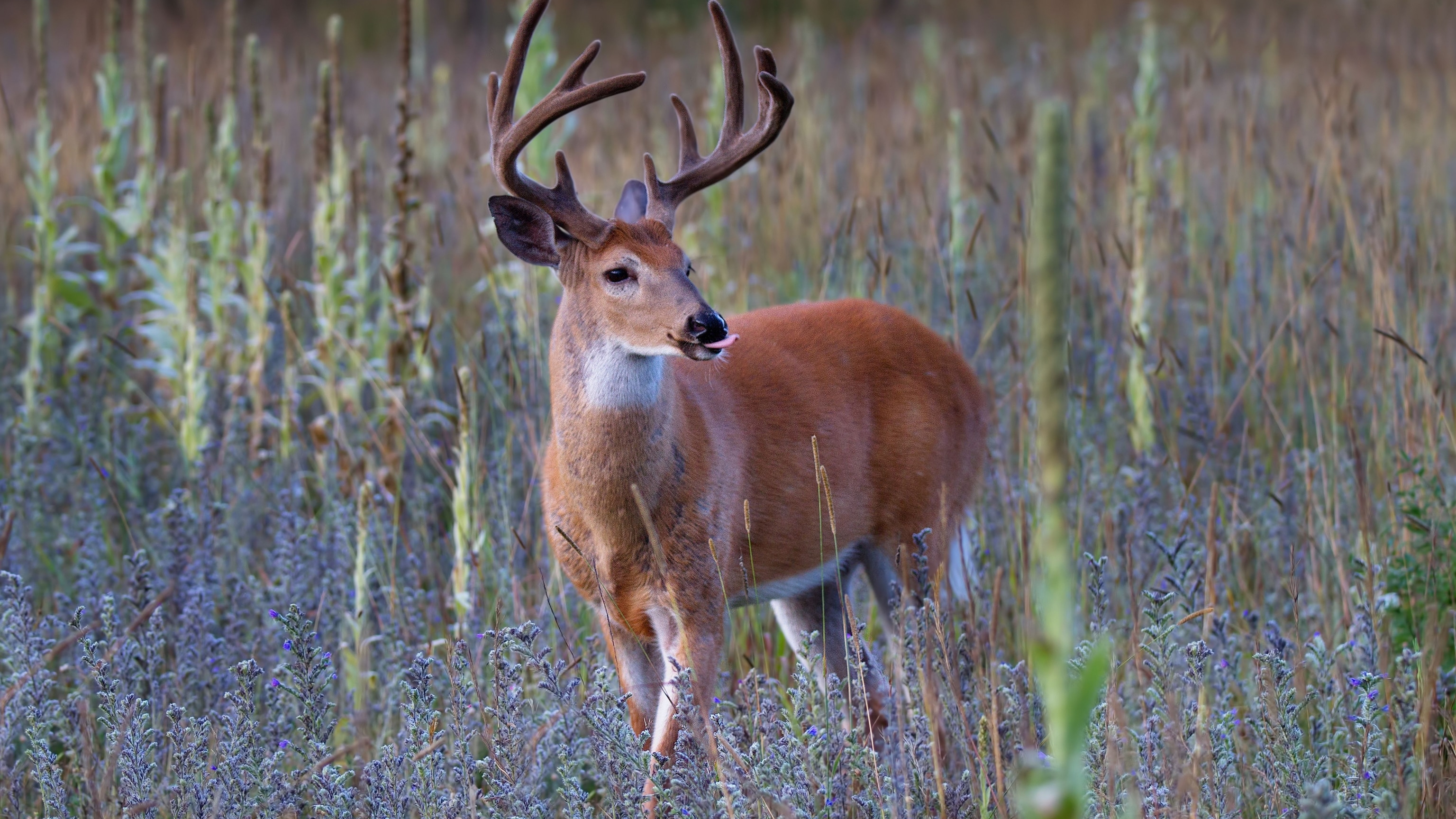
For farmers like John Daughtery, deer can really damage crops. For his Christmas tree farm, they eat the buds, and during this time of year, bucks batter trees with their antlers. With the amount of deer around, he's had to limit the types of tree's he plants. 

“We definitely lose a lot of trees as they get bigger, . . . when I was trying to plant some fraser fir and the deer were really eating those bad, I tried some Turkish fir, which is an exotic. The deer were just as bad with those. I think out of the 125 I planted, and I think I had three survive, and it was awful deer damage. So, I just can't . . .there's a certain species you just can't grow,” Daughtery said.

Daughtery said there's only so much they can do. 

“We try to harvest as many deer as legally allowed. The only other thing we can do is put up some deer exposure fences, but it's costly and we can't do that. . . it depends on where you're at in the state, but in this area, the deer, there's just way too many deer,” Daughtery said.  

PA State Game Warden Alex DiCicco said he see's deer everywhere, but it's not too drastic a difference from years before. In hopes of hunters harvesting more deer an additional 12,000 licenses were issued in the Knox area. 

It's generally consistent every year, but certainly is, of course, depending on things like farming operations, . . . The density can seem, you know, higher at different times, . . ., it seems, more deer out there,” DiCicco said.

DiCicco said anyone experiencing crop damage or issues should reach out to the main game commission office in Harrisburg.

“There aren't a lot of short term solutions to remove a lot of deer. . . hunting is the method we use to control the population, but I always advise people to reach out. Someone will come out and talk to you and work with you and get the plan whatever may be best for your property,” DiCicco said.  

Source - https://www.erienewsnow.com

20.01.2026

Maltese hailstorm damages vegetable crops in Rabat and Dingli

Farmers in Rabat and Dingli reported widespread crop damage following a sudden hailstorm that hit the area overnight on Saturday. 

20.01.2026

New Zealand - Storms cause $10m in crop losses

Arable growers are reeling from up to $10 million in crop losses after a trio of widespread hail storms whipped through Canterbury farms.

20.01.2026

Romania - Agra Asigurari launches the 2025-2026 agricultural season with solutions for unpredictable climate

Agra Asigurari, the national leader in agricultural insurance, is launching the new sales season for the 2025-2026 farming year. The announcement comes at a challenging time for Romanian farmers, marked by the intensification of extreme weather events, which are affecting crops earlier and earlier, causing considerable losses for farmers.

20.01.2026

USA - Federal Crop Insurance Changes Good for Producers

Two major changes are coming to federal crop insurance. There are two major changes to federal crop insurance.

20.01.2026

Payments by Azerbaijan Agricultural Insurance Fund 43% up in 2025

Last year, the Agricultural Insurance Fund of Azerbaijan paid farmers 9.147 million manats ($5.38 million) in insurance compensations.

20.01.2026

Ukraine launches state support for farmers’ agricultural insurance

The state budget for 2026 allocates ₴60M ($1.43M) for agricultural insurance assistance, the first time that this support has been offered. 

19.01.2026

FAO issues new guidance on food safety risks linked to climate mitigation chemicals in agriculture

As governments and agribusinesses race to curb greenhouse gas emissions while feeding a growing global population, the UN’s Food and Agriculture Organization (FAO) has released new guidance to help policymakers and industry assess food safety risks linked to emerging climate-mitigation chemicals used in agriculture.

19.01.2026

Indonesia pushes agricultural downstreaming to boost farmers’ income

Agriculture Minister Andi Amran Sulaiman has called on regional governments to accelerate downstreaming of local agricultural commodities - particularly coconuts, cashew nuts, and cocoa - to increase added value and raise farmers’ incomes.