Maryland farmers are asking lawmakers to expand ways to protect crops from voracious deer.
“The deer are owned by the people of Maryland. But we’re citizens too,” said Karl Shlagel, a Waldorf produce grower representing Maryland Farm Bureau.
Shlagel spoke during the Maryland House of Delegates’ annual state of agriculture hearing Tuesday in Annapolis.
Wildlife damage isn’t new. But in Maryland, as in other Mid-Atlantic states, farmers in recent years have amped up their complaints about large deer populations devastating fields.
John Swaine, a Talbot County grain farmer, estimates deer annually cost him close to $100 an acre.
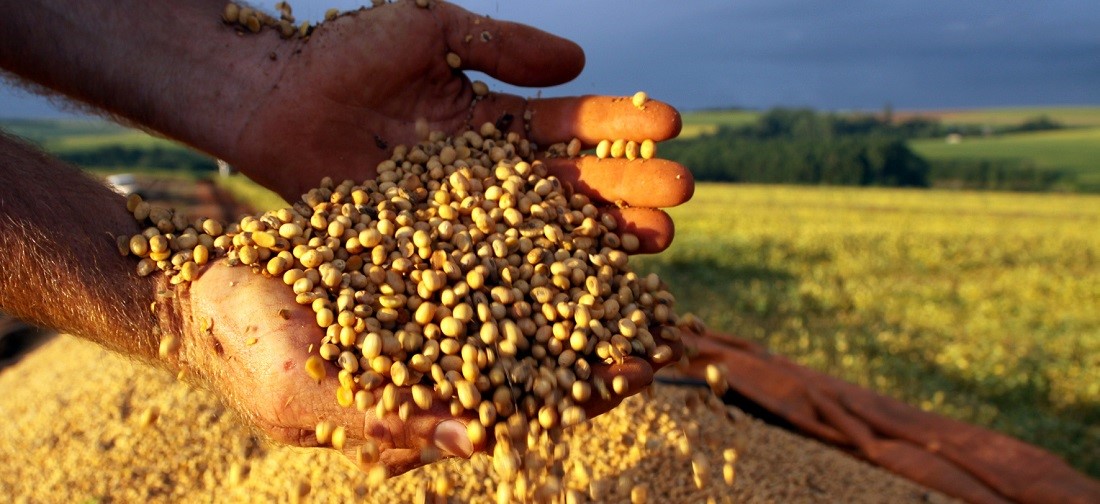
He’s had soybean fields he never harvested because deer ate the whole crop.
“When you do that two or three times in a row, you never go back to the farm to harvest it, it’s time to give up the ground, let somebody else farm it,” Swaine said.
Justin Brendel, who farms in Howard and Montgomery counties, has also abandoned fields because of deer depredation.
Last year dry weather was the biggest cause of yield loss, but in an average year, Brendel said, he loses 15% to 20% of his crop to deer damage.
Deer present a special problem on the Lower Shore.
In addition to native white-tailed deer, the region has sika deer, an introduced species that is treated as a game animal, said Brendel, the president of Maryland Grain Producers Association.
The Lower Shore is also home to one of the state’s most popular strategies for controlling deer — the Doe Harvest Challenge.
Controlling does is key to keeping deer populations in check, and the early January hunting contest removes hundreds of them every year.
Last year Maryland passed a law affirming the competition’s legality, addressing uncertainty raised by the state’s ban on bounties for furbearing species.
Shlagel supports expanding the Doe Harvest Challenge to other parts of the state. He said people in Anne Arundel County would welcome it, but he thinks the Department of Natural Resources would oppose that.
To control deer, Shlagel’s farm has used the state’s provision for winter night hunting.
Shlagel’s family has held crop damage permits consistently since roughly 1989, but Shlagel said the permits need to be easier to get.
Thanks to those crop damage permits, Shlagel said he has donated 1,000 pounds of venison each of the past five years to local food charities.
The farmer panelists also proposed state support for deer fencing — New Jersey provides a cost-share for its farmers — and hunting on Sundays, even if it’s only archery.
Lawmakers didn’t commit to any deer-control policies during the meeting.
But state officials are aware of the wildlife crop damage concerns — mostly from deer, but also from geese and, in western Maryland, bears.
A deer summit was one of the first big public events Kevin Atticks organized after he became the state’s ag secretary in 2023.
Baltimore County is even developing a formal plan for deer management, said Delegate Ryan Nawrocki, a Republican who represents the county.
Source - https://www.lancasterfarming.com