The first oyster reef planting in the local watershed for the multifaceted, partner-driven COASTAL (Conservation Opportunities Advancing Sustainable Technologies for Aquaculture Leases) project is complete, the Ocean County Soil Conservation District reports.
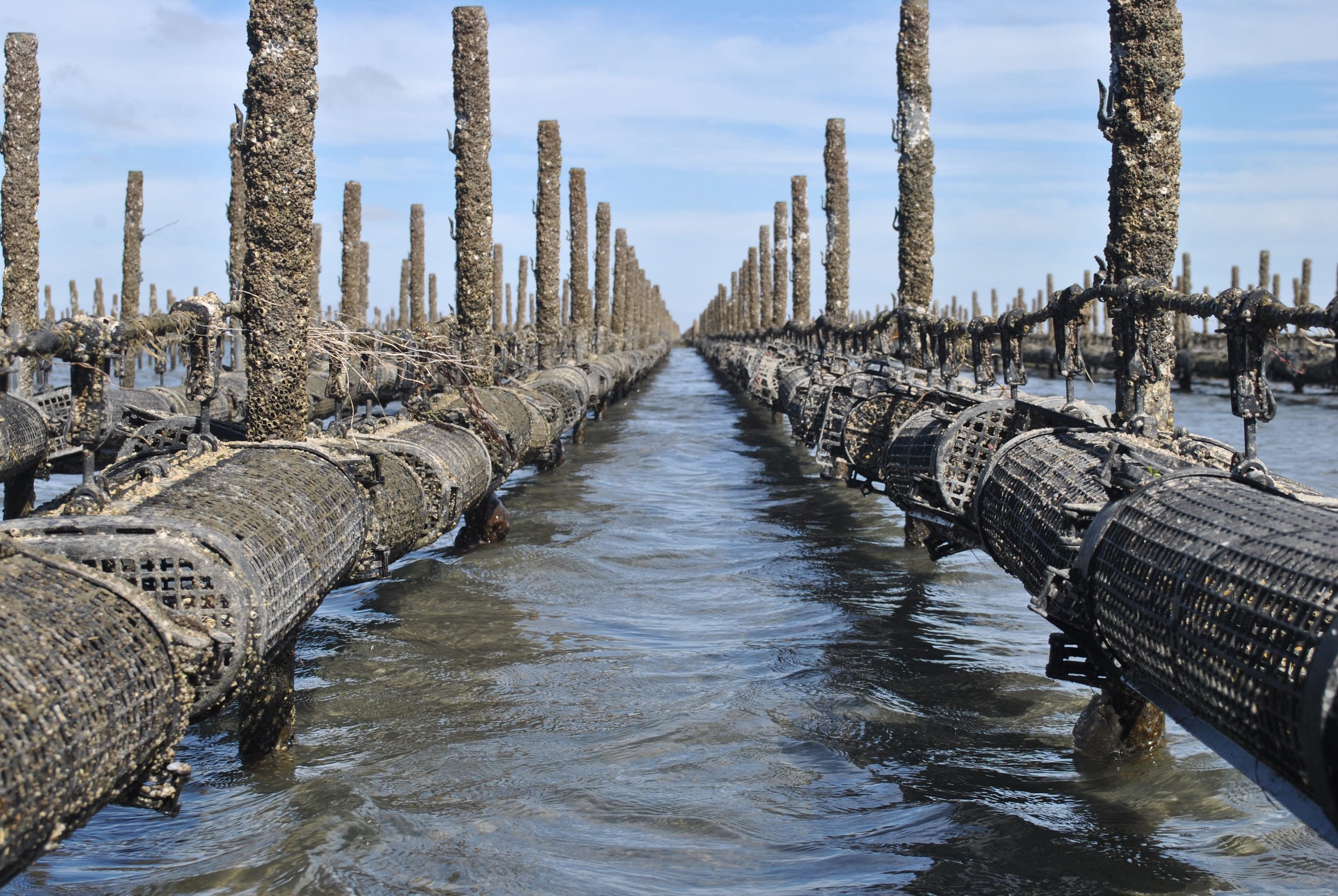
This reef planting, the first of four, is a milestone for the pilot project, which supports local aquaculture producers by farming for restoration.
Planning efforts for the project – funded by an agreement with the Regional Conservation Partnership Program through the U.S. Department of Agriculture, Natural Resources Conservation Service – began in 2020, said District Conservation Specialist Kristin Adams. “The overarching goals of the COASTAL Aquaculture Project are to promote aquatic habitat on shellfish leases and enhance water quality throughout the coastal bays of New Jersey, with a focus on the Barnegat and Great Bay region, by increasing producer participation in NRCS conservation programs,” she explained.
“An additional goal of this RCPP project is the implementation of new conservation practice scenarios connecting producers with restoration projects,” Adams continued. “Increasing oyster populations and improving water quality within the Barnegat and Great Bay region can be fulfilled through restoration initiatives as well as supporting the aquaculture industry. The COASTAL Aquaculture Project serves to make connections between farmers and NRCS and farmers to restoration; these linkages are critical to ensuring continued, future success for natural resource enhancement within our nation’s estuaries.”

PARTNERSHIP: Stockton University monitors both sites, the Tuckerton Reef and the Mill Creek Reef.
Last month, nine shellfish aquaculture producers throughout Barnegat Bay and Great Bay deployed oyster spat on shell – baby oysters that have set on recycled shell material – that they had been fostering on their aquaculture leases since June. The spat on shell was deployed, or “planted,” at two oyster restoration reefs managed and monitored by Stockton University: the Tuckerton Reef, established in 2016, and the Mill Creek Reef, established in 2022.

FARMING FOR RESTORATION: The COASTAL project supports local aquaculture producers.
“On the morning of Nov. 19, the participating producers loaded their boats with their oyster spat on shell and began the trek to the reef sites,” said Adams, who also serves as an aquaculture specialist for USDA-NRCS in New Jersey. She and Steve Evert, director of the Stockton University Marine Field Station, met the producers at the reef sites and marked out the planting locations with buoys.
Approximately 514,000 oysters, averaging 1.5 inches in length and set on recycled shell, were deployed between the two sites. As Adams remarked, “This is the first time either reef site has been planted with spat on shell that has been grown out on farms for one growing season prior to deployment; this will hopefully aid in the survivability of the reef by reducing the chance of being buried by sediment and reduced predation pressure due to a greater vertical relief from the larger, more three-dimensional nature of the spat on shell.”
The reef sites are monitored each spring and fall by students and staff from the Stockton University Marine Field Station.
Source - https://www.thesandpaper.net