USDA has extended the deadline in four of the last six years, including a 60-day extension this year. The back-and-forth makes it hard for agents to keep farmers informed.
Farmers and crop insurance agents in southern Minnesota want the federal government to stop moving the date crop insurance premiums come due and put it back where it sat for years.
The premium deadline topped the list of concerns at a Sept. 18 roundtable Rep. Brad Finstad hosted at the Faribault Chamber of Commerce with U.S. Department of Agriculture Risk Management Agency Administrator Pat Swanson. Participants also pushed for changes to the $200,000 claim threshold that triggers an audit of a farmer's production history.
Premiums are billed Aug. 15, and interest attaches Oct. 1, said Rob Tate, a Cannon Falls farmer and crop insurance agent. That's before many farmers see grain money, which typically starts coming in between early and mid-October.
USDA has extended the deadline in four of the last six years, Tate said, including a 60-day extension this year. The back-and-forth makes it hard for agents to keep farmers informed.
"If we could go back to a later due date, that would be extremely helpful," Tate said.
Swanson said the agency granted this year's extension with farmers' finances in mind.
"We looked at it from the perspective of cash flow concerns for farmers, but also there's parts of the country that had some disasters early, with some early frosts that caused some problems," she said.
Swanson pointed to the old schedule as a model: "It used to be that the bill was due the end of October, and interest attached Nov. 1," she said. "I think that worked really well for a long time."
Finstad, who represents Minnesota's 1st Congressional District, said the earlier date amounts to moving about $25 million from one fiscal year to the next, a figure Swanson shared at the roundtable.
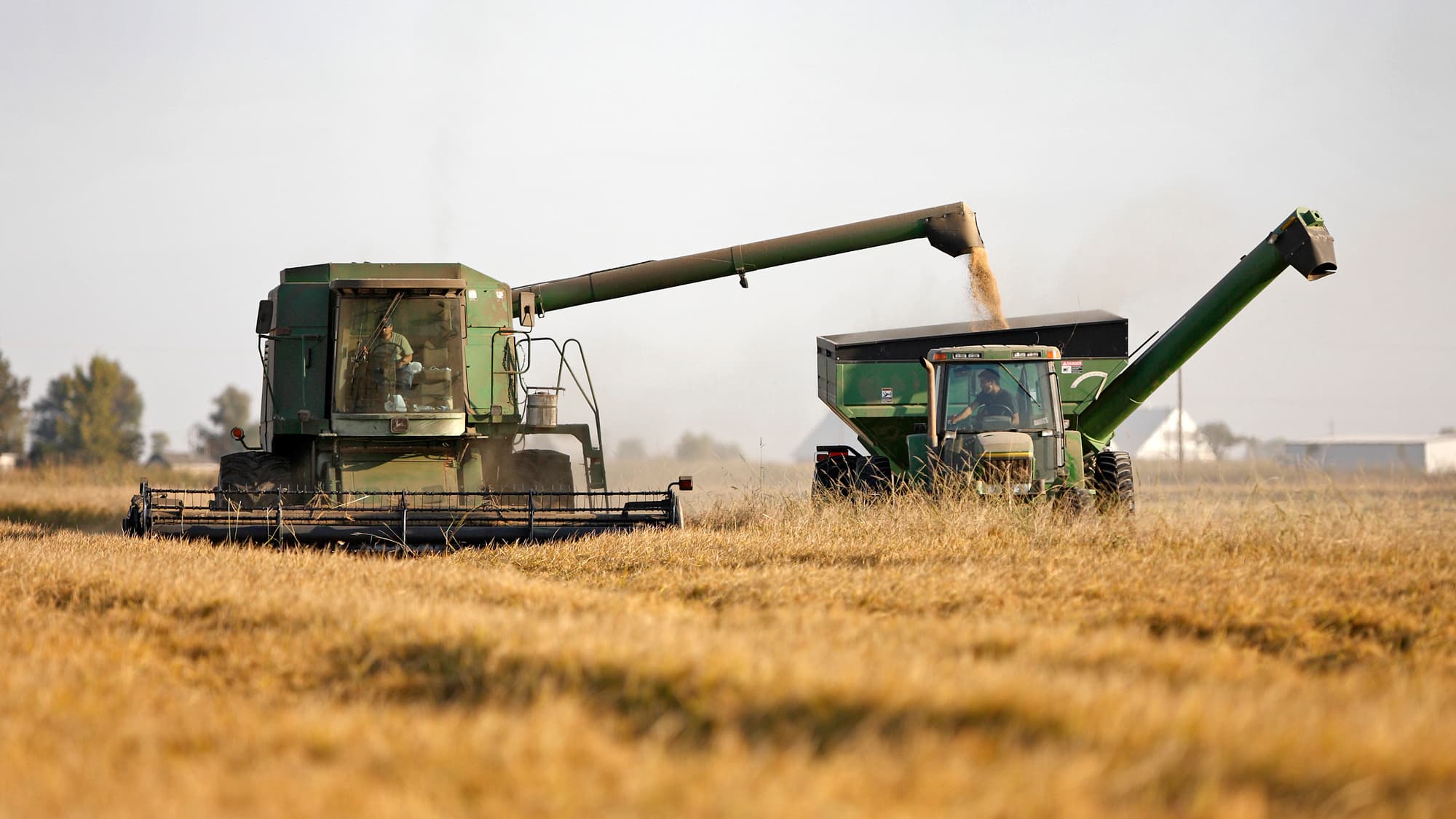
"The reality is it's hitting farmers when they're in their combine," Finstad said. "We've got to be smarter than that, so I'm gonna try to get to the bottom of that."
At the roundtable, Finstad said changing the date permanently would take legislation, with the unfinished farm bill as a possible vehicle.
Ryan Buck, a Goodhue County farmer and crop insurance agent, said an Oct. 30 or Nov. 30 due date would work.
"It was Oct. 30 for years, and that worked perfect," he said. "If it isn't broke, don't touch it."
Audit threshold
Any claim over $200,000 triggers a three-year audit of the farmer's production history, and the claim can't be paid until the audit is done, Tate said.
Tate said he isn't against audits, but the threshold doesn't account for farm size. He said it also doesn't reflect how much coverage farmers now carry, with many pairing an individual revenue policy with supplemental and enhanced coverage options that can take them to 95% coverage. Payments on those add-on products don't come until June, Tate said, which can push a claim over the limit months after harvest.
"The $200,000 amount across the board isn't necessarily right for somebody that has more acres," Tate said. "There still needs to be some checks and balances, but I think we just need to have it proportional to what the policy is."
Buck's agency writes about 450 policies covering roughly 150,000 acres in Goodhue, Dakota, Wabasha, Rice and Olmsted counties. He said big claims are rare, but high crop prices mean it doesn't take much to hit the threshold. Farmers then have to document every bushel they delivered and match it to the correct unit.
"It's not something you just print everything out and throw it and say, 'Here you go,'" Buck said.
At the roundtable, Swanson said RMA changed its compliance rules so that only a percentage of each company's claims over the threshold get audited, not every one.
Program changes
Finstad was pleased hear agents estimate more than 90% of farmers in his district carry crop insurance.
"That means it's a tool that's working," Finstad said.
Swanson said RMA's delivery through private companies has insulated it from USDA staff cuts and reorganization. The agency has about 350 employees, while roughly 18,000 agents, adjusters and underwriters deliver the program.
"We're one of the success stories of the private-public partnership," she said.
Buck said his customers are mostly fine with the changes, as long as premiums and coverage stay close to what they had. "They aren't going to rock the boat too much," he said.
Finstad said he'll keep pushing RMA to develop products for commodities beyond corn and soybeans, including sugarbeets, hogs and turkeys.
Source - https://www.agweek.com