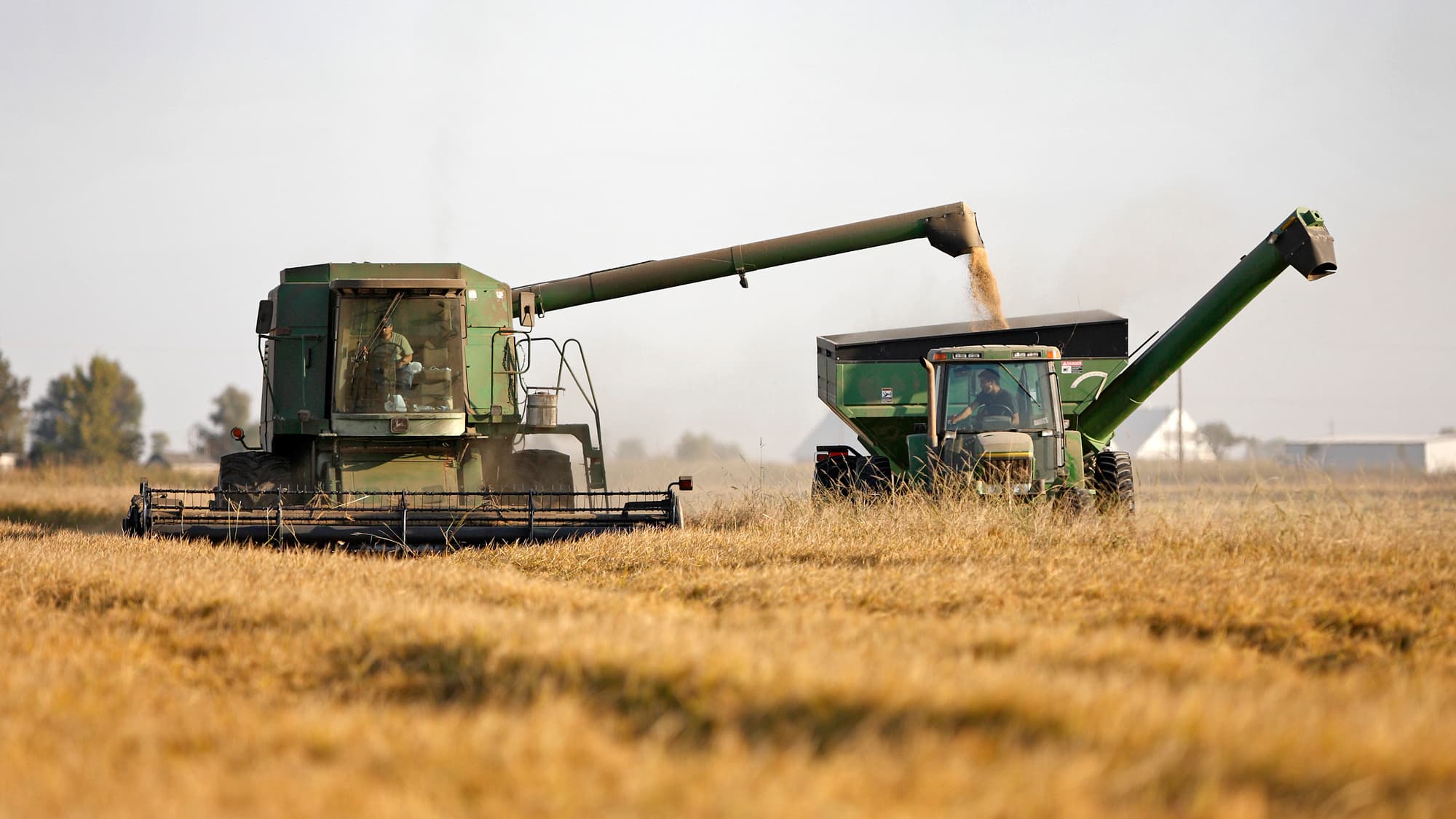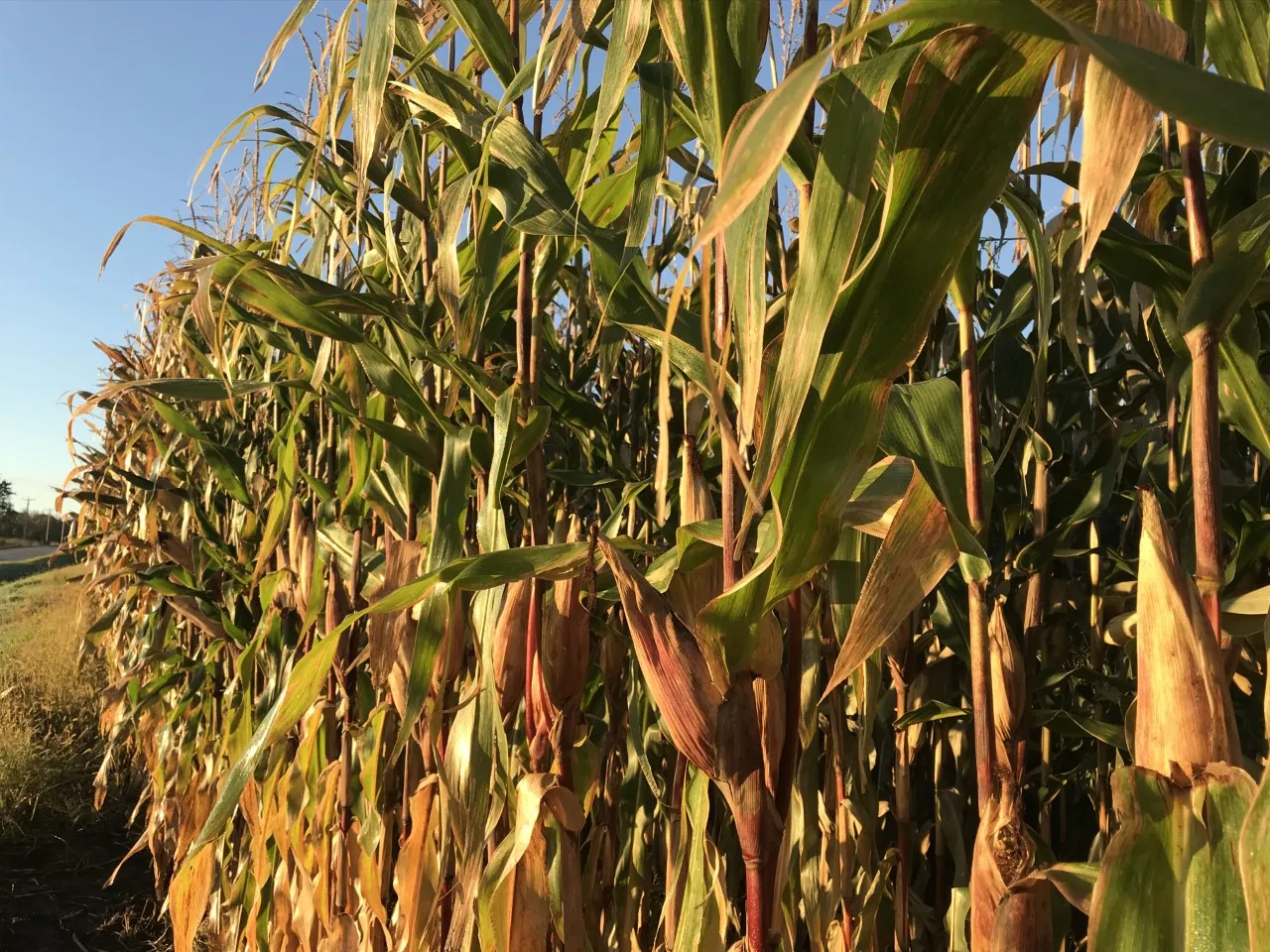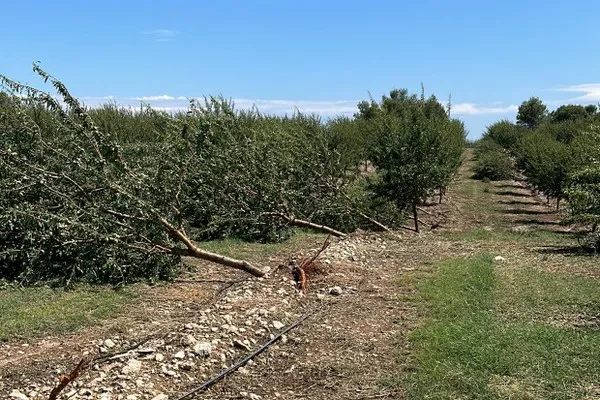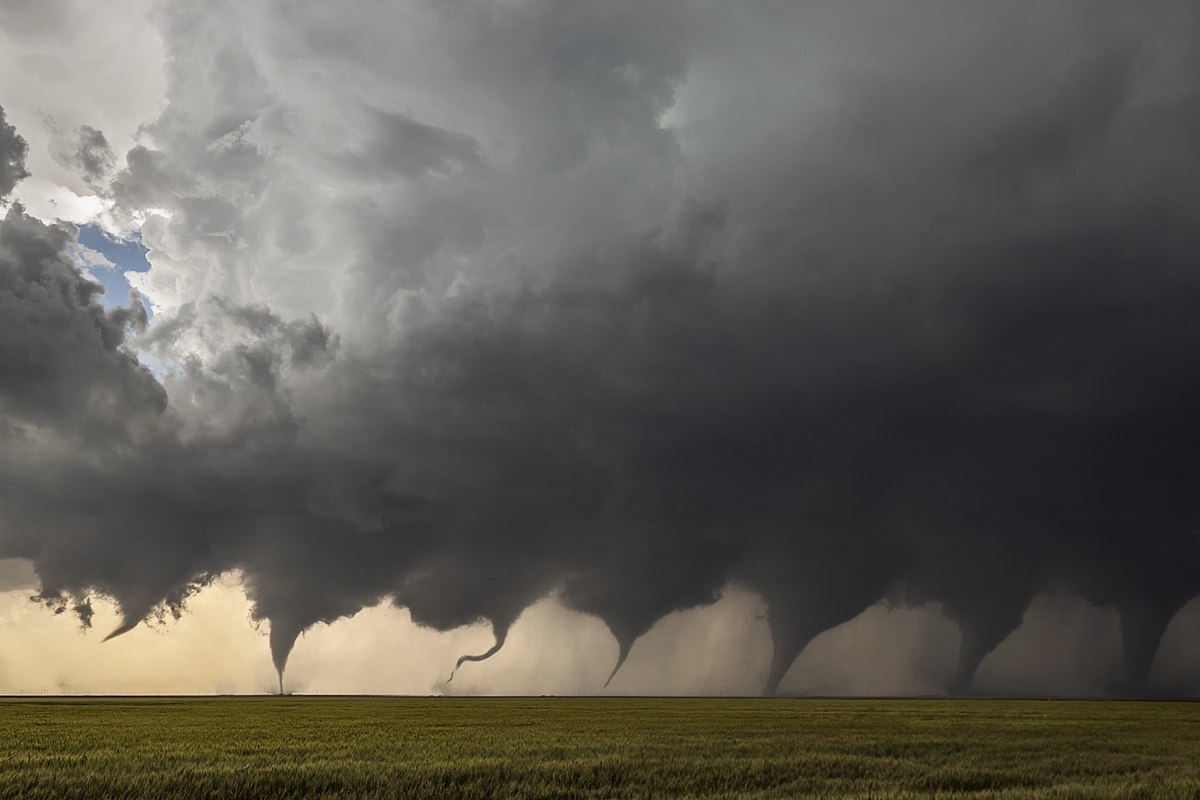
Agricultural operations in South Dakota have been significantly impacted by a severe weather event that included straight-line winds, causing wide-spread, extensive destruction across the state.
The U.S. Department of Agriculture (USDA) has technical and financial assistance available to help farmers and livestock producers recover from these adverse weather events. Impacted producers should contact their local USDA Service Center to report losses and learn more about program options available to assist in their recovery from crop, land, infrastructure, and livestock losses and damages.
“The widespread damage from the recent severe weather event that heavily impacted South Dakota, destroyed infrastructure and agriculture operations and greatly impeded the 2022 crop year progress,” said Robert Bonnie, undersecretary for farm production and conservation (FPAC). “Adverse weather events can leave agricultural producers in a tough spot, so we want to make it known that USDA has a wide-ranging portfolio of disaster assistance programs and continually revisits existing policies to determine where program flexibilities can be made to further assist producers overcome the adversity brought on by these storm events.”
Risk Management
Producers who have risk protection through Federal Crop Insurance must report crop damage to their crop insurance agent within 72 hours of the damage discovery or loss of production. All notices must be confirmed in writing with their crop insurance agent within 15 days of the initial notice. This storm as well as ongoing cold, wet weather in South Dakota has delayed many agricultural producers’ plans to plant an initial crop or replant a crop. Risk Management Agency (RMA) reminds producers to speak early and often with their crop insurance agent.
“It’s been a cold, wet spring for many farmers in the Midwest, and we’ve heard about challenges getting into the fields to plant or replant,” said Eric Bashore, director of the Billings Regional Office, which covers South Dakota. “We recommend you stay in touch with your crop insurance agents, so you know all the options available. The Federal Crop Insurance Program has several options built in to address these situations. We will continue to monitor the condition and communicate with our stakeholders, crop insurance industry partners, Farm Service Agency (FSA) colleagues, and State Agriculture Departments to ensure producers have all the information they need to make decisions throughout the planting season.”
Producers unable to plant by the final planting date due to an insurable cause of loss must notify their crop insurance agent regarding their intent to plant an insured crop or not. Producers may receive a prevented planting payment or receive a reduced insurance guarantee if they choose to plant within the late planting period. Additionally, producers may choose to plant a different crop with a later final planting date while still receiving a partial prevented planting payment. To learn more, read the May 27, 2022 news release , or visit the prevented planting and replanting webpages.
Producers considering non-conventional planting practices, such as broadcasting and then incorporating the seed, should contact their agent to see if an unrated practice or type (TP) written agreement is required to insure the practice. The deadline to request a TP written agreement for crops with a Nov. 30 Contract Change Date is July 15. Learn more in the May 23, 2022, news release.
Conservation
The Emergency Conservation Program (ECP) and Emergency Forest Restoration Program (EFRP) can assist landowners and forest stewards with financial and technical assistance for replacing or restoring fences as well as removing debris from farmland. FSA provides cost-share payments of up to 75% of the cost to implement approved restoration practices, and up to 90% for producers who certify as limited resource, socially disadvantaged, or beginning farmers or ranchers. ECP sign-up periods will be announced by county, but producers can submit applications before signup begins. In South Dakota, 32 counties are eligible for ECP assistance.
USDA’s Natural Resources Conservation Service (NRCS) is always available to provide technical assistance in the recovery process by assisting producers plan and implement conservation practices on farms, ranches and working forests impacted by natural disasters. The Environmental Quality Incentives Program (EQIP) provides agricultural producers with financial resources and one-on-one help to plan and implement improvements on the land including financial assistance to repair and prevent the excessive soil erosion caused or impacted by natural disasters. These practices include activities like stream bank restoration, grassed waterways, and buffers.
“NRCS programs are available to help South Dakota landowners recover from adverse weather events,” said Toni Sunseri, NRCS state conservationist in South Dakota. “NRCS employees will help landowners assess any damages and develop methods that focus on effective recovery options.”
NRCS-funded conservation practices protect land from erosion, support disaster recovery and repair, and can help mitigate loss from future natural disasters. Assistance may also be available for emergency animal mortality disposal from natural disasters and other causes. Producers can visit their local USDA Service Center to learn more about recent natural disaster impacts and potential recovery tactics associated.
Livestock, Crop and Farmland Disaster Recovery
Producers who experience livestock deaths in excess of normal mortality may be eligible for the Livestock Indemnity Program (LIP). To participate in LIP, producers will have to provide verifiable documentation of death losses resulting from an eligible adverse weather event including lightening, high and straight-line winds and must submit a notice of loss to their local FSA office within 30 calendar days of when the loss of livestock is apparent.
The Emergency Assistance for Livestock, Honeybees, and Farm-Raised Fish Program (ELAP) provides eligible producers with compensation for losses due to disease, certain adverse weather events, or loss conditions as determined by the Secretary of Agriculture. For ELAP, producers will need to file a notice of loss within 30 days and honeybee losses within 15 days.
The Noninsured Crop Disaster Assistance Program (NAP) provides financial assistance to producers of non-insurable crops to protect against natural disasters that result in lower yields or crop losses or prevents crop planting. For NAP covered crops, a Notice of Loss (CCC-576) must be filed within 15 days of the loss becoming apparent, except for hand-harvested crops, which should be reported within 72 hours.
The Tree Assistance Program (TAP) provides financial cost-share assistance to qualifying orchardists and nursery tree growers to replant or, where applicable, rehabilitate eligible trees, bushes, and vines lost by natural disasters. A qualifying mortality loss in excess of 15 percent (in excess of normal mortality) must be sustained to trigger assistance.
“It’s important to stay informed about the various programs available to your operation to recover from these severe weather events and equally important that you contact your local FSA office to timely report all crop, livestock, and farm infrastructure damages and losses.” said Steve Dick, state executive director for the Farm Service Agency (FSA) in South Dakota. “Required documentation such as farm records, herd inventory, receipts, and pictures of damages or losses will help support and accelerate FSA disaster assistance.”
Farm Credit
FSA also offers a variety of direct and guaranteed farm loans , including operating and emergency farm loans, to producers unable to secure commercial financing. Producers in counties with a primary or contiguous disaster designation may be eligible for low-interest emergency loans to help them recover from production and physical losses. Loans can help producers replace essential property, purchase inputs like livestock, equipment, feed, and seed, cover family living expenses or refinance farm-related debts and other needs. Additionally, FSA has a variety of loan servicing options available for borrowers who are unable to make scheduled payments on their farm loan debt to FSA because of reasons beyond their control.
The Farm Storage Facility Loan Program (FSFL) provides low-interest financing so producers can build or upgrade facilities to store commodities. Loan terms vary from 3 to 12 years. Producers who incurred damage to or loss of their equipment or infrastructure funded by the FSFL program, should contact their insurance agent and their local USDA Service Center. Producers in need of on-farm storage should also contact USDA.
Source - https://www.mitchellrepublic.com