A multi-institution research team led by the University of Wisconsin–Madison received $5.5 million from the U.S. Department of Energy (DOE) Advanced Research Projects Agency-Energy (ARPA-E) to develop a novel approach to cut synthetic nitrogen fertilizer use in two key crops for U.S. ethanol production – corn and sorghum.
The UW-led project was one of nine projects that were recently selected to share $38 million in funding from ARPA-E’s Technologies to Emend and Obviate SYnthetic Nitrogen’s Toll on Emissions (TEOSYNTE) program, which aims to decrease agriculture-related emissions and lower operating costs for American farmers.
Currently, corn and sorghum farmers use synthetic nitrogen fertilizers that are largely responsible for agriculture-related nitrous oxide emissions and account for a significant share of crop production costs. By reducing the need for those fertilizers, TEOSYNTE projects could prevent up to 78 million metric tons of new emissions and save U.S. farmers as much as $6.4 billion.
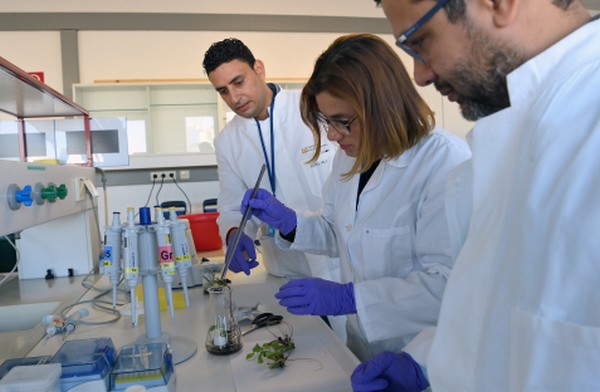
The UW-based project is led by Jean-Michel Ane, professor of bacteriology, and involves colleagues from the University of California San Diego and the Pivot Bio company. The collaborators—who call themselves the N2Cereals research team—aim to increase the benefits of biological nitrogen fixation by strengthening the symbiotic relationships between cereal crops and their nitrogen-fixing bacteria. They will work on “both sides” of the crop-bacteria partnership.
“Nitrogen is a crucial nutrient for plant growth. Although synthetic nitrogen fertilizers are widely used, they can lead to adverse environmental effects,” says Ane. “Our project will address those concerns by providing nitrogen through other means, namely coordinated plant and microbial bio-design.”
On the crop side, the project involves using traditional plant breeding to improve corn and sorghum cultivars so they can better host nitrogen-fixing bacteria on both their roots below ground and on aerial roots. On the bacteria side, the team will develop enhanced nitrogen-fixing bacterial consortia that can fix and deliver nitrogen above and below ground. Specific populations of the bacteria can then be applied to the improved corn and sorghum seeds before planting.
Through this targeted bio-design approach, the team aims to reduce synthetic nitrogen fertilizer inputs by 60% on corn while cutting greenhouse gas emissions by more than 50% and maintaining crop yields.
“Ultimately, the N2Cereals project will deliver improved corn germplasms and tailored nitrogen-fixing microbial inoculants,” says Ane. “These advancements will allow for substantial reductions in the use of synthetic nitrogen fertilizer, and as a result, the project will help U.S. farmers reduce their dependence on nitrogen fertilizers and lower their operational costs.”
More information about the award and descriptions of the other projects funded through the TEOSYNTE program can found here. ARPA-E funds and directs the research and development of advanced energy technologies, bridging the gap between outlier energy ideas and mass market adoption.
Source - https://m.farms.com