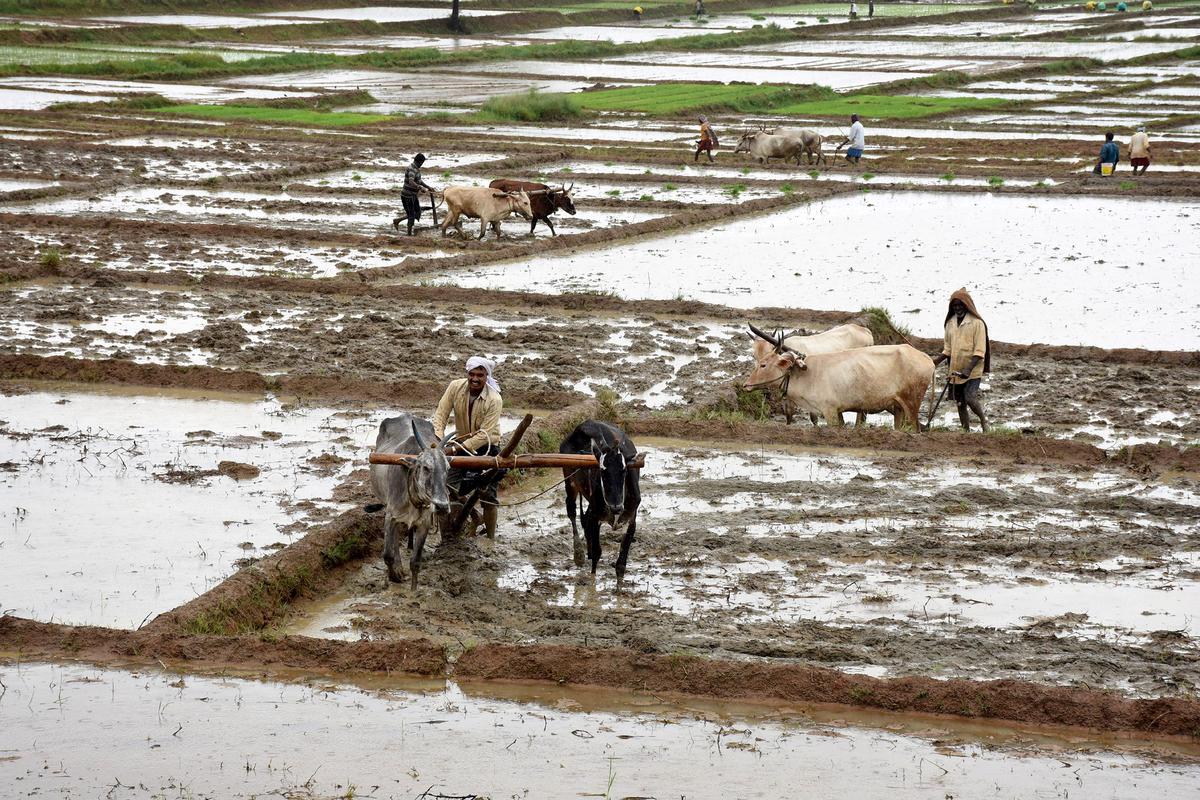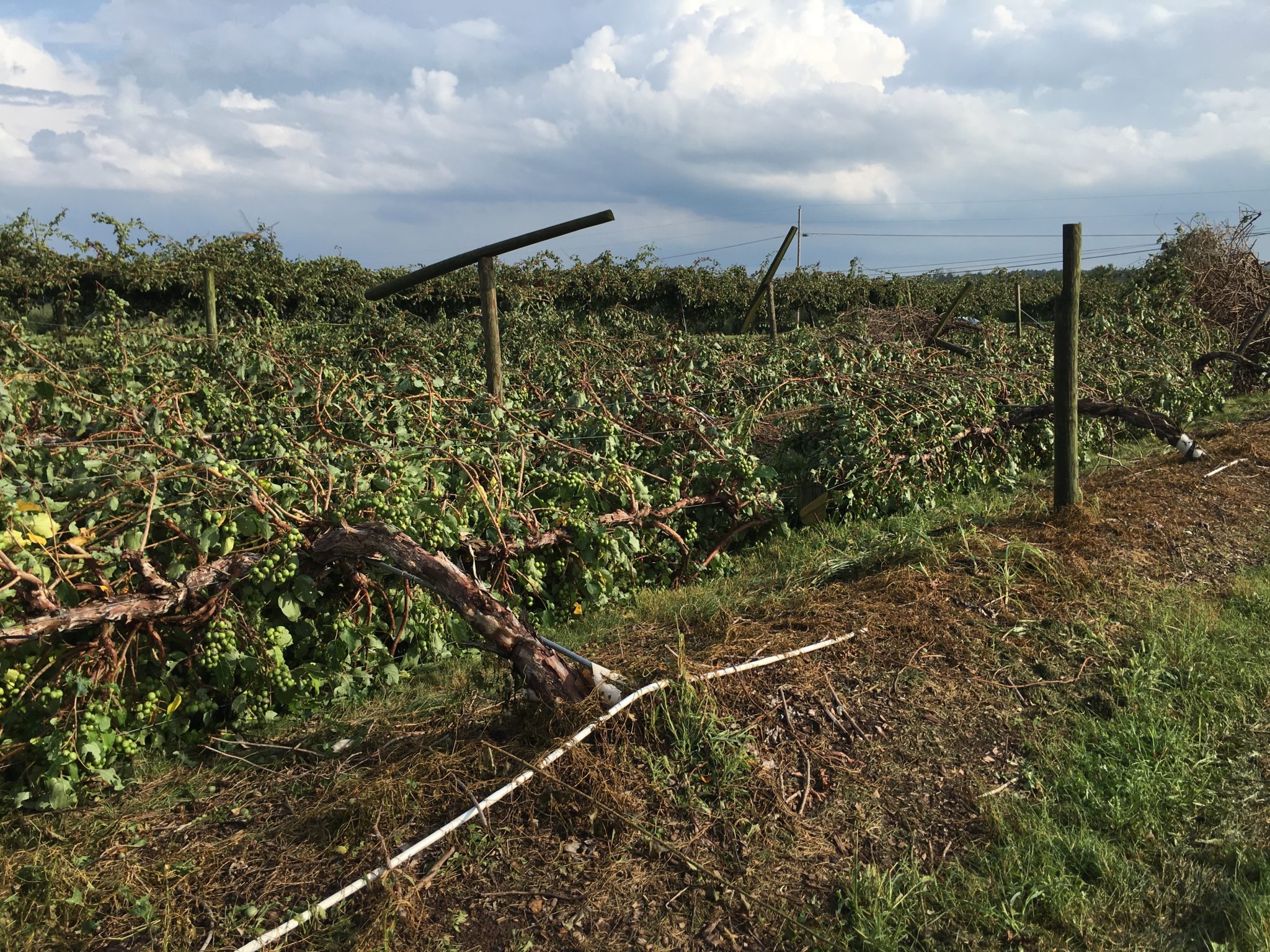
Low commodity prices and high input costs have Virginia’s winter wheat growers exploring other options to sustain farm profitability.
The state’s farmers harvested 47% less winter wheat this summer, according to a recent report from the U.S. Department of Agriculture National Agricultural Statistics Service. Virginia growers harvested 5.61 million bushels of winter wheat during the summer of 2024, compared to 10.2 million bushels in 2023.
Virginia has been steadily losing wheat acreage for 20 years, said Robert Harper, grain marketing specialist for Virginia Farm Bureau Federation.
“But this headline got everybody’s attention,” Harper said. “Forty-seven percent was a dramatic, fall-off-the-face-of-a-cliff drop.”
Farmers sowed 50,000 fewer acres during last fall’s planting season. Land harvested for grain totaled 85,000 acres, with 65,000 dedicated to other uses.
Those “other uses” included planting cover crops like barley, rye or wheat, which are proven to reduce nitrogen and runoff, protecting the Chesapeake Bay. Cover crops also don’t require expensive inputs like fertilizer and protectants.
Farmers can receive federal and state cost-share incentive payments to sow cover crops in the winter, based on the crop species and dates of sowing and termination.
“Cover crops are cheaper to manage than a wheat crop through the growing season, with little input costs and no management costs,” said Joseph Oakes, superintendent of the Eastern Virginia Agricultural Research and Extension Center in Warsaw. “The combination of the low price of wheat, high input costs, with cover-crop incentives tied in, is the main reason we are seeing this drop in acreage.”
It takes the most efficient Virginia growers about $600 to sow and manage an acre of wheat for nine months, Harper said. That amount has “super exceeded” the winter wheat futures price currently projected by the Chicago Board of Trade, at $6.25 per bushel for next July’s delivery.
“Harvesting an above-average 80 bushels per acre, you would need $7.50 per bushel at the farm to break even,” Oakes explained. “The cost of land, and the cost to sow it, harvest it, going over it four or five times with protectants like growth regulators, insecticides, fungicides, fertilizer and nitrogen—all costs a fortune to spoon-feed the crop. So, the incentive programs are a safety net, bringing agronomic benefits and some income.”
But when the going gets tough, farmers adapt.
“From a production aspect, we’re seeing a shift,” Oakes continued.
Farmers who previously grew winter wheat are expressing interest in pushing soybean plantings earlier than usual, to plant behind a cover crop. The AREC’s researchers are studying how early in spring this can be accomplished.
Growers may pivot back to sowing more winter wheat if prices improve, Harper added.
Source - https://www.morningagclips.com