


USA - Grape growers look to offset losses from smoke
31.01.2019 427 views
A winegrape-growing region wracked by wildfires wants to learn more about the impact smoke has on grapes, while growers look to crop insurance and disaster relief to offset some of their losses.
After the Mendocino Complex fire burned more than 459,000 acres of land in Lake and Mendocino counties last year, Lake County growers suffered an estimated $37.1 million in losses from smoke damage, according to a survey by the Lake County Winegrape Commission.
Loss figures for Mendocino County are still being calculated, said Bernadette Byrne, executive director of Mendocino Winegrowers.
The Lake County Winegrape Commission launched a research project last fall aimed at furthering understanding of the effects of wildfire smoke on grapes and wines. The project includes regional sampling, testing, data gathering, weather- and fire-related GIS modeling, and sensory analysis, said Debra Sommerfield, commission president. Project partners include the commission, University of California Cooperative Extension, UC Davis, ETS Laboratories, the Australian Wine Research Institute, Western Weather Group, Lake County Air Quality Management District and individual winegrape growers and vintners.
"We hope our collaborative research project will help develop a more precise understanding of wildfire impacts on winegrapes," Sommerfield said. "It's our intent to support innovative new findings that will expand the understanding of impacts and to set a precedent for the importance of future research across Northern California."
Additional research is underway at UC Davis, where a viticulture and enology extension specialist hopes to learn more about winemaking techniques that would prevent smoky flavors from hurting the wine.
About 75 percent of vineyards statewide were covered by crop insurance in 2018, said Keith Brandt, president of the Lake County Farm Bureau, who added that 61 percent of vineyards in Lake County were insured.
John Aguirre, president of the California Association of Winegrape Growers, said crop insurance proved to be "very important in instances of damage related to wildfires," including smoke exposure.
"If grapes are exposed to smoke for a significant period of time, that can result in smoke compounds remaining with the grape, making those grapes potentially unusable for wineries," Aguirre said.
Crop insurance is part of the federal farm bill and is overseen by the U.S. Department of Agriculture Risk Management Agency, which helps cover the premiums, said Greg Merrill, executive vice president of Pan American Insurance in Fresno. Insurance covers the crop, not the vines or trees, against naturally occurring perils. For winegrapes, a grower can insure anywhere from 50 percent to 85 percent of their average crop; other crops typically range from 50 percent to 75 percent.
A grape grower needing to file a claim must do so within 72 hours of knowledge of potential damage, Merrill said, and if the claim is for smoke damage, several steps must be taken.
"In order to have a valid claim process, you need to have your crop sampled and tested preharvest," he said. "You don't necessarily have to have the results of that test prior to harvest. You just need to be able to prove and certify the fact that you took that sample preharvest by an independent lab."
The test will look for elevated levels of guaiacol and 4-methylguaiacol, Merrill said. Elevated levels of both must be present and a winery must have rejected the grapes on grounds of smoke exposure. The policy will pay a claim only if the fruit cannot be used for its intended purpose, he added.
For winegrapes, there's also a quality adjustment loss to cover instances where the tonnage is unaffected but the crop is damaged by smoke.
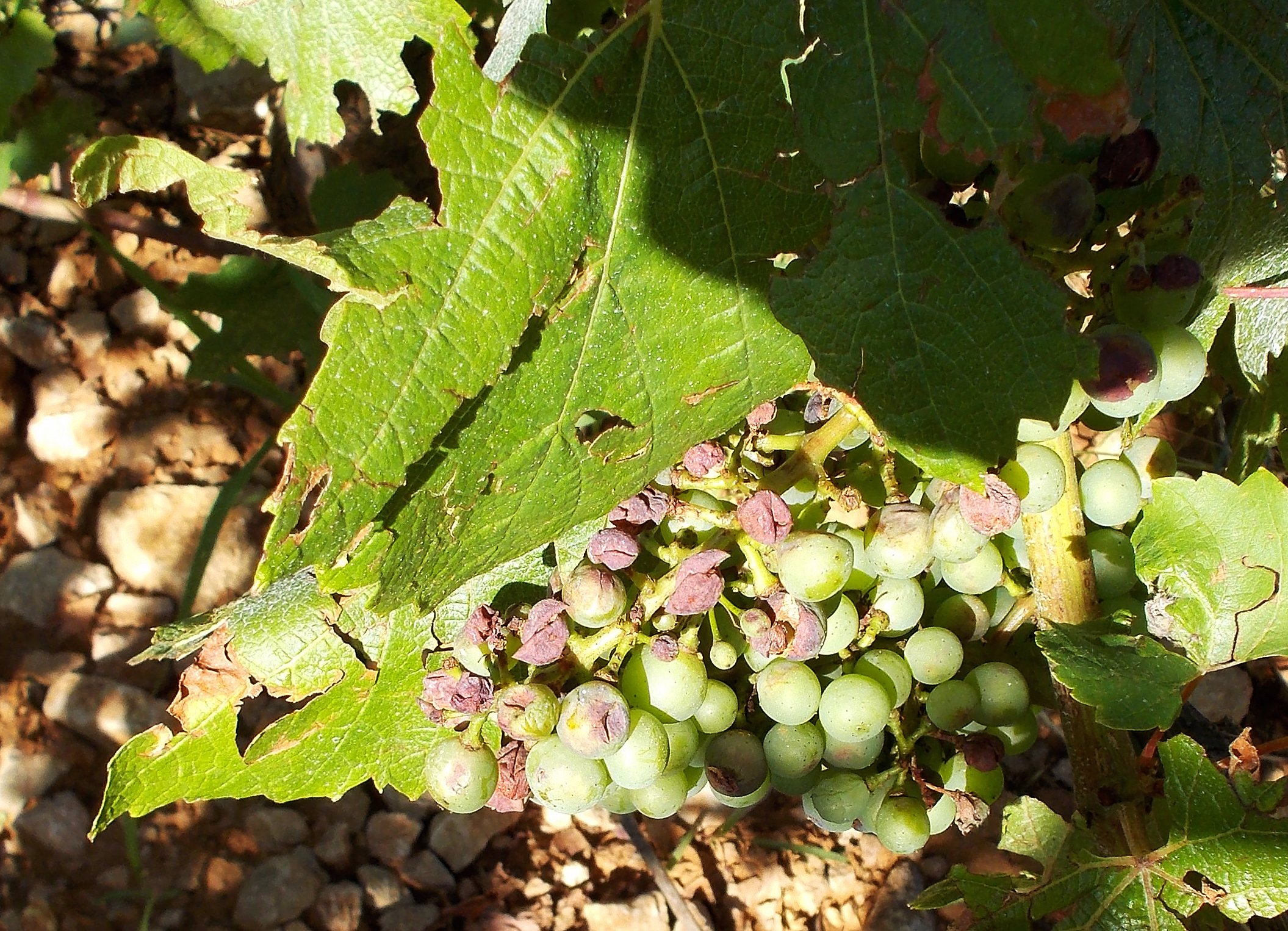
"When you have smoke taint, the fruit very likely still looks good," Merrill said. "It's an invisible damage."
If the grapes can't be sold for wine anywhere, a full claim is likely paid, he said; however, if they're sold for wine but at a much lower price than expected, quality loss adjustment comes into play.
An unharvested-acreage deduction could also be applied.
If the crop looks fine but testing shows smoke exposure and the winery rejects it, a per-ton deduction will apply to a claim payment if the crop isn't harvested for wine—even though the unsold fruit still needs to be removed from the vine anyway to make way for next year's crop.
"Here's where it's getting to be a hot topic and a bone of contention based on last year, especially in Lake and Mendocino counties," Merrill said. "Technically, did the grower remove the fruit from the vine? Yes. Doesn't that seem like that's technically a harvest of sorts? I would say yes. But the USDA says no, that ultimately the fruit needed to be removed and used for its intended purpose. All the insurance carriers must play by the same set of rules as guided by the USDA, so agents, carriers and growers are all at the mercy of these guidelines."
A disaster-aid bill before Congress would provide emergency funding to Lake and Mendocino county grape growers affected by smoke damage, under an amendment from Rep. Mike Thompson, D-St. Helena.
Aguirre said assistance would be greater for growers who carried crop insurance.
"Assuming Congress passes this disaster-assistance bill and the president signs the bill, that assistance would be available to growers affected by wildfire this past year in California, as well as potentially other states," Aguirre said.
The deadline to apply for crop insurance for the 2019 growing season comes this week, Jan. 31. Merrill said a signed application needs to be submitted to an insurance agent by that date.
Given the risks to winegrapes not just from wildfires, but from flood, frost, invasive pests and diseases, Aguirre said he considers crop insurance an important investment.
"I just think it's really critical for people to utilize crop insurance as a risk-management tool, but at a minimum, get the catastrophic, or cat, coverage," he said.
Source - http://agalert.com
EVENTS

ScaleAgData Stakeholder Engagement Event
22.10.2024The ScaleAgData project is pleased to invite you to our second stakeholder event. Building on the discussions and connections formed during our first webinar, this event will focus on fostering collaboration among stakeholders, providing updates on our project’s progress, and outlining future opportunities for engagement.

02.04.2026

USA - Court rejects crop insurance tech vendor's emergency bid to block USDA rule
The federal agency had greenlit the business model three times before reversing course.
02.04.2026

Ukraine plans to expand crop insurance program
The state crop insurance program in Ukraine is planned to be gradually scaled up and expanded to cover a wider range of crops. This was announced by the Minister of Economy, Environment and Agriculture Taras Vysotskyi, as reported by Latifundist.
02.04.2026
Indian hailstorms damage 14,809 hectares of grapes, pomegranates, and onions
Unseasonal rain and hailstorms have affected agricultural production in Baglan taluka, India, impacting multiple crops and farm operations. The event has affected 14,809 hectares (36,586 acres) of farmland and approximately 19,550 farmers.
02.04.2026
UNDP Partners with ATI to Build Sustainable Agricultural Insurance Systems in Tanzania
The United Nations Development Programme (UNDP), in partnership with the Association of Tanzania Insurers, has launched a new Technical Assistance initiative to strengthen agricultural insurance in Tanzania.
02.04.2026
Kenya introduces invoice financing for fresh produce sector
Avenews, an agri-fintech company, and the Fresh Produce Consortium of Kenya have announced a partnership aimed at addressing cash flow constraints in Kenya's fresh produce sector.
02.04.2026

Romania ranks 1st in EU for sunflower; Agricultural crop production rises across all crops in 2025
Plant-based agricultural production increased in 2025 across all major crops, particularly due to higher yields per hectare, while the cultivated area expanded for most crops, according to provisional data published by the National Institute of Statistics (INS).
01.04.2026
India - Hailstorm damage: Lad orders crop survey, relief for farmers
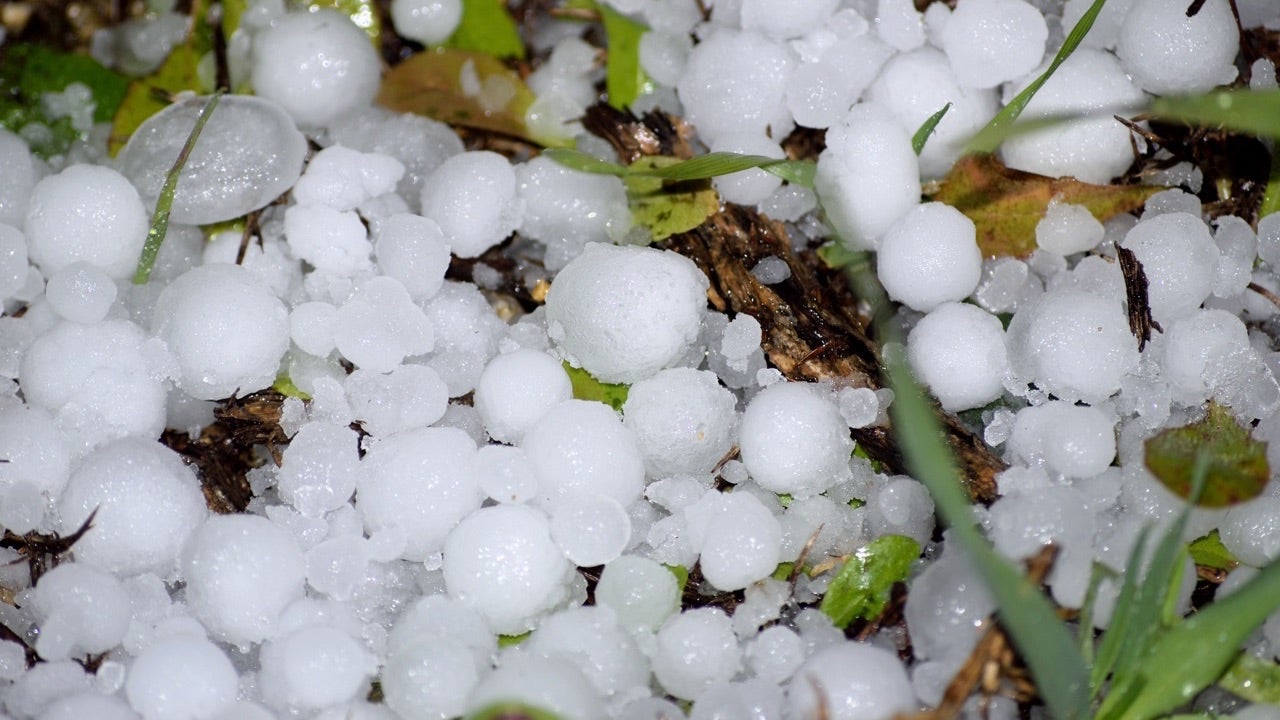
Labour minister Santosh S Lad on Wednesday directed officials to complete the survey of agricultural and horticultural crops damaged by an unexpected hailstorm in villages across Kalghatagi taluk and other parts of the district and submit the report at the earliest to facilitate relief to farmers as per norms.
01.04.2026

USA - Stray Voltage Case Raises Legal and Insurance Questions for Dairy Producers
Farm legal expert Roger McEowen highlights the legal challenges surrounding stray voltage, a recent court decision, and what it means for agricultural producers.
