USA - Kansas farmer admits defrauding USDA crop insurance

22.10.2019 533 views
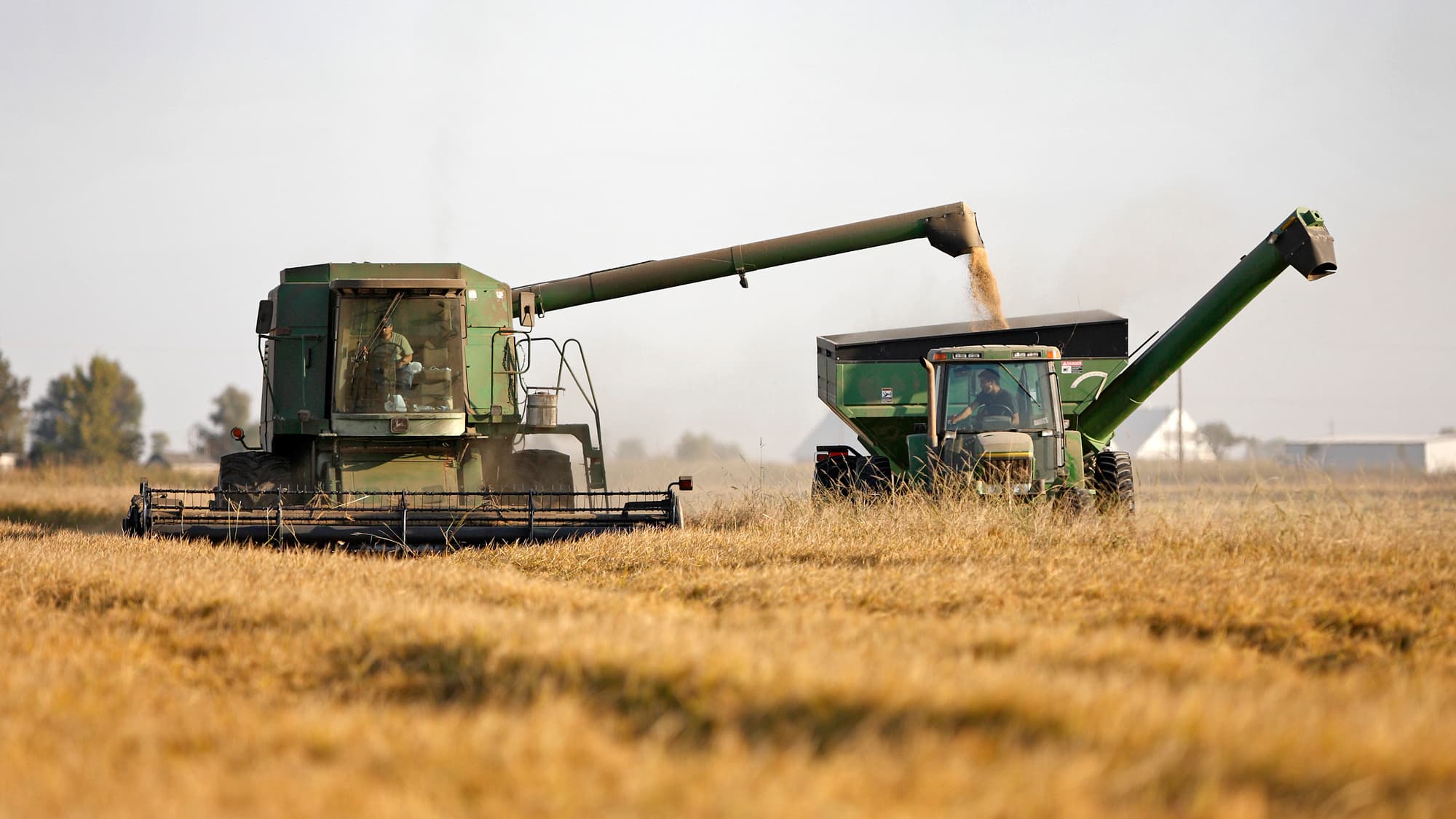
A Kansas farmer has admitted to defrauding federal government crop insurance programs before lying in court documents when filing for bankruptcy. Trego County farmer Kevin W. Struss pleaded guilty Monday at a federal courthouse in Wichita to one count of federal crop insurance fraud and one count of bankruptcy fraud, court documents show. In the plea deal, prosecutors said they plan to ask the court for more than $2.1 million in restitution. That total includes more than $600,000 in insurance premium benefits, more than $1.2 million in federal crop insurance premium subsidies and more than $270,000 in administrative costs. Struss admitted in the plea agreement that in the spring of 2015 he devised a scheme to defraud the Federal Crop Insurance Corporation. The plan involved making false proof of loss statements that under-reported his total harvested bushels of corn and grain sorghum, which is also known as milo. Those crops had been insured with an FCIC subsidy. As a result of the scheme, he was paid crop insurance benefits to which he was not entitled.
Then in April 2018, Struss filed for bankruptcy. He marked that he had not transferred property to anyone in the previous two years. In fact, Struss admitted in his guilty plea, he had transferred $470,000 to someone else within the three months before he filed for bankruptcy. Though Struss is only charged with crop insurance fraud from the 2015 reports, prosecutors alleged that his scheme to defraud the U.S. Department of Agriculture continued with false reports in 2016 and 2017. The criminal case was filed against the rural WaKeeney farmer earlier this month. That first year, in 2015, Struss allegedly under-reporting the yields of his corn crop by about 23,524 bushels and his grain sorghum crop by about 31,208 bushels. The alleged false reports resulted in Struss receiving about $201,000 in federal crop insurance benefits and about $511,000 in federal crop insurance premium subsidies that he was not entitled to. Prosecutors also say the scheme led the Federal Crop Insurance Corporation to pay additional administrative costs to ARMtech Insurance Services that would not have been paid if the reports were accurate. In 2016, prosecutors alleged, Struss under-reported his corn crop by about 116,194 bushels and sought more than $1.5 million in federal crop insurance indemnification payments to which he was not entitled. The claim was denied by Rural Community Insurance Services. Federal court records show that Struss sued Rural Community Insurance Services in April 2018 in relation to his 2016 corn crop. That case is in arbitration. In a separate case filed that same month, Struss sued the USDA, Risk Management Agency and Federal Crop Insurance Corporation, also in relation to his 2016 corn crop. A federal judge in Kansas City ruled in favor of the government agencies this summer. In 2017, prosecutors alleged, Struss under-reported his sorghum crop by about 35,530 bushels, causing Farmers Mutual Hail Insurance Company to pay him more than $108,000 in benefits to which he was not entitled. Prosecutors alleged in the bankruptcy fraud charge that Struss lied in his petition for Chapter 11 bankruptcy in April 2018 because he had wired $470,000 to Kellie Acker in the previous months. A pair of online obituaries show Acker was Struss’s sister-in-law in 2015 and was his fiance in 2018.
Source - https://www.kansas.com

28.04.2026

Philippines seeks 500 million USD for engineered bamboo development

The project is currently at the concept stage, with feasibility studies expected to take five to six months and overall preparation about a year. Implementation could begin in 2027, pending loan approval.

28.04.2026

Insurance compensation of 186,000 manats paid to tobacco farmers in Azerbaijan

To date, 186,000 manats of insurance compensation have been paid to farmers and farms in the tobacco industry in Azerbaijan.

28.04.2026

USA - Climate Disasters Are Straining Hawaii’s Insurance System

Frequent and costly disasters are driving up premiums and leaving many properties uninsured or underinsured. 

28.04.2026

Brazil - São Paulo releases R$400 million in rural credit in a record package for farmers, agricultural insurance, machinery, and land regularization

The package announced at Agrishow in Ribeirão Preto combines rural credit, agricultural insurance, land tenure regularization, mechanization, inclusion of women, innovation, and environmental actions, with R$ 455 million in investments aimed at strengthening São Paulo’s agribusiness.

28.04.2026

When will Moldovan authorities announce a call for applications for subsidizing agrarian insurance?

To date, the MAIA Ministry of Agriculture and Food Industry has not yet announced the start of the next stage of accepting applications for subsidies under agricultural risk insurance contracts concluded in the fall and winter period. While waiting for this announcement, some insurance companies are being "restrained" in the agricultural segment - they insure only livestock farms and perennial crop plantations of their regular customers.

28.04.2026

USA - USDA just doubled disaster payments, and gave farmers until August 12

SDRP disaster payment farmers 2026 just got a major upgrade. Agriculture Secretary Brooke Rollins announced on April 24 in Higginsville, Missouri that USDA is raising the Supplemental Disaster Relief Program payment factor from 35 percent to 70 percent. 

27.04.2026

India - Crop Ruined by Parrots is 'Damage by Wild Animals', says HC; Gives Relief

Holding that citizens cannot be forced to bear losses caused by protected wild animals, the Nagpur Bench of the Bombay High Court has ruled that denying compensation to a farmer merely because parrots were omitted from a government list would breach principles of equality. 

27.04.2026

The World Bank: Agri-risk management in Bulgaria

CAP has steered Bulgarian agriculture toward greater resilience, but the sector continues to suffer from an absence of a comprehensive risk management strategy and limited research on internal and external risks, the report concludes.