The harvest of soybeans was better than average this fall for some farmers, but others suffered yield losses because of the rare presence of white mold.
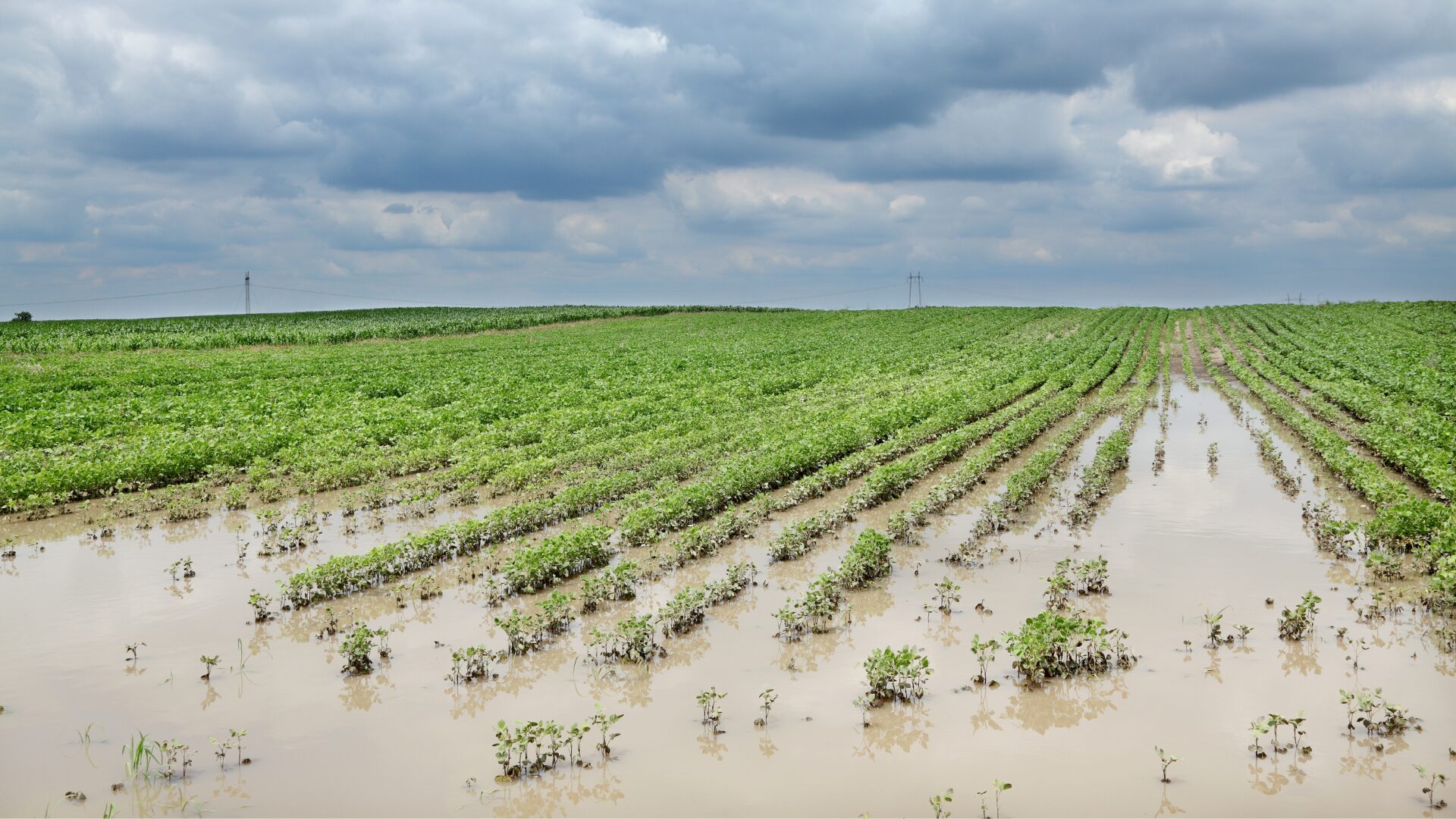
Belonging to the latter group was Ellisburg cash-crop farmer Douglas D. Dodge, who said the deadly fungus caught him off guard because it had not affected his fields before. About half of the 350 acres of soybeans harvested in October by the farm — in northwest Oswego County — weren’t affected by white mold. But the other half, planted in the towns of Ellisburg and Watertown, suffered a loss of about one-third because of white mold, which grew in this summer’s warm and moist conditions.
“It was in roughly half my beans in Jefferson County,” said Mr. Dodge, who has planted soybeans for 15 years. Those fields drew about 35 bushels per acre, he said, while they ordinarily get 45 to 55 bushels.
FIGHTING THE FUNGUS
Mr. Dodge said he first saw evidence of white mold on his fields in 2008, but it wasn’t enough to affect the harvest. He said farmers plan ahead for the fungus by planting mold-resistant varieties and spraying crops with fungicide, but not many in the north country have done so because it seldom has been a problem.
Next season, however, Mr. Dodge said he’ll plant mold-resistant soybeans in rows with wider spaces between them; doing so prevents the spread of the fungus by allowing more air to flow beneath the canopy of plants. The spacing of 7.5 inches used this year between rows probably will be extended to 15 or 30 inches, he said.
Initially, the bountiful growth of soybeans in early August made Mr. Dodge think he’d harvest a bumper crop. But the arrival of fungus killed that hope.
“When we had all that moisture in August, I thought that was a blessing because it helps the plant grow pods in that reproductive stage,” he said. “It went well for the first couple of weeks in August, but then these browns spots started showing up. If it weren’t for the mold, 50 to 60 bushels per acre could have been attainable.”
‘ALL OVER THE BOARD’
Mr. Dodge was among farmers across Jefferson County whose soybeans were affected to varying degrees by white mold, according to Michael E. Hunter, crop educator for Cornell Cooperative Extension of Jefferson County, who took samples of soybeans at fields. In some fields, he said, yield losses ranged from marginal to as high as 50 percent.
“The soybean crop has been all over the board this year. We’ve had some excellent yields and poor ones,” said Mr. Hunter, who estimated about 10,000 acres of soybeans were planted in the county this season. “At the end of the season, it was more widespread than farmers realized.”
Farmers have a challenge combating mold because it’s hard to tell whether it will arrive, Mr. Hunter said. In recent years, white mold had a noticeable impact on fields only in 2008 and 2011.
Soybean plants need to be treated with fungicide when they flower in July to prevent the fungus, he said, but there aren’t any detectable signs of its presence until August. And treating fields with fungicide can be expensive — about $30 per acre.
“If you’re a grower, you have to decide whether to treat your fields in that time frame” based on the cost and weather conditions, Mr. Hunter said. “It likes to grow in humid, warm and wet conditions.”
SOME FARE WELL
White mold had only a nominal impact on one 50-acre soybean field off County Route 20 in the town of Philadelphia owned by Murrock Farms, owner Darryl T. Murrock said. The fungus didn’t affect the other 800 acres harvested at the farm, on Route 283 in the town of Pamelia.
“This was the first year I’ve ever seen it,” Mr. Murrock said, adding that the farm harvested an average of about 48 bushels per acre. “We harvested up to 60 bushels on some fields, and others were only about 40.”
The 250-cow farm, which finished harvesting soybeans Thursday, has about 600 of its 1,800 acres of corn to harvest this month. Mr. Murrock said the corn crop, which is almost all harvested for grain, has fared much better than soybeans. An average of about 140 grain bushels per acre has been harvested.
Cape Vincent dairy farmer Lyle J. Wood, who co-owns Woods Farm with Scott F. Bourcy, said the soybean harvest was better than average for the 700 acres planted this season. Though traces of white mold were found, he said, the harvest wasn’t affected at all at the 1,150-cow farm.
Because of the heavier clay soil, soybean yields are typically lower on farms in northern Jefferson County than in the southern region. Mr. Wood said the farm yielded about 40 bushels per acre this season, up from the 30 to 35 it normally draws.
The farm sold soybeans for about $11 per bushel this season, down from $13.75 last year. Mr. Wood attributed the decrease to the record soybean crop harvested across the country.
“We made about $100,000 to $125,000 less than last year, and it’s because the market is saturated with soybeans,” he said. “It’s been a record U.S. crop for soybeans and corn.”
Source - http://www.watertowndailytimes.com/