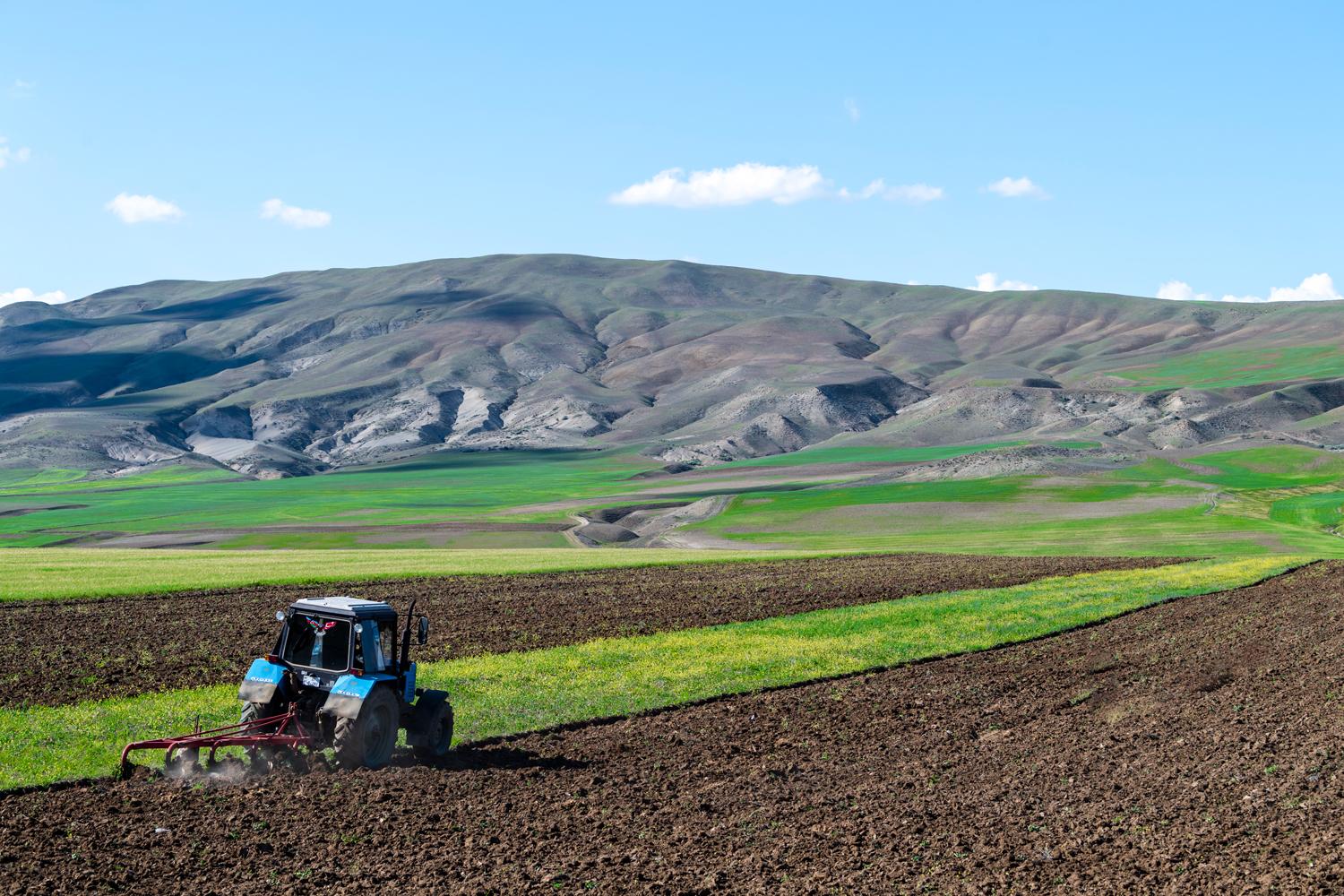
Improved farming practices have been given credit for farmers across Australia salvaging near average yields in spite of a tough spring in many areas.
“Everyone is a bit surprised about production, it has been that little bit better than expected in our area,” said Garry Hansen, farmer in South Australia’s upper south-east at Coomandook and president of Grain Producers South Australia (GPSA).
“Following the poor spring we were bracing ourselves for a disaster, but yields have been just below average.
“I’ve been chatting to a few fellows about it and we are just attributing it to modern farming practices and moisture retention.”
It is a scenario being repeated on a macro scale, with analysts generally predicting a solid, slightly below average national wheat crop of between 22 and 24 million tonnes.
While down on early season forecasts of 25 million tonnes plus, it is far from a genuine drought production figure.
Farmers are also buoyed by prices for Australian Premium White (APW) wheat of between $328 per tonne in the Brisbane port zone and $277/t in the Port Lincoln zone.South AustraliaThroughout the rest of South Australia, Mr Hansen said anywhere not hit by frost damage had some grain to harvest.
“I haven’t heard of too many thumping crops in the east of the State but there are no real disaster areas either, especially with prices holding relatively firm.”
In his local area, Mr Hansen said cereal yields were between 2-2.5 tonnes a hectare with generally reasonable quality.
Yorke Peninsula grower Jamie Smith said yields on the two peninsulas in SA had been very good.
“The Yorke Peninsula is very good, with cereal yields between 3.5 and 6 tonned per hectare, while another exceptional area has been the far western Eyre Peninsula, where growers have harvested up to 2.5 tonnes per hectare, which is double their average.”
He said lentils had been a standout crop in terms of gross margins.
“There are lentils crops going 3 tonnes a hectare, and with prices in excess of $900 a tonne, you are looking at gross margins of nearly $2500 a hectare.”
Durum wheat, with prices of up to $600/t, is another crop well and truly paying the bills, he said.
However, canola has proved an expensive rotational choice for many.
“Growers have been hit with beet western yellow virus, then the poor spring.
“With the high cost of hybrid canola seed, we’re talking about losses of $500 a hectare.”
Mr Smith agreed no-till, controlled traffic and stubble retention systems had allowed crop roots to push down to access moisture.
“I wouldn’t be surprised if there are wheat roots down 1.5 metres this year.”
He also said in spite of the low rainfall tallies in spring, the temperature never soared consistently.
“That allowed crops to finish better.”Western AustraliaWestern Australia has generally seen the most favourable season this year.
Calingiri farmer Leon Bradley said yields were generally good in his area north-east of Perth.
“Yields are above average and we’re happy to see the strong basis in WA.”
However, he said yields were slightly below visual assessments pre-harvest and added that areas to the north had suffered from a lack of spring rain.
“The dry spring has had an impact in the northern wheatbelt from what we’re seeing.
“A few kilometres makes all the difference in yield, just according to where rain fell.”
Wheat in his area is around 3t/ha while canola is coming in at generally 1.5t/ha.
In the south of WA, Kojonup South farmer Rob Warburton is enduring a frustrating harvest period.
“We’re yet to really get going due to ongoing wet conditions.”
His farm bore the brunt of a heavy hail storm in late October.
“We’ve had 700 hectares of canola that has been damaged by the hail, we won’t really know how bad it is until we get into it, there may be some pods intact or they may not have filled after the plant was smashed over.”
He said the canola would be direct-headed as it was too matted after the hail to swathe.
Cereals will fare better, but Mr Warburton said all crops suffered from the wet winter somewhat.
“We had 250 millimetres over 10 weeks in winter here.
“Canola has been the worst hit, the cereals should be OK.”New South WalesIn NSW, Dan Cooper, chairman of the NSW Farmers grains committee, said the State as a whole was likely to be below average.
“The south looked the best, but where I am (between Grenfell and West Wyalong), we only had 18 millimetres for spring, so that really hit hard.”
He said there were strong variations over just a couple of kilometres, based on thunderstorm activity and soil type.
“At home, the red ground has yielded reasonably well, around 3 tonnes a hectare, but that drops by more than half on the black soil where crops just didn’t have the moisture to finish.”
He said there were some pockets of good yields in the central west around Forbes and into the south-eastern Riverina, however, overall the State was below average.
“It hasn’t been a great year, but I think our water use efficiencies have been very good, so most people have got something.
“Summing it up, I would say in general the crop will pay the bills and allow people to go around again, but when you talk in terms of the potential we had in the south in July it is a bit disappointing.”
According to Mr Cooper, quality has generally been “okay”, although there were localised issues, which he attributed to both variety and soil type.
VictoriaVictorian Farmers Federation (VFF) grains group president Brett Hosking said farmers worst impacted by the dry spring had largely finished harvest.
“Yields were poor, as expected, but in general quality has been sound, so that is something.”
He said while the focus of Victoria’s production worries had been the southern Mallee, Wimmera growers may end up having the toughest time.
“While the Wimmera guys are getting something, it is probably lower in terms of a percentage of average than those in the Mallee.
“With production costs that much higher in the Wimmera, growers there will do it tough.”
Mr Hosking said there were issues with quality in the Wimmera, with reports of low quality feed barley coming in.
Further east, yields improve, although thunderstorms earlier in the week to the east of Bendigo caused sporadic damage.QueenslandAgForce grains section president Wayne Newton said although the season had been disappointing there were some mildly positive results.
“We’ve seen some wheat go between 2 and 3 tonnes to the hectare on the Darling Downs which, given the season, is a good result.
“There have also been chickpeas going up to 2.5 tonnes a hectare, there was just a little rain at the end of August and that all went to yield.”
Source - http://www.farmweekly.com.au/