Crop damage from May’s deluge in southwest and central Oklahoma should be balanced by gains elsewhere, Oklahoma Wheat Commission official says.
This year, Oklahoma wheat farmers were expecting a record crop, not a record rain.
Caleb Fourkiller, grain elevator manager in Granfield, said heavy rain “has cut the harvest in half.” Granfield received 18 inches of rain during the growing season, leaving muddy fields and limp wheat stalks, said Fourkiller.
But Mike Schulte, executive director of the Oklahoma Wheat Commission, is confident that the damage caused to crops by rains in southwest and central Oklahoma will be balanced by gains elsewhere.
“The late freeze on Good Friday made us write off the crop in northwest Oklahoma,” Schulte said. “But the rain we got soon after that revived that crop. Now, the gains in northwest Oklahoma can offset the losses from excess rain in southwest and central Oklahoma.”
The U.S. Department of Agriculture last month estimated 118.9 million bushels would be harvested this year in Oklahoma, and Schulte doesn’t see any reason why that wouldn’t happen.
“We have not seen any sprouted wheat taken into elevators at this point in time,” Schulte said. “This is much welcomed, considering we have had the wettest May on record in regions of southwest Oklahoma. We have also had concerns of the heavy rains impacting test weights. However, the test weights being reported so far are favorable.”
Test weight is a good indicator of milling yield for the crop and for flour extraction purposes, Schulte said.
Rain wilts crop
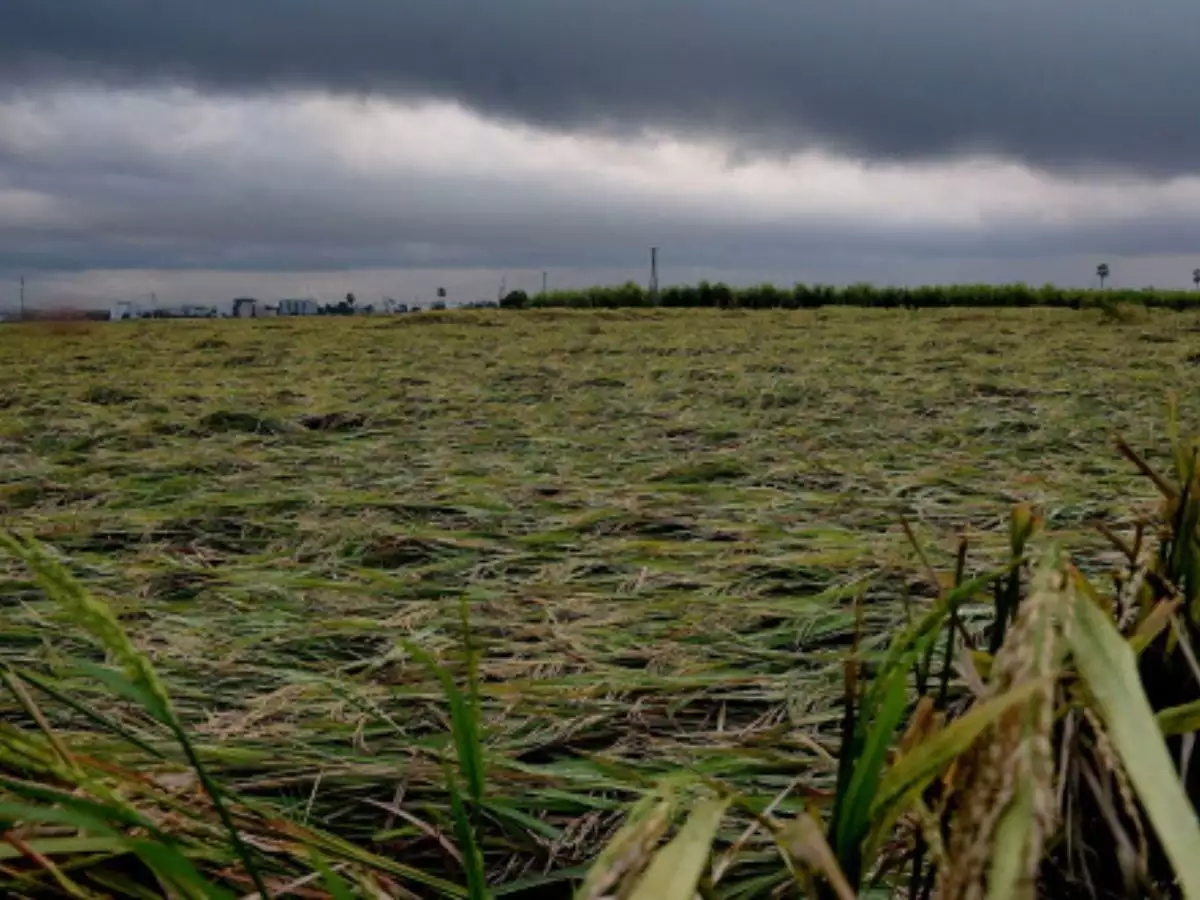
May was the wettest month in recorded state history, and the deluge was too much for some plants, Fourkiller said.
“Once the wheat is mature, all of the weight is in the head of the stalk,” Fourkiller said. “When it rains, the wheat lies down, and then comes back up with the sun. But when we have constant amounts of heavy rain, it’s hard for that wheat to stand back up.”
Fourkiller said Granfield can expect about 600,000 bushels. Their process got off to a slow start Monday, harvesting 10,000 bushels of wheat.
“Good days will see anywhere from 70,000 to 80,000 bushels,” Fourkiller said.
Fourkiller estimates harvesting could be finished in 10 to 12 days — if heavy rains stay away.
Tillman Production Coop CEO Jimmie Franklin is just happy the harvest is not a repeat of last year’s.
“(There’s a) good side and a bad side with the rain we’ve seen this year,” Franklin said. “The good is we have a better crop than we did last year when we had a drought. But the amount of rain has affected the quality of our crop.”
The 2014 harvest was the lowest it’s been since 1957, yielding just 47.6 million bushels with drought paralyzing production across Oklahoma. This year, Tillman County saw about 17 inches of rain in a six-week period. Now, the excess moisture affects the stalks’ ability to stand, which in turn affects the farmers’ ability to harvest the crop.
“We’re expecting about 1.25 million bushels, which will take about 14 days to harvest,” Franklin said. “Good days, we see 90,000 bushels harvested.”
In 2014, Oklahoma made nearly $300 million in wheat production. That is about half what it usually averaged in previous years. From 2009 to 2011, Oklahoma wheat generally contributed $673 million, on average, to the state’s economy. As harvesting begins for this year, Schulte is hopeful the economic impact of the wheat industry this year will be more than $600 million.
Source - http://newsok.com/