Weather and rainfall
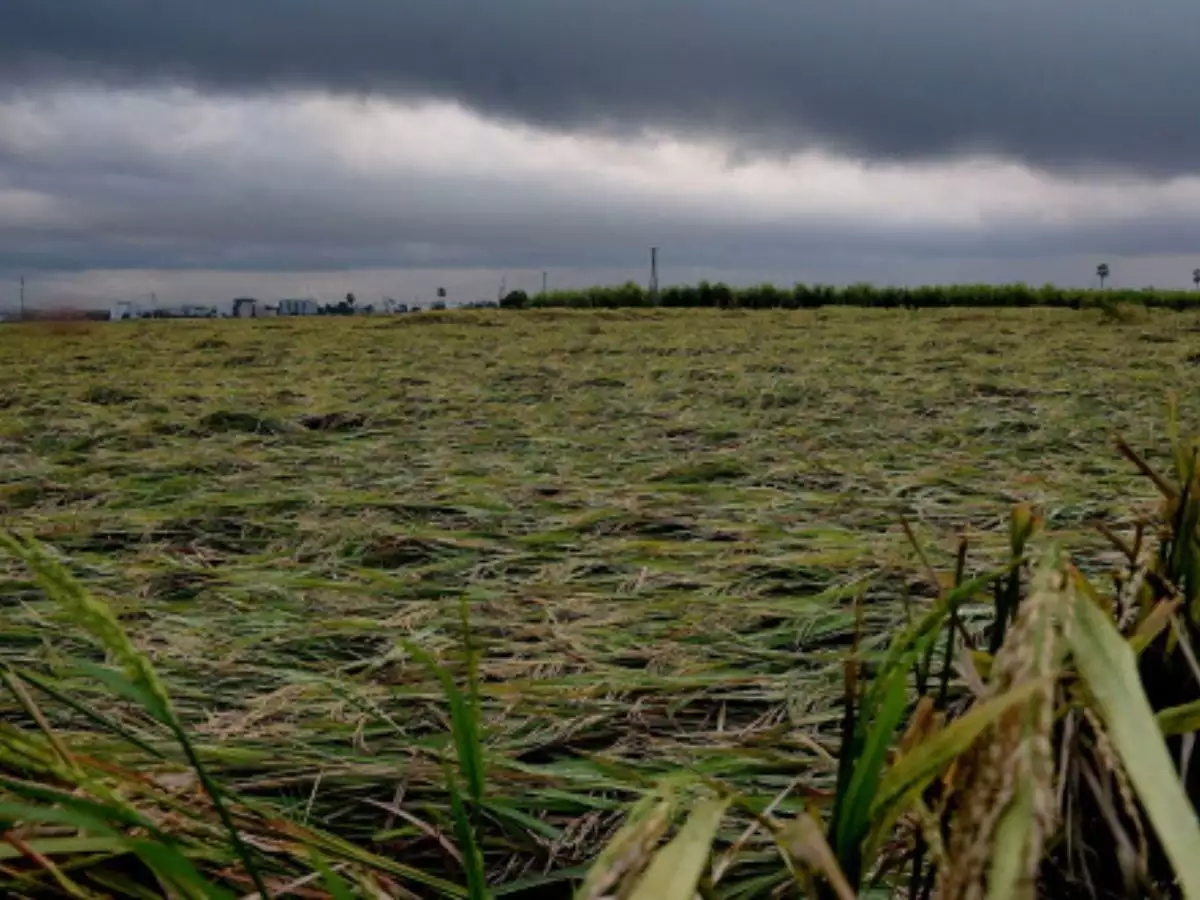
A day of rain, followed by a day of sun, followed by another day of rain – this pattern has continued in northern Michigan as we move into summer. Fortunately though, most of us missed the severe storms and heavy rains that passed through other parts of the state Monday, June 22. Our total rainfall recorded this week was 0.11 inches from Thursday, June 18, through Wednesday, June 24, at the Michigan State University Hawks Enviro-weather station.
Looking ahead to the weekend, high pressure will build into the region keeping us dry with clear skies. The next significant chance for rainfall will come Monday, June 29, and linger into Tuesday with a Canadian air mass expected to drop 0.25 inches of rainfall. The six- to 10- and eight- to 14-day outlooks from NOAA suggest precipitation levels will continue to be slightly above normal in coming weeks.
Growing degree days (GDD)
Temperatures are still struggling to approach normal in our region. Daytime high temperatures ranged from the upper 60s to upper 70s the past seven days, averaging 4 degrees Fahrenheit below normal for this time of year according to the 30-year average. Nighttime lows have also been unseasonably cold this past week, with temperatures ranging from the low 40s to low 50s, 6 degrees below normal for this time of year. GDD accumulations since March 1 total 1,795 base 32, 1,098 base 41 and 588 base 50. High temperatures are expected to be in the low to upper 70s next week, with lows in the 50s. The NOAA six- to 10- and eight- to 14-day outlooks predict below average temperatures for our region going into July.
Commodity reports
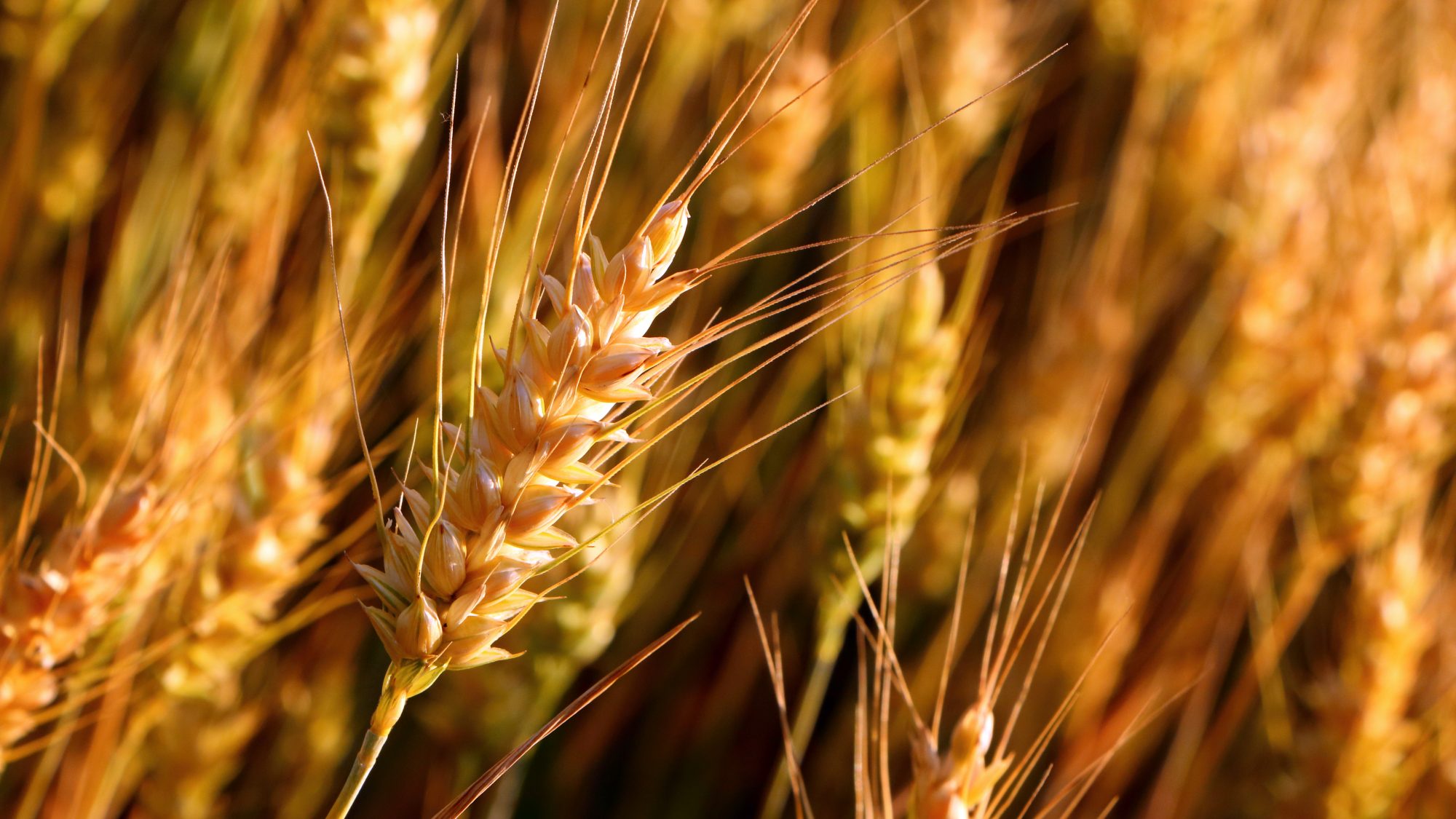
Winter wheat in northern Michigan has flowered (Feekes 10.5). Fusarium head blight risk in our area remains in the medium to high range according to Pennsylvania State University’s Fusarium Head Blight Prediction Center. Now would be a good time for growers to scout for Fusarium head blight symptoms. The first noticeable symptom is bleaching of some or all of the spikelets while healthy heads are still green. Over time, the entire wheat head can be bleached while the stem remains green. Infected kernels are shriveled and lightweight, and when looking closely, pink or orange spores will be visible. Infection can spread across the field for as long as conditions are favorable.
In addition to yield loss, high amounts of Fusarium head blight will result in the presence of the mycotoxin deoxynivalenol (DON), also known as vomitoxin. DON is toxic to humans and livestock, so elevators will dock and sometimes reject loads of grain if DON levels are too high.
Alfalfa harvest is underway in the area. Dairy farmers seem to be making the most progress as many are chopping their first cutting. On and off rain has slowed down or completely restricted producers trying to make dry hay. Three days of dry weather forecasted for this weekend should help growers catch up. Some are experiencing low first cutting yields this year. There are a number of stresses we have experienced that may have contributed to yield loss, including a dry spring, cool temperatures this past month and repeated frosts throughout May and the first week of June. Pasture shortages may be another repercussion of these events for livestock producers.
It is a good time to be scouting for potato leafhoppers as they can cause yield loss, lower protein content, stand longevity and open up pathways for plant diseases such as root rot. Potato leafhoppers will feed on alfalfa by piercing plant tissue and sucking up plant sugars, leaving yellow, burnt-looking leaf tips. When scouting, Michigan State University Extension recommends making 10 sweeps with a sweep net in five to 10 points across the field. The average economic threshold on second cutting regrowth (2-6 inches tall) is four to six adults per 10 sweeps, depending on value of forage, growth stage and insecticide costs. When numbers are beyond this threshold, insecticide treatment may be necessary. For more information on potato leafhopper scouting and thresholds, visit “Potato Leafhopper on Alfalfa” from Pennsylvania State University.
Corn in our area continues to range widely in development, with most fields in the three-to seven-leaf range (V3 to V7). There is growing concern for slow growth in our region; overnight temperatures in the 40s are limiting GDD accumulation, which is in turn slowing vegetative growth. Some fields are continuing to show signs of stress with yellow and striped leaves. Fields that had early weed pressure have suffered the most. Growers concerned about yellowing and striping can submit a tissue sample to the MSU Soil and Plant Nutrient Laboratory to confirm and address any nutrient deficiencies.
Soybean growth is variable across the region as well. Growth ranges from emergence (VE) in late planted fields to the second trifoliate stage (V2) in fields planted early. Soybean fields appear to be developing much quicker than corn in our area.
Dry bean planting is has wrapped up and development ranges from emergence (VE) to the first trifoliate stage (V1). The Presque Isle County Extension office will begin to put out pheromone traps to monitor western bean cutworm movement in fields in the upcoming week.
Source - http://msue.anr.msu.edu/