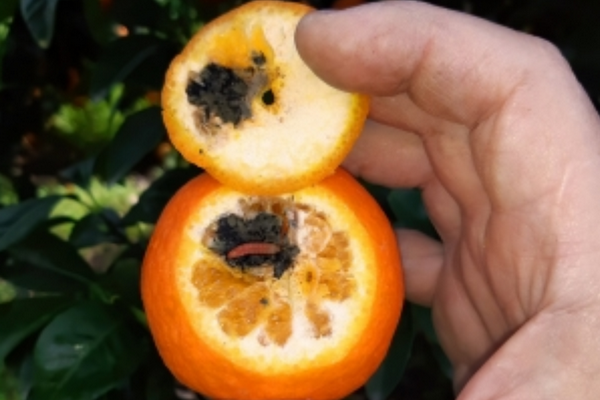
The EU's TRACES platform has reported another detection of the false moth (Thaumatotibia leucotreta) in oranges from South Africa. The Valencian Growers' Association (AVA-ASAJA) is calling on the EU to "enforce compliance with EU rules from this third country by requiring cold treatment of its orange shipments to prevent this pest from harming European citrus crops." They also recommend "extending this preventive measure to South African imports of other citrus species that are susceptible to carrying the false moth, such as mandarins and grapefruit."
The president of AVA-ASAJA, Cristóbal Aguado, points out that "something is not being done properly when the EU detects live false codling moths in one of the consignments of South African oranges that have been analyzed. A very high percentage of imports from South Africa are not inspected, and the pest could enter through them. The EU must take these issues seriously and enforce its own regulations, ensuring South Africa properly conducts the required cold treatment to prevent this unacceptable phytosanitary risk."
In August, the EU also intercepted a black spot (Phyllosticta citricarpa) case in oranges from South Africa, increasing the total detections of this quarantine disease in citrus fruits from that country to 16. AVA-ASAJA emphasizes the need for the EU to close its borders to South Africa and other third countries until they can ensure the phytosanitary safety of their shipments to Europe.
Mercosur
Among the 62 instances of pests and diseases intercepted in fruit and vegetables from third countries throughout August, AVA-ASAJA also highlights the detection of citrus bacterial canker (Xanthomonas citri) in lemons from Argentina, a Mercosur member with which the EU has signed a trade agreement, despite opposition from the agricultural sector.
Source - https://www.freshplaza.com