Researchers at the University of Hawaiʻi at Mānoa are developing an artificial intelligence tool to protect agricultural lands by predicting where the invasive coconut rhinoceros beetle is most likely to spread.
The $300,000 project will help field crews decide where to place pheromone-baited traps and look for new infestations on Hawaiʻi Island, Kauaʻi and Maui.
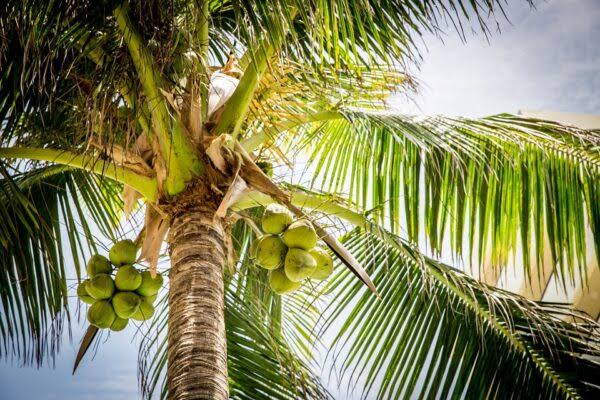
The invasive beetle can kill coconut palms and reduce yield by boring into the crown, feeding on sap and destroying growing tissues.
Recently, the Hawaiʻi Department of Agriculture and Biosecurity alerted the pubic about a live male coconut rhinoceros beetle that was discovered in a trap in the Kurtistown area of East Hawaiʻi.
“Knowing where the coconut rhinoceros beetle is likely to spread gives farmers and response teams a major advantage,” said Pascal Aigbedion-Atalor, project lead and assistant professor in the Department of Plant and Environmental Protection Sciences, in a news release. “Our technology aims to help farmers and agriculture officials act early, target high-risk areas and protect valuable crops and landscapes.”
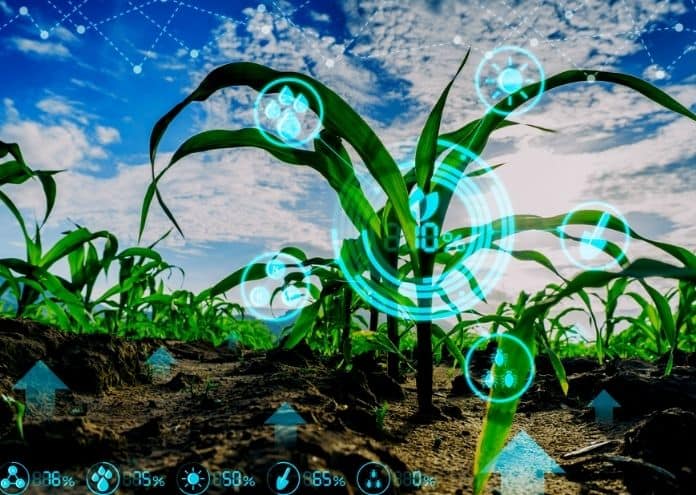
The research team will use machine learning to analyze local conditions that help the beetle survive and map areas where it is most likely to spread. Researchers plan to test the predictions against field observations.
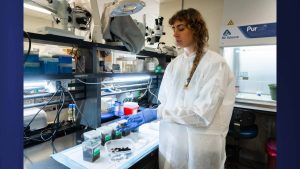
UH Mānoa researchers will use AI to help predict the spread of the invasive coconut rhinoceros beetle. (Photo courtesy: University of Hawaiʻi at Mānoa)
“Stopping invasive pests before they spread is one of the best ways to protect American agriculture,” said Kathy Munkvold, scientific program director at the Foundation for Food & Agriculture Research. “This research gives farmers a head start against a devastating introduced pest, helping to protect crops, livelihoods, and the future of Hawaiʻi’s agriculture.”
Researchers may be able to adapt the approach to help protect Hawaiʻi crops from other invasive pests.
The project is funded by the Rapid Outcomes from Agricultural Research program of the Foundation for Food & Agricultural Research and UH’s College of Tropical Agriculture and Human Resilience.
Source - https://bigislandnow.com