A growing number of South Korean farms are being forced to destroy entire tomato crops just before harvest. Less than a month after an untreatable virus was detected in the country for the first time, it has spread nationwide, and damage in some areas is projected to exceed 10 billion won.
Confirmed Farms Triple to 117 in Four Days, Half of Them in Jeonbuk
A total of 117 farms across six cities and provinces had confirmed infections of tomato brown rugose fruit virus (ToBRFV) as of the 13th, according to the Rural Development Administration on the 17th.
The affected area has expanded across the country in less than a month since the first domestic infection was confirmed in Gimje, Jeonbuk State, on Oct. 20.
The number of confirmed farms tripled from 39 on the 9th to 117 four days later. Still, the actual rate of transmission cannot be said to have tripled, as the expansion of government surveys may have uncovered farms that were already infected.
Jeonbuk State accounted for 63 farms, or 53.8% of the total, followed by South Gyeongsang Province with 26, South Chungcheong Province with 15, Busan with 10, South Jeolla Province (Jeonnam) with two and North Chungcheong Province with one.
In Iksan, Jeonbuk State, infections were confirmed at 35 of 191 tomato farms, or 18.3%. That means more than half of all infected farms in Jeonbuk State are concentrated in Iksan alone.
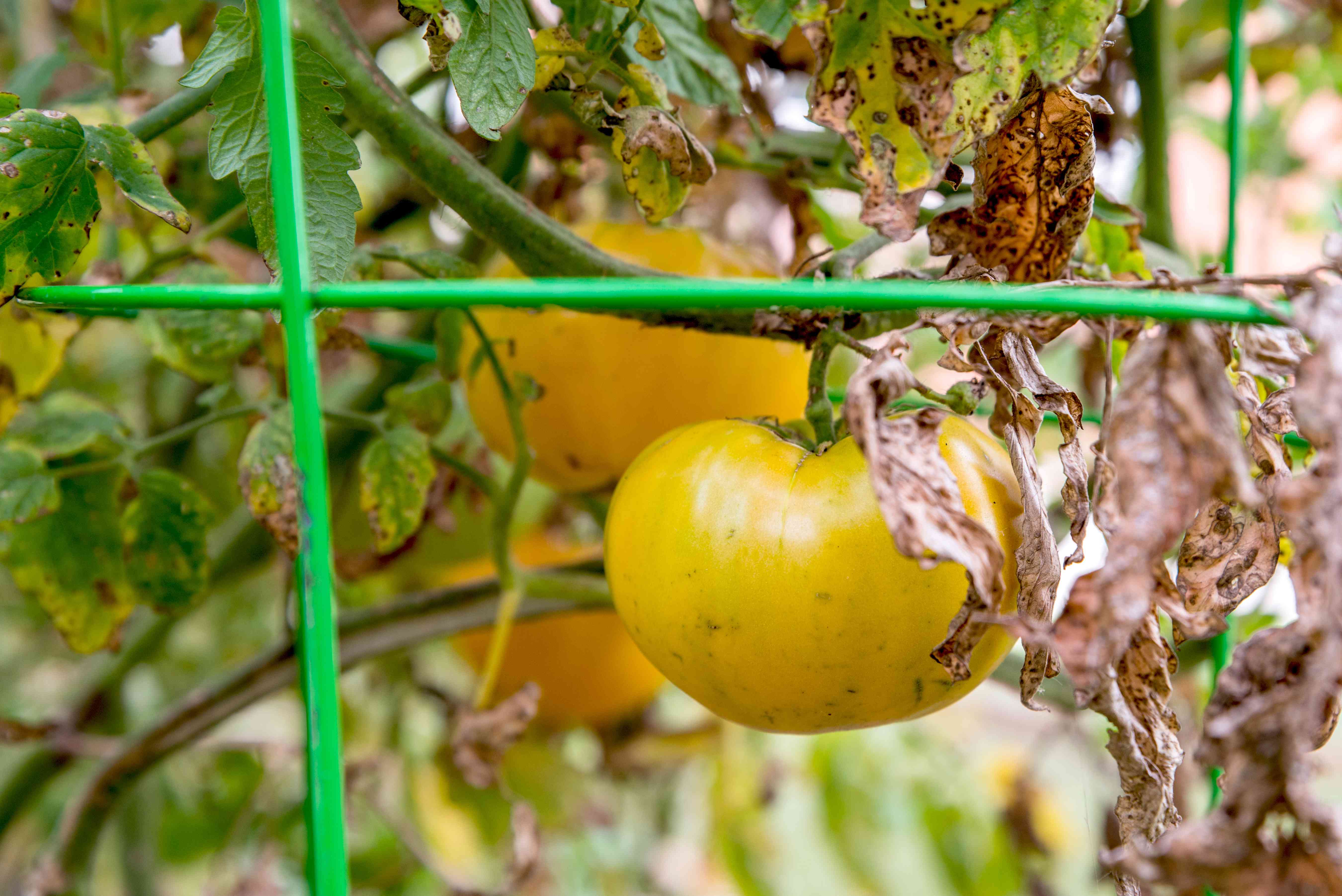
The virus can damage peppers and paprika as well as tomatoes. Infected plants develop yellowing leaves or leaves that narrow to a needle-like shape, while fruit shows brown blotches, wrinkling and cracking that sharply reduce its market value.
The virus does not infect humans, however, and eating infected tomatoes poses no harm to people.
The biggest problems are the virus's high transmissibility and the absence of any treatment. There is no chemical treatment available for infected plants, according to the European and Mediterranean Plant Protection Organization (EPPO).
The virus can be carried on workers' hands, clothing, gloves and farm tools, as well as through infected seedlings and contaminated nutrient solutions. That means the act of working inside a greenhouse can itself become a transmission route.
It also persists outside host plants. In an experiment cited by EPPO, the virus remained infectious in dried plant sap for at least four weeks.
Growers overseas have struggled to eradicate it. According to EPPO's report on control efforts in the Netherlands in 2021, eight growing facilities failed to eliminate the virus and infections were confirmed in the following crop.
Dutch growers reported production losses mostly in the range of 5% to 30% at the time. Official disposal costs alone reached about 5,000 to 10,000 euros per hectare, with facility disinfection costs separate.
The financial toll on Korean farms is mounting. Buyeo County in South Chungcheong Province estimated that the virus would cut tomato shipments by about 2,276 tons and cause roughly 11.7 billion won in damage.
Farms that must destroy crops just before harvest lose their sales revenue and also face a gap in income until they can grow another crop.
Infected Greenhouses Destroyed Entirely; Replanting Requires Clearance
The government held a review committee on crop pest surveillance and control on the 9th and decided to carry out public control measures.
Under the decision, facilities with confirmed infections must destroy all plants, produce and growing media on a greenhouse-by-greenhouse basis. Facilities and farm materials must be disinfected, and worker access and the removal of goods are controlled.
Replanting tomatoes is also tightly regulated. Soil-grown crops must undergo testing for residual virus four weeks after disinfection, and hydroponic operations two weeks after. Cultivation can resume only after a negative result, and affected farms will be subject to follow-up monitoring for the next three years.
The Rural Development Administration is conducting an emergency survey of tomato farms nationwide through the 19th, along with an epidemiological investigation to trace the infection route.
Support measures are also being prepared. The agency plans to cover control costs and replanting expenses, with detailed criteria to be set this month.
Lee Seung-don, administrator of the Rural Development Administration, visited affected farms in Iksan, Jeonbuk State, on the 14th and said the agency would "prepare support measures including compensation for destroyed produce and thoroughly block any further spread."
Authorities said consumers need not be overly concerned about the safety of tomatoes on sale, as infected produce is blocked from reaching the market.
Source - https://en.sedaily.com