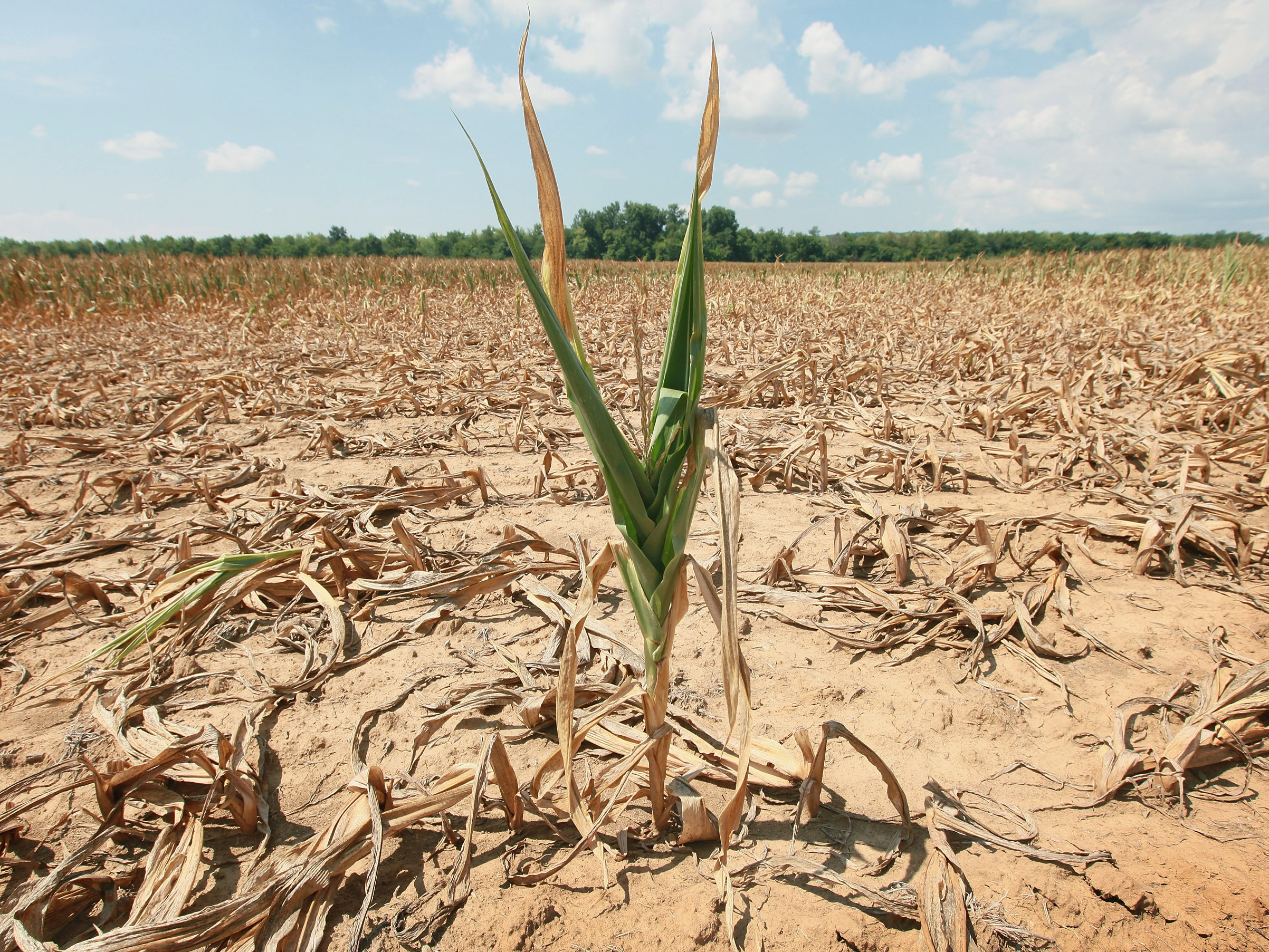
In the Argentine town of Ciguena, rancher Andrés Betiger is fighting to keep his farm from going under amid the South American country's worst drought in sixty years, which has pummeled soy, corn and wheat crops and dented cattle herds.
To get water, Betiger travels 52 kilometers (32 miles) with a tank and rickety tractor that often breaks down, a reflection of how the arid weather since last year has weighed on farmers, who have delay planting and even abandoned crops.
"Things are bad, we don't have much, we don't have margins to stop things for four or five days. We are practically hauling water every day for the animals to drink," said Betiger, 41, who is contemplating to declare bankruptcy.
"It hurts, it scares me," he added. "It's already becoming financially and physically unsustainable."
Argentina's drought has big repercussions for global food markets, forcing farmers to slash harvest outlooks and denting grains supply from the world's top exporter of soy oil and meal, the No. 3 for corn, and a major wheat and beef supplier.
This in turn hits Argentina's ability to build up much-needed reserves of dollars, threatening to derail a fragile economic revival and leave the government unable to meet debt repayments amid spiraling inflation and a deep fiscal deficit.
"In Argentina this drought situation has created a perfect storm," said Cristian Russo, head of agricultural estimates at the Rosario grains exchange, which cut its soybean harvest estimate this month to what would be the lowest in 14 years.
The impact of the drought, linked to a third straight La Nina weather pattern, could still get worse, he added, which could lead to further cuts to the soy and corn outlook. The wheat harvest was already slashed in half by drought.
"There are more reasons to be pessimistic and think that the numbers are going to continue to collapse," Russo said, adding that in terms of the harvest it was shaping up as the worst in 20 years.
"It's going to be a crisis like we haven't seen. That implies that many producers are going to go bankrupt."
BILLION DOLLAR LOSSES
In another dust-dry Sante Fe field, Gustavo Giailevra lifts the head of a pregnant cow lying still in the heat to coax it to drink. He doesn't think she will survive, but he wants her to have a "decent death."
Like many farmers, Giailevra - who has experienced bad droughts before - has seen his livelihood hammered over the last year. A third of his 900 head of cattle have died and he has lost most of his cotton and corn crops due to the acute lack of rain.
"You hear the calves bleat until they die. It's terrible," the 63-year-old told Reuters at his farm, where the water reservoirs he had dug are all dried up, forcing him to bring what little water he can in by truck.
Many farmers in the area say they have lost early-sown corn, wheat and soy, so to rake back income they have planted fields with more drought-resistant cotton. Many have lost cattle, which threatens to hit beef supply and push up prices.
The government has rolled out some tax relief measures for farmers, though with depleted state coffers has limited firepower. Farmers who Reuters spoke to said the measures were just "patches".
Around the region Reuters visited, the impact of the drought was stark.
The El Bonete lagoon in the nearby town of Vera has completely vanished, as have the species that lived in and around it. One town had faced over a month without mains water.
The economic hit of the drought to producers, meanwhile, could be around $10.5 billion, said Julio Calzada, head of economic research at the Rosario exchange, mainly due to a decline in exports.
"Argentina would lose about $8 billion worth of exports," he said, adding that this would represent a loss of some $3.5 billion in terms of government revenues, hurting already depleted currency reserve levels.
"The national economy relies on income from rural areas," he said. "This (drought) is the main problem for the economy."
Source - https://www.reuters.com