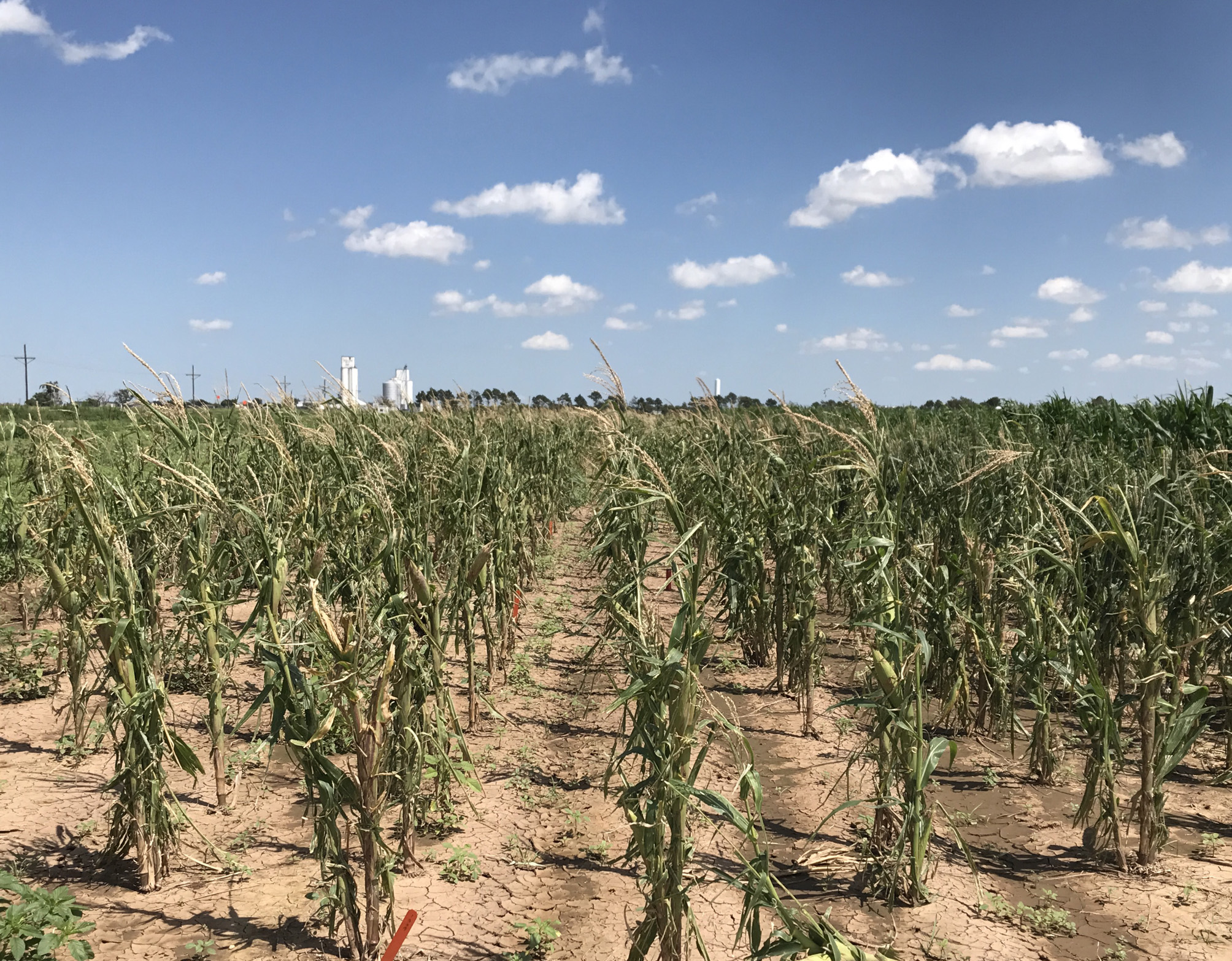
Government officials in Argentina are fearing the impact of drought on the nation’s agricultural production, with experts estimating the potential losses could top US$10 billion.
Economy Minister Sergio Massa and leaders from Argentina’s agricultural sector huddled Thursday to discuss the financial impact of a severe drought that has damaged and destroyed crops across the country.
Fears of losses are gripping President Alberto Fernández’s government, with grain exchanges warning that the deterioration could shave as much as two points of gross domestic product this year. That would do significant damage to Argentina’s state coffers and its chances of meeting the fiscal targets outlined in its multi-billion-dollar debt deal with the International Monetary Fund
Authorities are closely monitoring crop forecasts, as agricultural exports are crucial to the country's economy. Massa, accompanied by Agriculture, Fisheries & Livestock Secretary Juan José Bahillo met with representatives of the Mesa de Enlace industry group on Thursday to establish the state of play.
Last weekend, the economy minister said that the government would work with the grouping to establish a 90-day monitoring system "sector-by-sector and economy-by-economy, looking at satellite maps of rainfall, looking at satellite maps of soil moisture, and comparing the drop in profitability 2022 against 2023.”
Experts are warning that losses from the drought could be huge and that rains heralding the end of the devastating La Niña drought will likely come too late to prevent crops from withering and ending up as the smallest in 14 years.
The La Niña weather phenomenon is easing into a more neutral weather pattern, but it is doing so at a slower pace than previously thought. Rains that were forecast for late January are now expected weeks from now, too late for relief for Argentina's soybean and maize crops that require more water in February, the heart of summer in the southern hemisphere. The soybean harvest occurs in the second quarter.
"While rains are expected to return in the coming months, alleviating the soil situation in the 2023/24 season, they will not improve the current production cycle," the Buenos Aires Grain Exchange said in a report. The Rosario Stock Exchange said it expects rains to normalise closer to April.
Argentina is the world's largest exporter of soybean meal and oil and the world's third-largest supplier of corn. It is also a major supplier of maize, wheat and sunflower oils.
The US Department of Agriculture has sharply lowered its projections for Argentina’s soybean and corn production, warning of the possibility of further reductions.
Estimates
According to estimates by the Rosario Stock Exchange, the impact of the drought would erase 2.2 points of GDP by 2023.
A report filed by the Exchange trimmed estimates for the wheat, soybean and maize harvest by 28.5 million tonnes, 23 percent of the initial expected production.
The cost of the 2022/23 drought already amounts to US$10.425 billion for soybean, wheat and corn producers and would erase 2.2 points of this year’s GDP estimate, it warned, adding that the situation “could get worse if the rainfall deficit continues."
"When we talk about the producer sector's net income loss, we are referring to the difference between the producer's net margin estimated at the time of sowing, with an average yield under normal weather conditions, and that which is expected to date, as a result of the drought," explained the Rosario-based commercial entity.
"This analysis takes into account both the loss of yields, as well as the hectares that were sown and cannot be harvested, and those that could not even be sown due to lack of moisture," they added.
Lower income from exports also has a knock-on effect for freight, financial and intermediary services, as well as less demand for the construction sector, etc. This is what is called the multiplier effect of agriculture on consumption in Argentina.
Earlier this week, the Rosario exchange said that Argentina has lost half of the soybean crop in its main growing area, the fertile pampa húmeda, due to drought
"Although it was known that it would be a very difficult season because of the drought, what can be seen has surpassed the worst nightmares of producers," said the exchange.
Warning that “economic losses will be very large,” the grain exchange said “there is a drop in the sown area due to the extreme lack of water" and the expectation is that "there may be producers who do not harvest anything this year.”
Source - https://www.batimes.com.ar