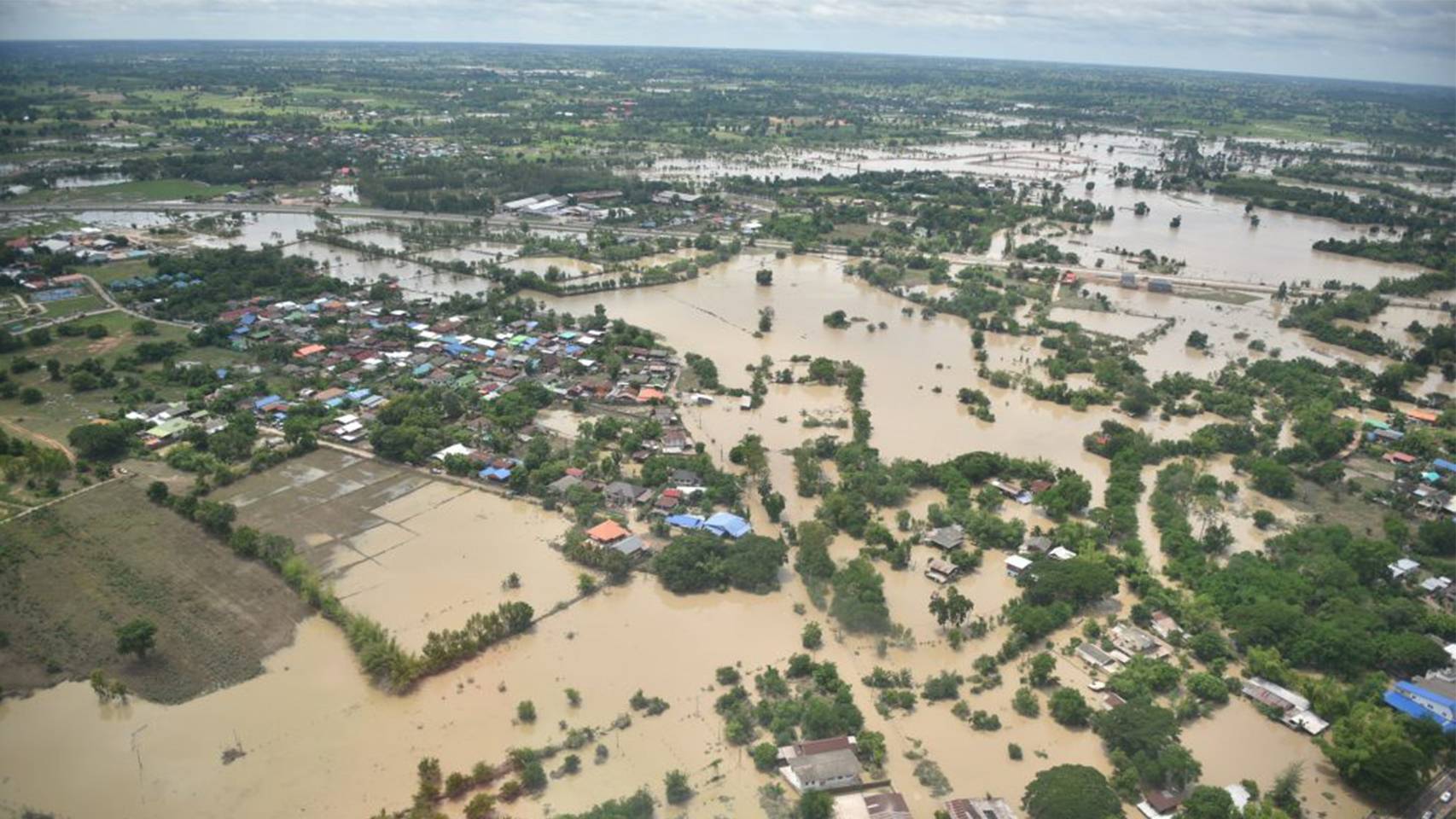
Farmers in the Lachlan Valley are starting to tally up the costs as floodwaters move down the river system — with some facing tens of millions of dollars in crop losses.
"This was all meadow grass, good grazing grass, and it's destroyed — it won't come back," Laurie Norris said while riding Blossom to inspect the flood damage on his property on the outskirts of Forbes.
Riding a horse is the only way to access the farm with a foot of water across the paddocks where he lost his lucerne crop that was within days of being cut for hay.
"That was going to be our feed for the stock for the next 12 months, so now we'll have to buy feed," he said.
Mr Norris is just one of many farmers assessing the damage from floodwaters passing through the district.
The Lachlan River peaked at 10.53 metres in Forbes on Thursday morning, just below the 2016 flood level.
But farmers across the region say the flood impacts on their properties have been equal to and potentially even worse than the devastating peak five years ago.
This week the New South Wales government announced it had started the process for Forbes to be declared a natural disaster zone.
The waters are making their way slowly to the Jemalong irrigation district downstream.
"It couldn't have come at a worse time, because we're just on the brink of securing a really good crop," local farmer Peter Francis said.
The mild spring weather across the state has delayed harvest in the region.
It meant virtually no crops had been stripped before the floodwaters arrived.
"To have all this at risk is devastating," Mr Francis said.
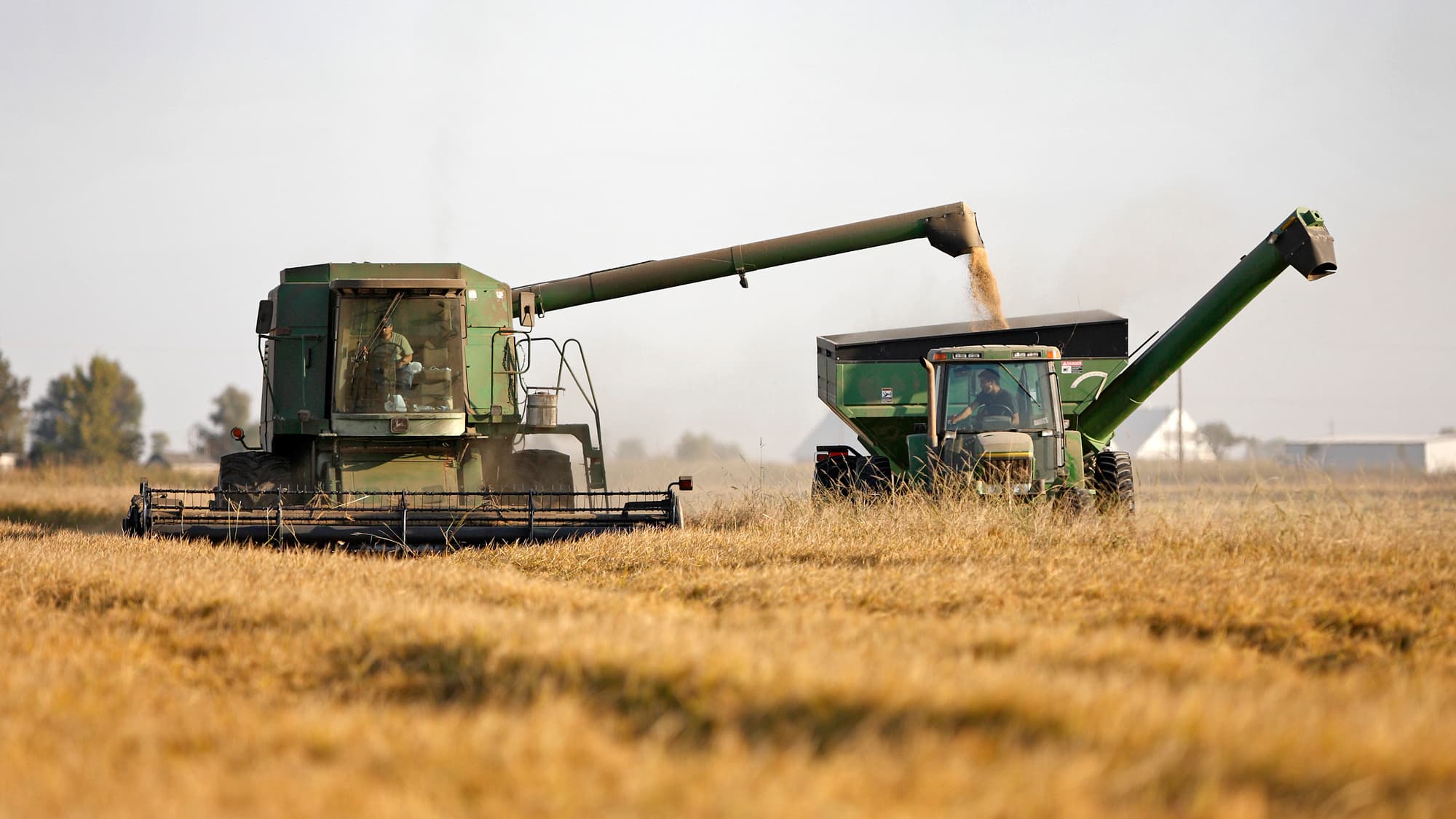
Further downstream, at Jemalong Station, water is streaming out of the river and into thousands of hectares of wheat paddocks that were just days away from harvest.
Station manager Lee Maxwell said it was especially worrying as the peak of the flood was yet to arrive at his farm.
"Who knows how high it could go," he said.
"It's devastating — we've spent every cent that we could possibly spend on it to maximise yields and take advantage of the high commodity prices at the moment."
Flood sparks renewed calls for larger dam
The Lachlan River flooding has renewed calls to raise the Wyangala Dam wall upstream.
The controversial project was promised during the drought to increase the storage capacity by 50 per cent to save water and help with flood mitigation.
The farmers who are now ankle deep in water say this flood shows why the project needs to go ahead.
The floodwater impacting the region now spilled out of Wyanagla Dam when it reached capacity over the weekend — four to five days ago.
Nick Turner, who represents irrigators in the Jemalong region, says the project is vital to safeguard future crops.
"This event would have been able to be mitigated significantly if we had additional airspace in the dam," he said.
"There's a number of benefits of having a larger dam … it was only a few years ago everyone was short of water.
"There's so many reasons now why the dam has to go ahead."
More rain predicted
Farmers in the region are also cautious of the weekend forecast with rain predicted across most of New South Wales.
The Bureau of Meteorology said a deep low pressure system will cross the state during the weekend with the potential for widespread rainfall and renewed riverine and flash flooding.
And with Wyangala Dam still full, it could be a nervous week ahead for farmers on the Lachlan River and throughout the valley.
Source - https://www.abc.net.au