Early RoBird trials in Australian almond orchards recorded an 89 per cent reduction in fruit loss within monitored trial blocks and a 94 per cent bird displacement rate following engagement with the technology.
Now, the biomimetic drone is being tested in strawberries.
A different approach to bird management
Bird damage remains a challenge across Australian horticulture, affecting both crop yield and quality.
While growers have a range of management tools available, maintaining their effectiveness can be difficult. Birds can become accustomed to noise and static visual deterrents, reducing their impact over time.
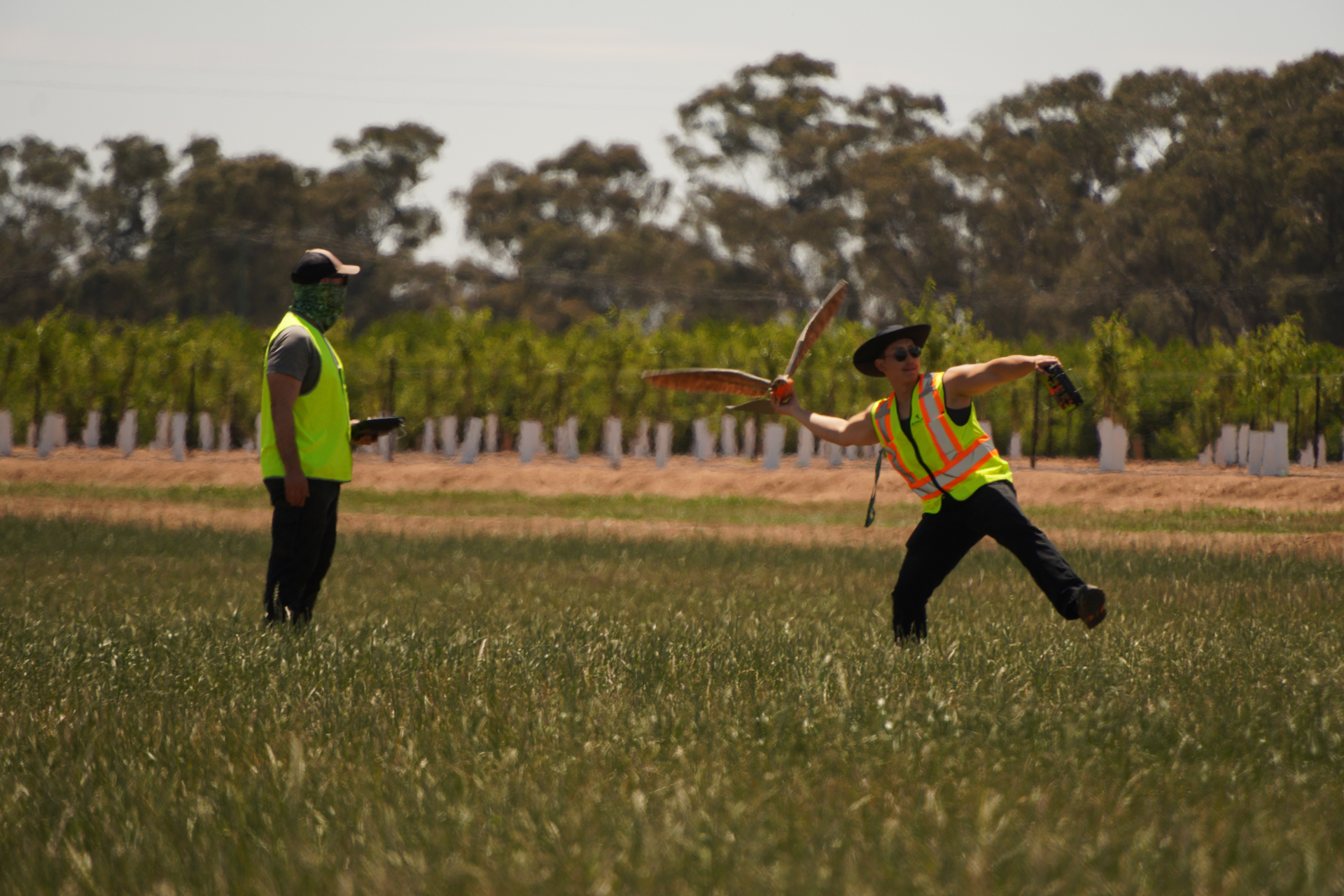
The biomimetic drone system is designed to mimic the appearance and flight behaviour of a bird of prey. Rather than relying on noise or a fixed visual presence, it aims to trigger a predator response and encourage pest birds to leave growing areas before damage occurs.
According to AERIUM Analytics, RoBird's effectiveness increased throughout the almond trial period, with no signs that birds were becoming accustomed to the technology.
"Beyond the initial results, what stands out is the system's ability to shape bird behaviour over time. We observed increasing effectiveness throughout the trial period, with no signs of habituation," said Jill Viccars, Chief Growth Officer at AERIUM Analytics.
"This is critical for growers, as it allows for sustained protection and a more strategic approach to managing bird pressure across the season. Looking ahead, we're focused on expanding operations and supporting broader adoption of the system across Australian horticulture."
From almonds to strawberries
The almond results provide a starting point, but bird species, crops, growing environments and cultivation systems vary considerably.
The trial on Tim Harris' farm is helping researchers understand how RoBird performs in strawberries and how it could fit alongside the bird-management practices growers already use.
It forms part of a broader phase of commercial testing designed to identify where the technology works, how consistently it performs and the conditions in which it could be used by growers.
Building practical guidance for growers
The goal is not simply to determine whether RoBird can move birds away from a crop.
Researchers want to understand where it works, whether its early impact can be repeated across horticulture and how it can be integrated into existing bird-management strategies.
RoBird is not intended to replace the practices growers already use. Instead, it could provide another option within a broader management approach, particularly where birds are becoming accustomed to traditional deterrents.
Through trials across multiple industries, the project is gathering evidence to determine where RoBird fits and the role it could play in reducing crop loss and protecting yield and quality.
Source - https://www.freshplaza.com