Bangladesh has been swept up in the massive heat wave scorching large parts of Asia, with temperatures among the highest in six decades.
The country’s capital, Dhaka, saw the temperature reach 40.6° Celsius (105.1° Fahrenheit) on April 16, the highest in 58 years, making people’s lives unbearable for more than a week with low humidity in the air, according to Bangladesh Meteorological Department (BMD) officials.
“It is unusual. Almost the entire country was under cover of a heat wave. It is a new experience and also alarming at the same time,” Md. Bazlur Rashid, a meteorologist with the BMD, told Mongabay on April 20.
Abdul Mannan, a retired meteorologist, said heat waves usually sweep over the western region of the country, but this year extended to the southwestern areas too. The BMD concurred that the extent of the affected area was something new.
A 2021 report by the World Bank noted that average temperature rises in Bangladesh are broadly in line with the global average. It said Bangladesh regularly experiences some of the highest maximum temperatures in Asia, with an average monthly maximum of around 30°C (86°F) and an average April maximum of 33°C (91°F).
“Bangladesh will experience emerging hot and humid seasons, in which the Heat Index surpasses 35°C [95°F],” the report said.
This year’s heat wave corroborates this projection. The average highest temperature in Bangladesh is 33.2°C (91.8°F), but this year the average highest temperature is up to 6°C (10.8°F) higher, said meteorologist Abdul Hamid.
“In recent times, we did not experience heat waves [that] continued for such a long period,” he said, adding the danger is that heat waves like the current one are becoming increasingly common in the country.
Over the past 44 years, the average temperature in Bangladesh has risen by 0.5°C (0.9°F), the World Bank said in its “Climate Afflictions” report. By 2050, that average will rise by 1.4°C (2.5°F).
Across Asia, countries caught in the grip of the heat wave are recording some of their highest ever temperatures this week, while on the Indian subcontinent the heat has killed more than a dozen people. April and May are typically the hottest months for South and Southeast Asia, as temperatures rise before the start of the monsoon rains.
The situation has been so dire in parts of India that officials shut schools for a week after they recorded sweltering temperatures higher than 40°C (104°F). At least two states, Tripura in the northeast and West Bengal in the east, ordered schools to shut this week, with temperatures hovering more than 5°C (9°F) above average, state governments said.
Heat islands
Officials and experts said urban areas are particularly hard hit by the heat, due to what’s known as the “heat island” effect, where the built-up environment magnifies the heat.
“Climate change is one aspect, but anthropogenic factors such as widespread urbanization are the main drivers for hotter weather in metropolitan cities,” said Ashraf Dewan, a professor at the School of Earth and Planetary Sciences at Curtin University, Australia. “The issue of urban temperatures has become a grave concern. This has resulted from manifold increase of air condition use, rapid loss of green-blue space, construction of huge high-rise buildings and increased industrial activities.”
A 2021 study by Dewan and colleagues showed that Bangladesh’s biggest cities of Dhaka, Chattogram, Rajshahi, Khulna, Barishal and Sylhet witnessed an increase in average daytime and nighttime temperatures from 2000 to 2019.
A World Bank report showed that the maximum temperature in Dhaka increased by 0.5°C between 1980 and 2019, while in Chattogram it increased by 0.9°C (1.6°F) during the same period.
Heat shock and flood threats for rice farmers
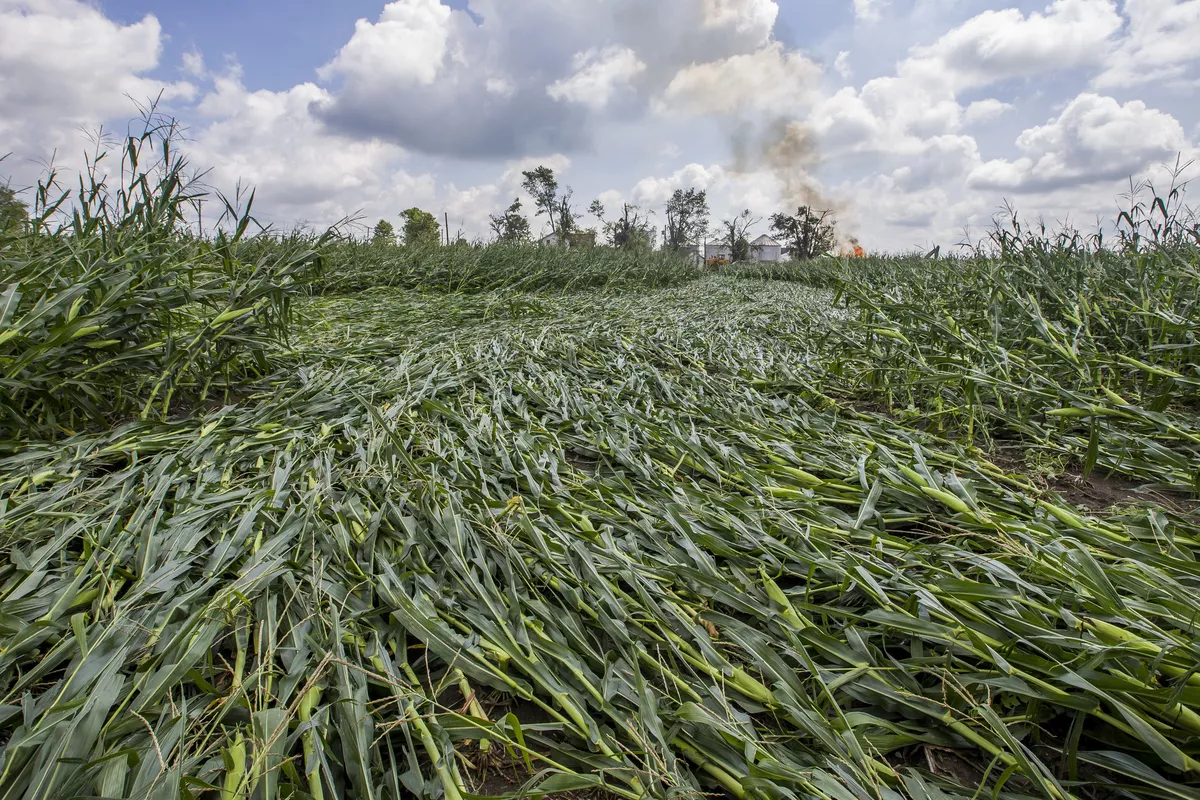
Agricultural experts are warning that the heat wave could hammer rice production. The Bangladesh Rice Research Institute (BRRI) issued a warning to farmers to ensure their rice fields remain adequately irrigated throughout the period of high temperature.
“Retain 2-3 inches [10-12.5 centimeters] of water on harvest lands to save the crops from heat shock amid extreme temperatures,” it said.
Md. Abdul Latif, head of the BRRI’s plant pathology division, said it’s likely a portion of the crop will be damaged due to the prolonged heat wave.
Badal Chandra Biswas, director general of the Department of Agricultural Extension, said the heat wave had already ruined 141 hectares (348 acres) of rice crops. “The damage is very nominal. But we are trying to develop heat-tolerant rice verities like we developed salinity-tolerant rice variety and winter-tolerant wheat varieties.”
In 2021, heat shock ruined 21,000 hectares (52,000 acres) of rice crops across Bangladesh.
Yet even with the temperature now starting to drop, a new worry has emerged. That’s because the cooling heralds the start of rains, with showers and even hailstorms already occurring in the northeast.
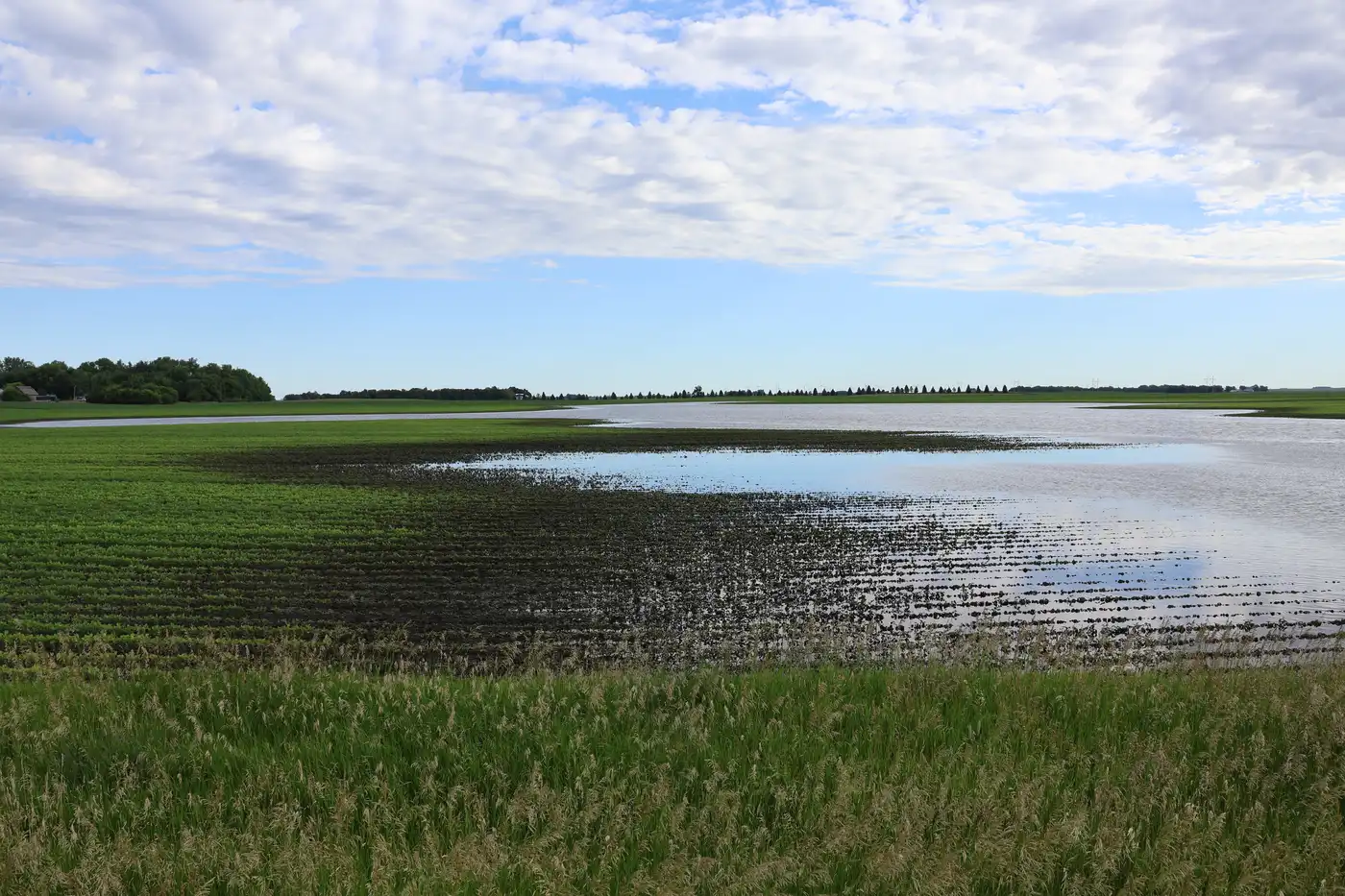
Latif from the BRRI said farmers in the haor (northeastern) region, where the bowl-shaped topography means a higher likelihood of flooding once the monsoon rains start, are being advised to harvest their rice if it’s 80% ripened.
The haor region usually experiences advanced flood before the monsoons start, usually in late April. Most of the rivers in the haor region originate in the Indian states of Meghalaya and Assam, and about 60% of the total catchment area that they drain lies within Bangladesh, according to a media report. The abundance of waterways, combined with this part of Bangladesh’s proximity to the Cherrapunji area of India — famous for having the highest rainfall of any place on Earth — makes flooding a perennial problem.
The Bangladesh Water Development Board’s Flood Forecast and Warning Centre said that with the fall of temperature, there will be rain and the rivers will swell. But whether this will lead to floods is harder to tell, officials say.
“We can forecast for only one week,” said Md. Arifuzzaman Bhuyan, executive engineer with the Flood Forecasting and Warning Centre. “In the Sylhet region, rain has already started, and it will continue. In May first or second week, there might be a flood in some parts of the country. But we have to wait a few more days.”
Any early hailstorms and flash floods could cause havoc for rice farmers. Floods this time of the year in 2017 caused widespread crop damage. They also devastated poultry, fisheries and livestock in several districts in the haor region.
Source - https://news.mongabay.com