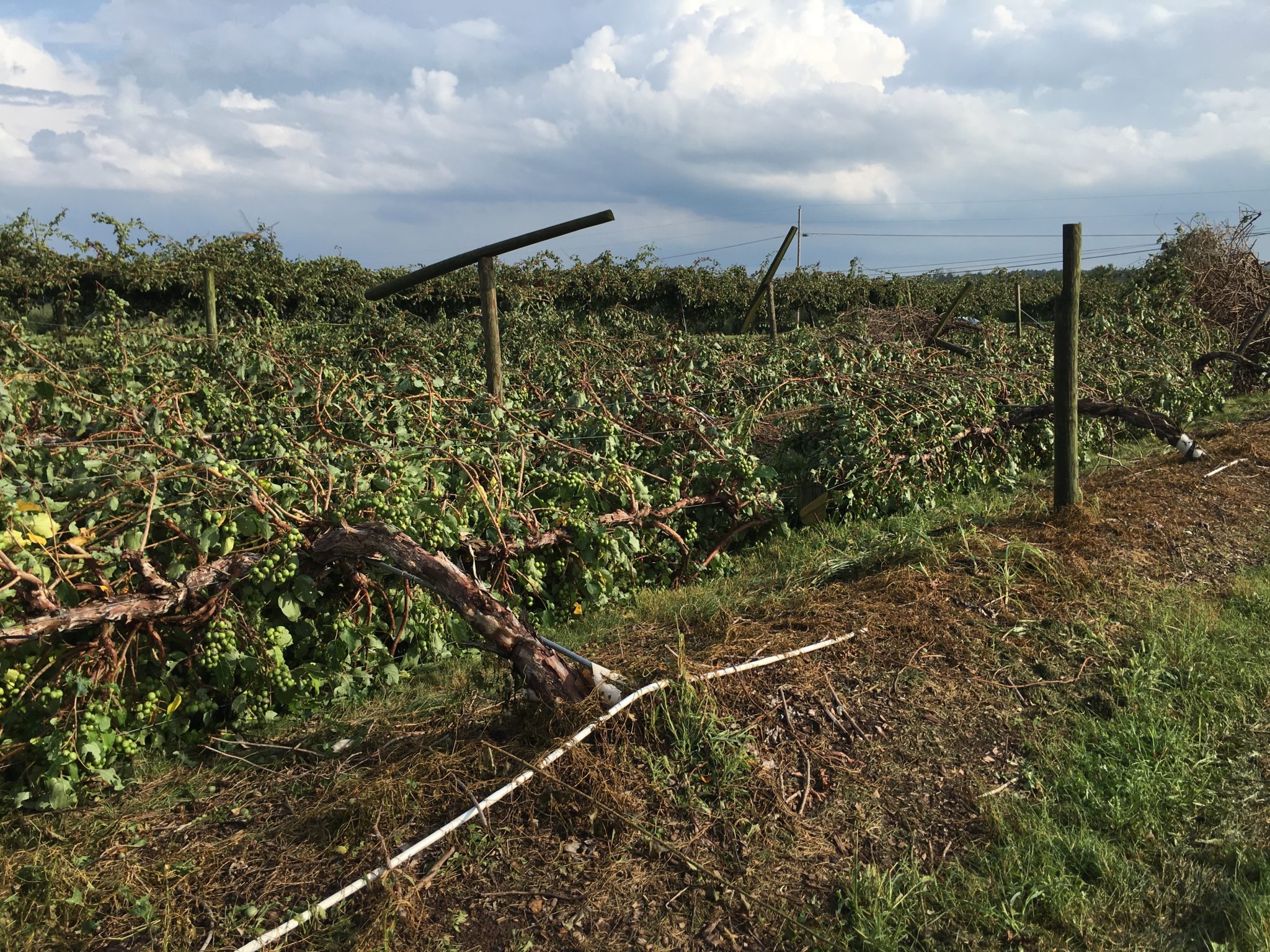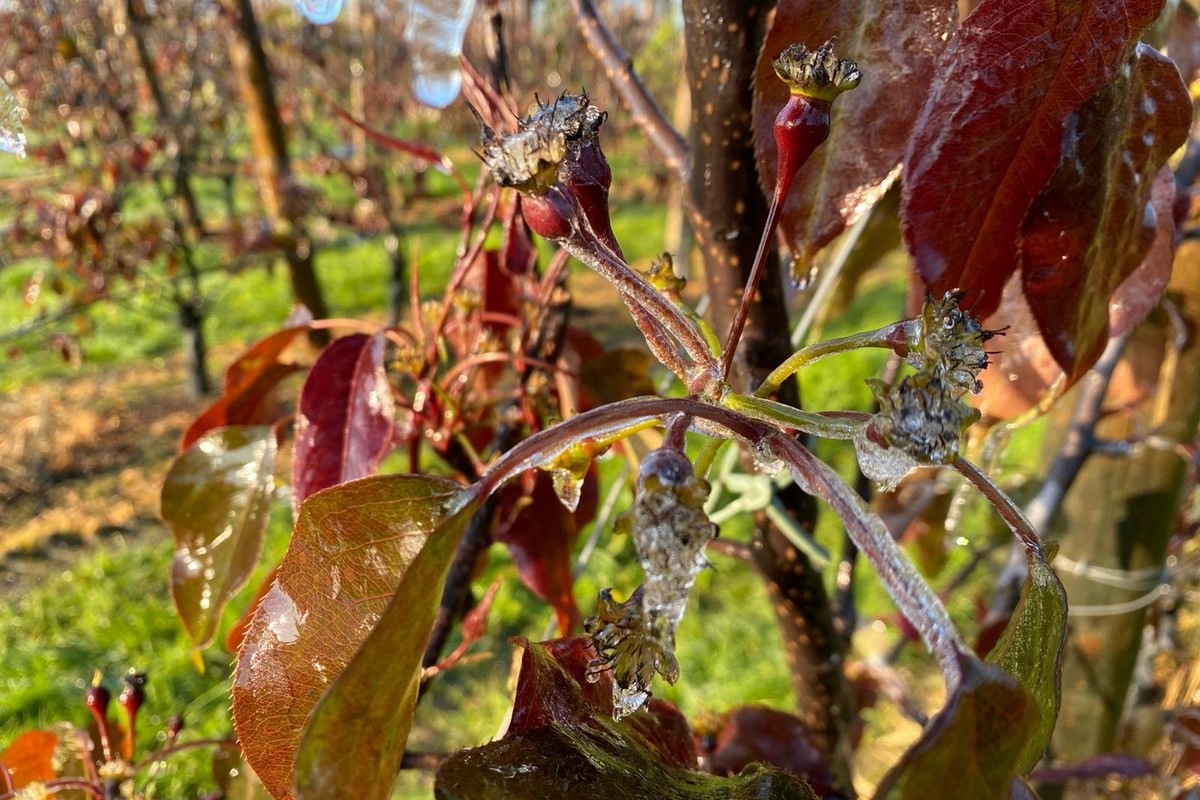
The past ten nights were filled with anxiety for Belgian fruit growers. Wine grapes are being called a huge disaster due to frost. For apple and pear growers, though, the consequences seem to vary significantly by region. Hail has been and remains particularly concerning, and the frost did not make things any easier. "The combination of hail and frost kept us on our toes," begin Kris Wouters (Wouters Fruit), Christophe van Haelst (VHM Fruit Trade), and organic grower Gerard Kenens.
"As for the frost, we only had to intervene from Monday to Tuesday," says Kris. "The extent depended on the plot's location. We measured -3.7°C on some, but on higher ones, it was 'only' about -1.2°C. There are pears with brown cores on the plots where it froze very hard. But, there are very few of those plots. We don't know what these pears will do; we've never experienced frost so late before. The pears are already 10 to 15 mm in size. But pears that aren't brown may still have suffered skin damage, which we'll only see later."
So, even for the experienced grower/trader, what will happen remains to be seen. "I don't think I've ever seen frost this late. You often have to deal with it before or during blooming, but we've never had frost when everything's bloomed. And certainly not across all plots. That's partly because it's an extremely early year. Don't hold me to it, but were I to believe the numbers, it's the earliest bloom in history. Yet, it seems many could protect themselves against the frost," Kris explains.
He sees the hail is causing more concern. "Several hailstorms have hit some plots, with the first one being especially damaging. I think almost all of the Netherlands and Belgium were hit. The damage is still generally manageable. Some less sensitive varieties, like Conference, will probably see little of it, but we know if you get hail during this period, the trees produce ethylene in response."
"They, thus, shed more. Also, many trees' leaves were damaged, impeding the smaller pears' growth. These factors can cause less production towards the new season, but nature doesn't reveal its secrets. It remains to be seen, but dark, cold weather undoubtedly increases shedding. Despite people being less worried about the frost, the combination with the recent hail is worrisome," Kris admits.
Sensitive varieties more vulnerable
Organic grower Gerard Kenens of VerKen Bio Deli-Vers, some 10 km further, did not feel those low temperatures Kris measured. "Our lowest plot didn't get much colder than -1.5°C, which shows how much temperatures can vary locally. That's quite remarkable; we're usually among the first orchards to freeze because much of the orchard is in a valley. Getting -3°C is a different story, but I think some lingering clouds saved us a bit. Those kept the temperature higher, so we don't expect any lasting damage from the frost," he says.
"The hail affected us, too. That caused spots on the fruit, but I think the Conference will survive. For varieties like Qtee, I dare not say. With these, we're still stuck between hope and fear. We have hail nets, but because frost was predicted, we couldn't yet use them everywhere, only on the plots with micro-sprinklers for frost spraying. These don't spray high enough to form ice on the nets. It just shows how problematic the hail/frost combination is."
Difference per region
While it dipped below -3°C in some places in Belgium, temperatures did not go that low in others. "Closer to the coast, we had almost no frost," says Christophe Van Haelst of VHM Fruit Trade and Van Haelst Fruit. "There were some colder temperatures and strong winds. That might result in some bronzer pears, but we had that last year, too. Other areas have bigger problems, but they're mainly in the low-lying plots. I think geographically, there's a big difference in how hard the frost hit everyone."
"We, too, see that the hail has caused bigger issues. But it's still very early in the season. I hope the spots will grow out, but that will vary per variety. Conference has stronger skin, so generally, it should be okay. There may be more Class II, but that fruit's still very sellable. With other more sensitive varieties, like Comice and Lukassen, it's anyone's guess as to how much damage will remain visible. These varieties will probably be more affected. But we can still use fertilizers to smooth their skins out," Christophe explains.
He, however, is not worried about the new harvest. "Volume-wise, I'm completely unconcerned at a Belgian and even European level. We have to wait and see for some varieties, but I don't expect the disaster that's sometimes sketched. Certainly not for Conference, which shows how strong this pear is."
Protection
The men agree that you are dependent on the whims of nature, but they also see it is becoming more important to arm yourself against it. "We see it as a sort of ranking," Kris points out. "There are many methods, but few give 100% certainty. Braziers, for example, are very expensive, and you must time their use precisely because if you place them preventively, they can be empty by the time the frost starts. We hardly use these for apples and pears because other options, such as frost irrigation, are available. That's actually the only protection that always works. Braziers are mainly seen in cherry cultivation because cherry blossoms cannot withstand water/irrigation."
"In apples and pears, we swear by irrigation, which we've used for many years." That is the method that Gerard prefers. "We also have the advantage of a river running through the valley where we're located, from which we can draw water for classic night frost irrigation. We've recently continued investing well in frost protection. We've placed micro-sprinklers on various plots and have bought Frost Guards. These might not save you in severe night frost, but so far, they've worked. Especially to protect the new, more sensitive varieties, like Qtee, PiqaBoo, and Natyra, we keep investing heavily in irrigation. The only downside is not everyone has access to fresh water."
That is the case with Christophe. "The amount of available freshwater makes it tough to irrigate in our region. People are increasingly opting for a solution that seems to be finding its way to growers: wind machines. We've not used them yet. Being close to the sea always makes a difference in temperatures. You ultimately remain dependent on nature, but it seems to be a solution for many."
Kris confirms that: "We don't have wind machines, but we see them more and more often. They certainly help with inversion frost, which occurs when the temperature above the orchards is higher than lower down. This week's differences between high and low-lying plots prove that. The wind machines can sometimes provide up to 3°C difference."
"The only problem is that in the Netherlands and Belgium, getting a permit for such a large machine was hard. Since this season, though, there are also portable smaller machines on the market, and many have been sold. We'll undoubtedly hear whether they've worked well or not. The future will show how much everyone could protect themselves. Using aids will probably become increasingly necessary," Kris concludes.
Source - https://www.freshplaza.com