In a bid to secure food production and protect livelihoods, rural farmers in Bhutan are testing advanced universal hybrid fences to deter wildlife.
In a concerted effort to secure food production and protect rural livelihoods, farming communities in Bhutan are piloting an advanced universal hybrid fencing system designed to deter destructive wildlife. The initiative directly addresses the escalating human-wildlife conflict that threatens the nation's agricultural self-sufficiency goals.
The friction between agricultural expansion and wildlife conservation is a global crisis. For Kenyan farmers in regions bordering Tsavo or the Maasai Mara, where the Kenya Wildlife Service (KWS) spends billions compensating for elephant-destroyed crops and livestock predation, Bhutan’s technological intervention provides a highly relevant blueprint. Both nations rely heavily on agriculture while harboring significant protected wildlife populations, making non-lethal, effective deterrents an economic necessity.
The Burden of Traditional Mitigation
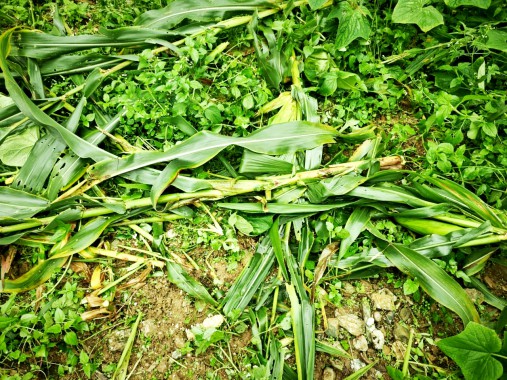
Bhutan, widely celebrated for its environmental stewardship and Gross National Happiness index, maintains extensive forest cover that supports robust populations of wild boars, monkeys, and Asiatic elephants. However, as the government pushes for greater food security, farms encroaching on forest buffer zones face severe nocturnal raids.
Historically, Bhutanese farmers relied on chain-link fencing or basic solar-powered electric wires. Locals reported that installing heavy chain-link fences was physically exhausting and financially draining, requiring deep soil excavation and the construction of retaining walls to support metal poles. Furthermore, traditional chain-link barriers proved highly ineffective against agile primates like macaques, which easily climbed over them, while wild boars simply burrowed underneath.
In a concerted effort to secure food production and protect rural livelihoods, farming communities in Bhutan are piloting an advanced universal hybrid fencing system designed to deter destructive wildlife. The initiative directly addresses the escalating human-wildlife conflict that threatens the nation's agricultural self-sufficiency goals.
The friction between agricultural expansion and wildlife conservation is a global crisis. For Kenyan farmers in regions bordering Tsavo or the Maasai Mara, where the Kenya Wildlife Service (KWS) spends billions compensating for elephant-destroyed crops and livestock predation, Bhutan’s technological intervention provides a highly relevant blueprint. Both nations rely heavily on agriculture while harboring significant protected wildlife populations, making non-lethal, effective deterrents an economic necessity.
The Burden of Traditional Mitigation
Bhutan, widely celebrated for its environmental stewardship and Gross National Happiness index, maintains extensive forest cover that supports robust populations of wild boars, monkeys, and Asiatic elephants. However, as the government pushes for greater food security, farms encroaching on forest buffer zones face severe nocturnal raids.
Historically, Bhutanese farmers relied on chain-link fencing or basic solar-powered electric wires. Locals reported that installing heavy chain-link fences was physically exhausting and financially draining, requiring deep soil excavation and the construction of retaining walls to support metal poles. Furthermore, traditional chain-link barriers proved highly ineffective against agile primates like macaques, which easily climbed over them, while wild boars simply burrowed underneath.
Engineering the Universal Hybrid Fence
To overcome these limitations, the district administration of Wangdue Phodrang, supported by the Japan International Cooperation Agency (JICA), recently introduced the universal hybrid fence. The pilot project in Zamding Chiwog covers just over two kilometers of agricultural perimeter and fundamentally alters the installation mechanics.
- Streamlined Installation: Farmers erect 250 cm metal poles directly into the ground without costly excavation or masonry work, laying a 200 cm-high wire netting immediately.
- Anti-Burrowing Anchor: The bottom 40 cm of the wire net is folded outward and secured to the ground using heavy U-shaped metal pegs covered in mud, preventing wild boars from digging under the barrier.
- Electrified Crown: Crucially, insulators are fitted above the wire netting to carry live electric wires. This dual-layer approach effectively shocks climbing monkeys and larger mammals attempting to breach the upper perimeter.
Agricultural extension officers noted that the hybrid design drastically reduces the labor required for installation. Farmers underwent just two days of technical training before independently deploying the system across their communal fields.
Economic and Psychological Impact
The economic stakes are massive. Previous impact assessments by Bhutan’s National Plant Protection Centre revealed that despite extensive state efforts, human-wildlife conflict forced many rural families to abandon cultivable land entirely. The psychological toll of conducting all-night vigils in wooden watchtowers, armed only with flashlights and whistles to scare off charging elephants, left farming communities exhausted and resentful of conservation policies.
- Streamlined Installation: Farmers erect 250 cm metal poles directly into the ground without costly excavation or masonry work, laying a 200 cm-high wire netting immediately.
- Anti-Burrowing Anchor: The bottom 40 cm of the wire net is folded outward and secured to the ground using heavy U-shaped metal pegs covered in mud, preventing wild boars from digging under the barrier.
- Electrified Crown: Crucially, insulators are fitted above the wire netting to carry live electric wires. This dual-layer approach effectively shocks climbing monkeys and larger mammals attempting to breach the upper perimeter.
Agricultural extension officers noted that the hybrid design drastically reduces the labor required for installation. Farmers underwent just two days of technical training before independently deploying the system across their communal fields.
Economic and Psychological Impact
The economic stakes are massive. Previous impact assessments by Bhutan’s National Plant Protection Centre revealed that despite extensive state efforts, human-wildlife conflict forced many rural families to abandon cultivable land entirely. The psychological toll of conducting all-night vigils in wooden watchtowers, armed only with flashlights and whistles to scare off charging elephants, left farming communities exhausted and resentful of conservation policies.
| Fence Type | Installation Cost/Labor | Target Species Deterred | Vulnerabilities |
|---|---|---|---|
| Standard Chain-Link | High (requires excavation/walls) | Deer, livestock | Monkeys climb over; boars dig under |
| Basic Solar Electric | Medium | Elephants, large mammals | Prone to short-circuiting from undergrowth |
| Universal Hybrid | Low (direct pole insertion) | Boars, monkeys, elephants | Requires ongoing electrical maintenance |
Initial field data from the hybrid pilot indicates a drastic reduction in crop depredation. By preventing total crop failure, the fencing directly boosts household income and food security. If the Wangdue Phodrang pilot maintains its success rate through the current harvest season, JICA and the Ministry of Agriculture plan to establish the hybrid fence as the definitive national standard, rolling it out to vulnerable farming communities across all districts.
For agricultural policymakers worldwide, Bhutan’s transition from heavy, labor-intensive barriers to smart, species-specific hybrid systems demonstrates that resolving human-wildlife conflict requires constant technological evolution, not just concrete walls.
Source - https://streamlinefeed.co.ke