Agronomist Sergio Rubin kneels in a field of oats to remove some of the straw covering the soil. Opening a gap, he shows us the damp earth on a warm day, in what has been a winter marked by great fluctuations. Thermometers here in the state of Rio Grande do Sul hit 25C in mid-August – well above the average in the Brazil’s southernmost region – while on Rubin’s farm in Júlio de Castilhos, in the centre of the state, the previous week’s heavy rain had not yet evaporated from the soil.
It was a far cry from the compact, crumbly earth that had been seen here just months earlier, caused by one of the worst droughts in Rio Grande do Sul’s recent history, which lasted four years and destroyed a significant portion of the state’s soy crops.
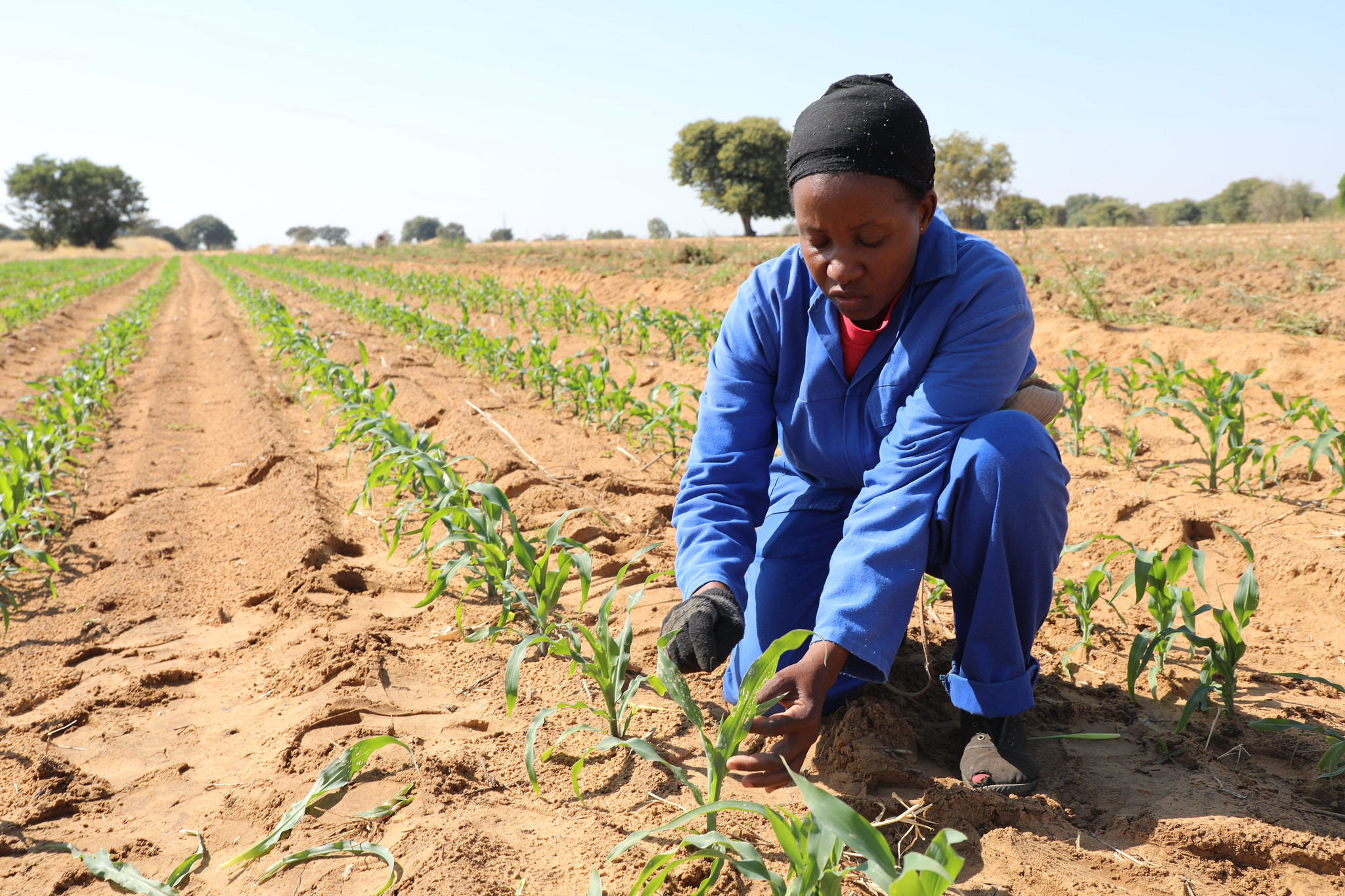
Rubin plants oats as a cover crop to keep moisture and nutrients in the soil that will be sown with soy seeds in October. “The drought taught us that we can’t leave the soil bare,” explains the 65-year-old producer. “It always needs to be well nourished and protected with different mulches to keep moisture in.”
Soy is a key crop in Rio Grande do Sul, and its production had been climbing until the arrival of La Niña in mid-2020, which caused output to plummet in the following years. This climate phenomenon causes the waters of the Pacific Ocean to cool abnormally, making winds stronger and, in turn, altering rainfall patterns and humidity. Having lasted three consecutive years, this rare “triple-dip” La Niña event brought more rain to Brazil’s north and north-east regions, and drought to the south.
After these difficult and dry years, southern Brazil’s farmers are now facing a new set of challenges following the arrival of El Niño. The counterpart to La Niña, this phenomenon causes an abnormal warming of the waters of the Pacific Ocean, bringing changes in the winds and increased rainfall in Rio Grande do Sul from spring – planting season.
No rain, no soy
Rain is a determining factor in the success of a soy harvest. There are two crucial moments: germination, between October and November, and flowering, which takes place between January and February in the state. This second phase was particularly affected by the years under the influence of La Niña, when part of the crop did not even flower.
The first drop came in the 2019/20 harvest, which fell 41% compared to the previous period, from 19.5 million to 11.4 million tonnes harvested in the state, according to data from CONAB, Brazil’s agricultural supply and statistics agency. In the following harvest, the drought gave way and the sector began to recover. But then came the second fall, the biggest of all, as 9 million tonnes were harvested in 2021/22. In the last season under the influence of La Niña, 2022/23, production was 13 million tonnes – a level that had been surpassed in the past decade, following the expansion of plantations and an improvement in agricultural techniques.
Producers in Rio Grande do Sul had already dealt with serious droughts – in 1985, during another La Niña period, as well as in 2005 and 2012. But they couldn’t remember one as severe as the last four years. “I remember [a drought season] more than 30 years ago in which we harvested 19 bags per hectare, but [last year] never reached an average of 13 bags,” recalls producer Glenio Soldera, now 59. Normally, his farm’s productivity exceeds 65 bags per hectare.
Soldera says he is one of the largest soy producers in Tupanciretã, a municipality in the centre of Rio Grande do Sul that is considered the state’s soy capital. On his 4,000-hectare property, the farmer recalls that though irrigation helped, it could not fully overcome the damage of the drought. “In areas with pivots [artificial irrigation systems], where there was never a shortage of water, we harvested 30 bags per hectare,” says Soldera, the fourth son of a family of farmers.
The drought hit Rio Grande do Sul in the midst of the Covid-19 pandemic in 2020, when logistical restrictions caused prices for agricultural inputs such as fertiliser – most of which were imported by Brazil – to skyrocket. In 2022, when the worst drop in production occurred, prices increased even more following Russia’s invasion of Ukraine, as Russia, Brazil’s main supplier, imposed export quotas to safeguard its domestic market.
“It was the worst-case scenario: crop failure and an increase in the cost of production,” says Argemiro Brum, a professor in rural development at the Regional University of Northwestern Rio Grande do Sul. A drought monitoring body run by the state government estimated that more than 100,000 soy and corn farmers were affected by the four year-drought.
Production shifts, sustainability questions
Rio Grande do Sul usually competes with the state of Paraná, also affected by drought although lower in intensity, to be the second largest source of Brazil’s soy exports. The climate phenomenon that impacted both states has allowed the state of Mato Grosso to consolidate its position as the main exporter of the commodity, including to China, which buys 70% of the country’s soy exports.
“Brazil increased soy exports to China in 2022, even with the crop failure in Rio Grande do Sul, because of the harvests in Mato Grosso and Matopiba,” says Brum, using the name for the region comprised of the states of Maranhão, Tocantins, Piauí and Bahia. These states are covered by the Amazon and Cerrado biomes.
A study published in 2022 in Nature Sustainability revealed that the soy boom of the last 15 years has put pressure on sensitive biomes such as the Amazon. Grain crops currently occupy more than 5.8 million hectares, according to Mapbiomas. “Soy in the Amazon accounted for 30% of the growth in commodity plantations in the country in the period,” agronomist Alencar Zanon, a professor at the Federal University of Santa Maria and one of the authors of the study, told Diálogo Chino.
The research also reveals that, if Brazil does not abandon its model of land expansion built on deforestation, 5.7 million additional hectares of savanna and forest could become farmland in the next 15 years.
Zanon points to another possibility: “Brazil could produce 1.7 million tonnes more soy a year by investing in sustainable practices to improve productivity without cutting down any trees or converting new areas.”
The climate, however, hinders the soy productivity potential in southern Brazil. “The lower amount and the bad distribution of rainfall in Rio Grande do Sul leave the state at a disadvantage compared to the Cerrado, for example,” said Zanon.
El Niño arrives
Meanwhile, climatologists are still debating the strength of El Niño, another climatic phenomenon that officially arrived in Brazil at the beginning of June. The National Institute of Meteorology (Inmet) expects it to be moderate to intense.
Rio Grande do Sul “should have a better chance of successfully exploiting the crop” than in recent seasons, says agronomist José Renato Farias, a soy researcher at the Brazilian Agricultural Research Corporation (Embrapa) in Londrina, Paraná state. But everything depends on the distribution of rainfall in the region, which he says is still unknown, he adds. “Soy depends not on the volume of water, but on a good distribution of rainfall.”
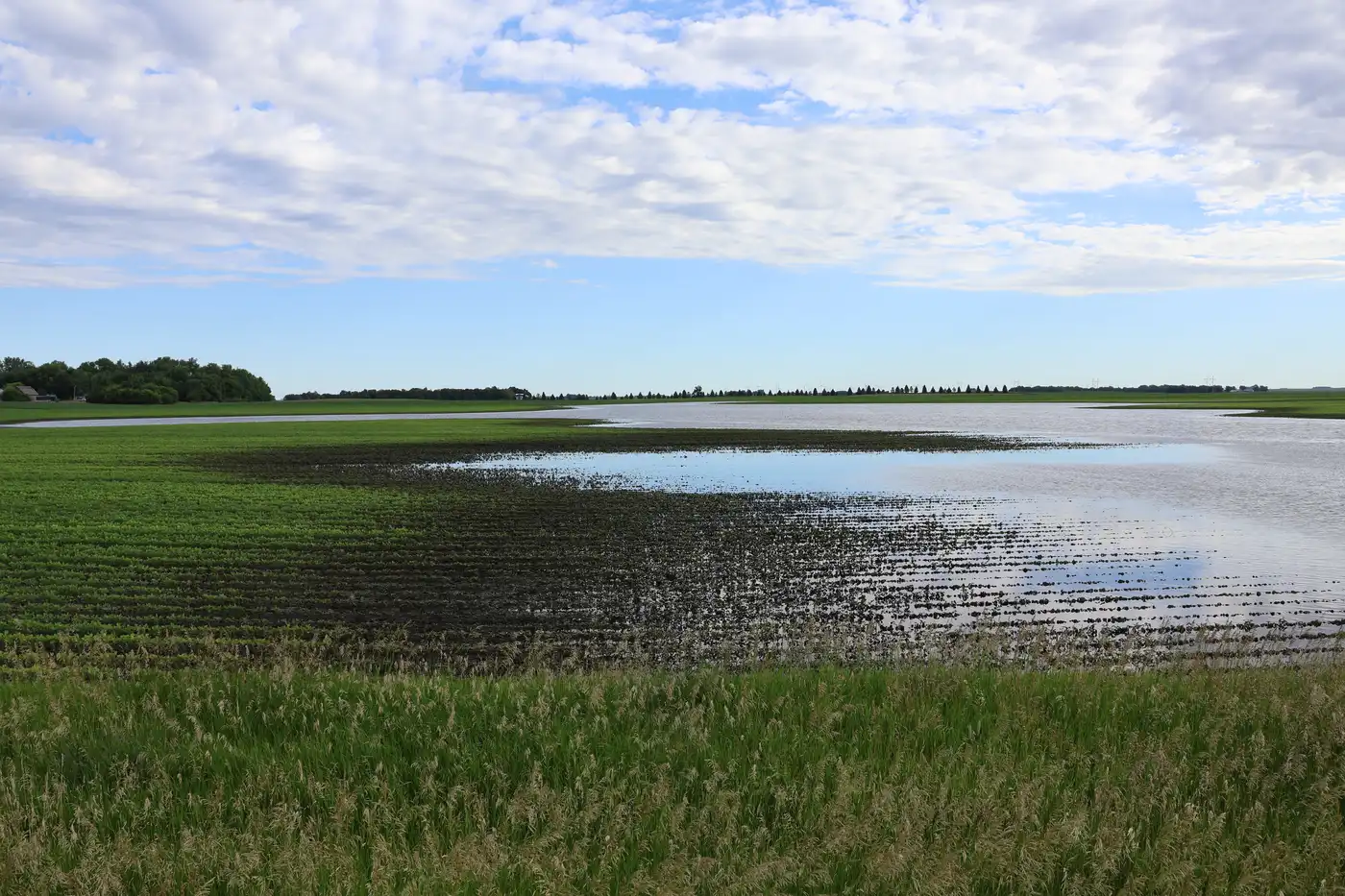
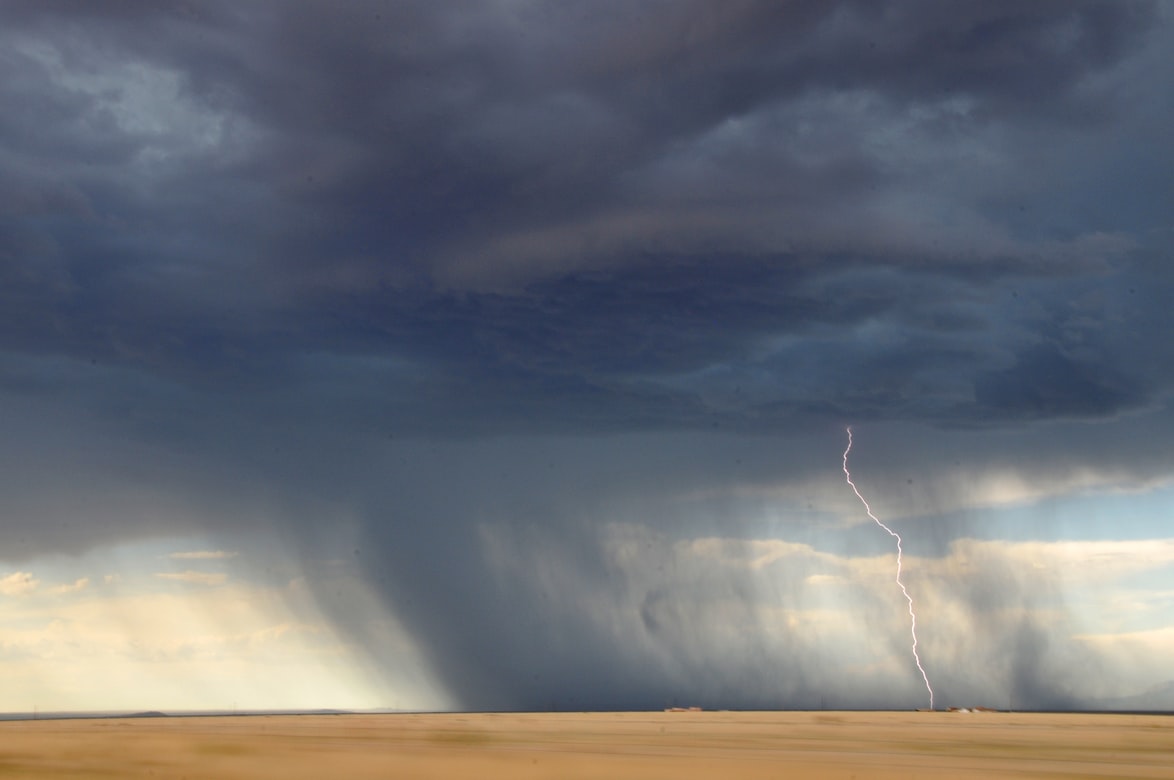
This was demonstrated in early September, when an extratropical cyclone, intensified by climate change according to experts, added to the effects of El Niño. In the region where Tupanciretã and Julio de Castilhos are located, 250 millimetres of rain accumulated in just two days, almost twice the average level of precipitation in August.
“There has already been a break in maize and wheat, which is in full bloom – and more rain is coming,” laments Glenio Soldera. In the Taquari Valley, east of the producing municipalities, at least 49 people died in what is already considered the state’s biggest natural disaster in six decades.
For the next harvest, with above-average rainfall forecast, according to Inmet bulletins, producers also need to watch out for plant diseases such as soybean rust, as most of them tend to appear with an increase in humidity. “It’s a big problem when the humidity rises and the temperature doesn’t drop,” warns Farias, from Embrapa. “Weed management practices and insects are also hampered by the frequency of rain. This can hinder management because you apply the product, the rain comes and washes it away.”
Agronomist Evandro Boligon, 44, is aware of this problem, but laments a difficult situation for producers often left to fend for themselves. “Not having [private] technical assistance is a very serious mistake. It’s a [necessary] investment, especially after four years of bad harvests,” says the producer, whose family history is intertwined with that of soy in the state.
Davi Boligon, the patriarch, now 80, started planting in the 1980s on a small property of around 20 hectares. “It was all manual labour, with a scythe,” recalls the farmer, who shared the work with his five brothers.
Davi’s three children grew up in the countryside of Júlio de Castilhos, but were encouraged to study in Santa Maria, a university hub 65 kilometres from their hometown. Evandro graduated as an agronomist and worked for a technical consultancy company before joining the family in 2015 to manage four properties, where they plant 3,000 hectares of soy in the municipalities of Cachoeira do Sul, Júlio de Castilhos and Dilermando de Aguiar. In winter, they invest in beef cattle, maize and oats.
Evandro is about to start planting, and has been focused on preparing the soil after consecutive years of drought. This seemed to be a common concern among the producers Diálogo Chino spoke to.
“What we have to do is ensure that the soil is better able to conserve rainwater,” says Pedro Barcellos Alves, an agronomist and administrator from Tupanciretã, who is also working to ensure the health of his own crops.
Alves grows oats in the same way as Sérgio Rubin, from Júlio de Castilhos, who also planted turnips and vetch. “Each one has roots of different sizes that penetrate the soil, forming galleries through which water enters and is stored, as well as fixing nutrients,” says Rubin, a retired researcher from Rio Grande do Sul’s State Agricultural Research Foundation, where he worked on the genetic improvement of the commodity.
Unprotected soil retains neither water nor nutrients, while some plant species protect the soil despite extreme phenomena.
The preparation of the soil, combined with the rain brought by El Niño, should
enable the grain to ripen at the right time, quite different from what happened in the last year of drought. “Some of the grains harvested were still green. The plant was in so much trouble physiologically that it didn’t know if it was ripening or not,” he says.
As a result, some of the ill-fated La Niña-period crops are still in the silos drying out before they can be sold, since they did not ripen by harvest time. As they prepare for the next cycle, Rio Grande do Sul producers will hope that their fortunes will change by the next harvest.
Source - https://dialogochino.net