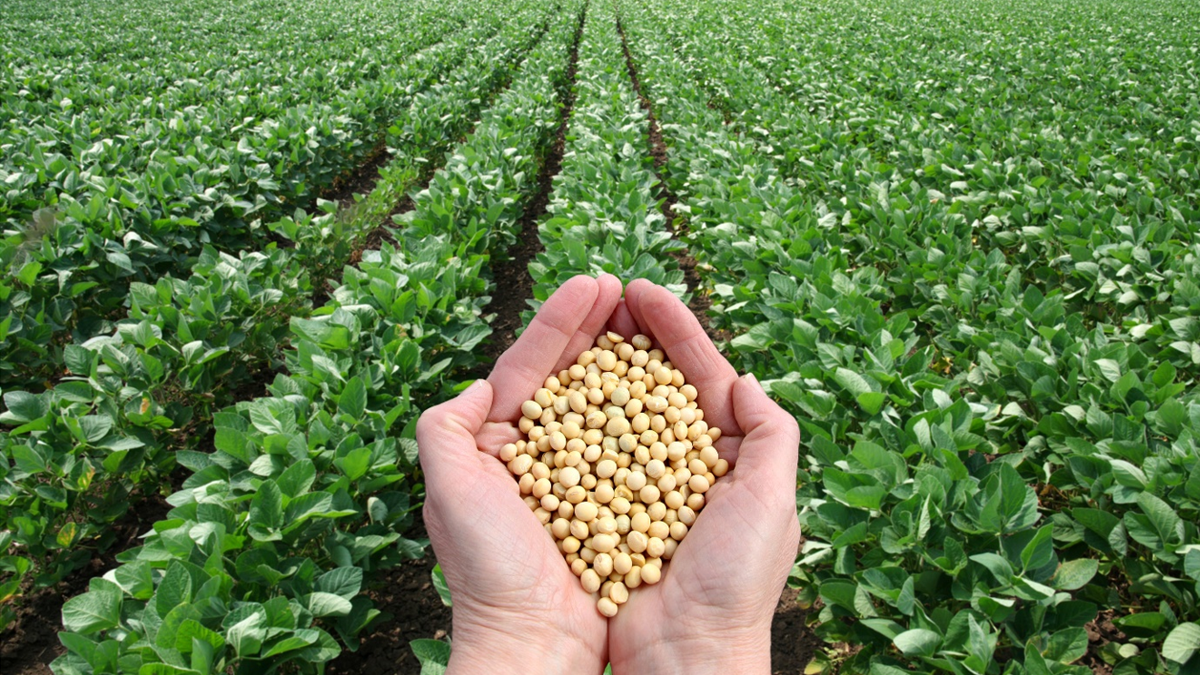
Brazil's quest to have yet another bumper soybean and corn harvest is hanging in balance amid the imminent threat of El Niño, a weather pattern that typically brings wide variations in rainfall across the country.
According to the latest forecast by National Agricultural Supply Company, or Conab, Brazil is projected to produce 162 million mt of soybeans in the marketing year 2023-24 (January 2024-December 2024), breaking the previous record of 154.6 million mt set in MY 2022-23. For corn, the MY 2023-24 projections show 119.4 million mt, down 9.5% year on year, but one of the heftiest harvests in a decade, nonetheless. However, the forecast assumes normal weather conditions until the end of March next year, a hypothesis that is very unlikely in an El Niño year.
El Niño is a weather phenomenon characterized by unusually warm ocean temperatures in the Equatorial Pacific, as opposed to La Niña, which is characterized by unusually cold ocean temperatures in the Equatorial Pacific, according to the National Oceanic and Atmospheric Administration. From the perspective of Brazil, El Niño typically brings heavy rains across the south, droughts in the north and uneven rainfall across the west-central parts -- the country's top soybean and corn producing region.
Infrastructure
In fact, the effects of El Niño are already visible in the country as the Southern region has received excessive rains, while the Center-West and North remain parched. At a time when soybean and corn planting activities should be gaining momentum, there are reports of planting delays, which could hurt second corn productivity. Amazon River basin areas have fallen to their lowest levels in over a century due to drought.
The pace of soybean planting is estimated at 17% of the projected soybean acreage of 45.2 million hectares as of Oct. 12, down 7 percentage points year on year, according to the agricultural consultancy AgRural. Corn sowing progress is seen at 41% of the total expected acreage of 21.2 million hectares, down 5 points year on year, the consultancy said.
Field work has lost momentum in several states because of unfavorably hot and dry weather in the week ended Oct. 14, AgRural said. There is a possibility that some areas of Mato Grosso could be replanted, it said.
With El Niño spreading its wings as the year wears on, there is a high possibility of uneven rainfall and dryness across the key states of Mato Gross, Goias and Mato Grosso do Sul. This could lead to planting delays and yield losses for soybeans and corn.
Planting delays are likely to make soybeans crop vulnerable to weather extremes, such as dry weather and excessive heat during the crop's development phase in November and December. As long as the oilseed crop doesn't enter the advanced stages of development, it remains more susceptible to unfavorable weather, which directly affects the yield potential.
Delayed soybean planting is also likely to defer Brazil's second corn sowing, which is done immediately after the completion of yellow oilseed harvest during March-April. This could put Brazil's second corn crop at risk of yield loss as the planting and development window is very limited for the safrinha corn.
In Brazil, safrinha corn output is very critical as it accounts for 75%-78% of total corn supplies. In MY 2022-23, 102 million mt of safrinha corn was produced out of the total harvest of 131.8 million mt, according to Conab data.
The weather forecast for the next three months indicates a classic pattern of El Niño conditions, with below-average rainfall in central and northern parts of Brazil, while the Center-South is likely to receive above-average rainfall, according to the Instituto Nacional de Meteorologia. In general, El Niño is expected to increase the water deficit in the northern and northeastern regions, such as Matopiba. In the north of central Brazil, irregular rainfall could cause a delay to the start of the rainy season, which could reduce soil moisture, Inmet said.
During El Niño years, heavy rainfall is common in CS Brazil, which tends to benefit grain crops such as soybeans and first corn production. However, excess rainfall in the south can also increase the severity of plant diseases, in addition to delaying operations of winter crop harvest, such as wheat, Inmet said.
Trade
Brazil is the world's top soybean and corn exporter and any interruption in the production process can have significant impact on global supplies.
The country is forecast to export a record 102 million mt of soybeans in MY 2023-24, the latest Conab report showed. Corn exports for MY 2023-24 are projected at 38 million mt, down 27% year on year, Conab said. Although the coarse grain shipments are seen lower year on year, they are still the third-largest exports ever forecast for Brazil.
But El Niño is likely to have a big say in these export projections as key soybean and corn producing states are likely to be affected by irregular rainfall.
The West-Central states of Brazil, where El Niño can cause dryness issues, account for the bulk of country's soybeans and corn trade.
The states of Mato Grosso, Goias, Mato Grosso do Sul and Rondonia contributed nearly 50% of Brazil's soybeans exports of 97.5 million mt in MY 2022-23, data from the Secretariat of Foreign Trade at the Ministry of Economy showed. For corn, the four states accounted for 73% of Brazil's total corn shipments of 52 million mt in MY 2022-23.
Prices
The basis prices of soybeans and corn have remained largely under pressure amid the prospects for a hefty harvest in MY 2023-24. However, prices are expected to fluctuate in the coming months, according to the El Niño-dictated weather conditions.
If the conditions remain largely dry in key central states of Mato Gross, Goias and Mato Grosso do Sul, the soybeans and second corn supplies are likely to tighten, leading to a surge in prices.
In southern Brazil, if there is sufficient rainfall, as expected in a typical El Niño year, it will make up for some yield loss from the central states, if not all, and act as a stabilizing factor to some degree.
Platts, part of S&P Global Commodity Insights, assessed SOYBEX FOB Santos for December deliveries at $525.18/mt on Oct. 18, down $67/mt year on year, and SOYBEX FOB New Orleans at $513.40/mt, down $75/mt year on year.
Source - https://www.spglobal.com