Brazilian President enacts bio-inputs law to boost sustainable agriculture

25.12.2024 384 views

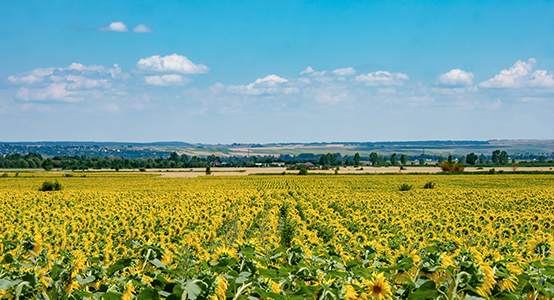
Brazilian President Luiz Inacio Lula da Silva has officially sanctioned Law 15.070/2024, establishing a comprehensive framework for the use of bio-inputs in agriculture and aquaculture. This is reported by Toda Palavra, a partner of TV BRICS.
Bio-inputs, as defined by the new law, are biological-origin materials or processes utilised in the production, processing, or storage of agricultural, aquatic, or forestry products.

These inputs play a crucial role in promoting healthier growth, pest control, and disease management while offering an eco-friendly alternative to traditional chemical-based inputs.

The law governs the entire lifecycle of bio-inputs, encompassing their production, import, export, registration, commercialisation, use, inspection, and regulation.

It also addresses related areas such as research, packaging, advertising, transport, storage, waste disposal, and incentives for bio-input development.

With this move, Brazil aims to set a global benchmark for sustainable agricultural innovation.


Source - https://tvbrics.com

16.04.2026

USA - Forecast Performance of RMA Expected Yields: Comparison of Yield Projection Methods

Building upon the analyses discussed in the Farmdoc Daily articles of Jan. 27, 2026 and April 1, 2026, this study finds that the current method used by USDA’s Risk Management Agency (RMA) provided the least accurate projection of actual RMA county yields across the five crops and four projection methods examined in this study. 

16.04.2026

Philippines - DAR orients agrarian beneficiaries on crop insurance

The Department of Agrarian Reform (DAR) facilitated an orientation workshop for the agrarian reform beneficiary organizations (ARBOs) from the provinces of Surigao del Norte and Dinagat Islands to strengthen their access to crop insurance and equip them to become authorized underwriters of the Philippine Crop Insurance Corporation (PCIC). 

16.04.2026

Estonia - AgriFi Brings Agricultural Real-World Assets On-Chain with $AGF on Polygon

Agriculture remains one of the largest and most complex industries in the global economy, contributing over $3 trillion annually to global GDP and supporting the livelihoods of billions of people worldwide, according to data from the Food and Agriculture Organization and World Bank.

16.04.2026

USA - Aid Available for Nebraska Wildfire Victims

Just over one month ago, Nebraska experienced the worst series of wildfires in history, burning nearly 950,000 acres. Since then, assistance for farmers and ranchers affected has been rolling in.

16.04.2026

Thailand - Storm batters Si Sa Ket durian orchards, losses hit B39m

A summer storm caused extensive damage to durian plantations in Kantharalak district, toppling hundreds of trees and wiping out tonnes of Thailand’s economic crop just days before harvest, local officials said on Thursday.Following the storm, district chief Somkuan Singkham ordered an urgent survey in tambon Phu Ngern, where strong winds and thunderstorms hit five villages, damaging durian orchards belonging to 110 farmers.The affected fruit is a geographical indication (GI) product known as “Sisaket Volcanic Area Durian,” grown in Khun Han, Kantharalak and Si Rattana districts. Popular varieties include Monthong, Chanee and Kanyao, prized for their creamy texture, mild aroma and relatively dry flesh.

16.04.2026

Cropshader approved for organic farming in Europe

Cropshader, developed by Lumiforte, has been verified as suitable for use in organic farming under the control of Ecocert in Europe. The product complies with the requirements for inputs used in organic production in accordance with applicable European regulations.

15.04.2026

USA - Federal aid programs aim to help Southeast Texas farmers recover from losses

Southeast Texas farmers grappling with crop losses due to extreme weather are turning to federal aid.

15.04.2026

India - Landowners waive lease payments after crop damage

Farmers with large landholdings are doing their part to ease the burden on small and marginal farmers whose crops were damaged by the April 4 storm.