With bitter cold descending on the Okanagan Valley this week, there is concern in the wine industry about vines being killed again by the freezing temperatures.
Ben-Min Chang, a scientist at the Summerland Research and Development Centre, said he's uneasy about the temperatures forecasted for this weekend that may push grape vines past survival.
In late 2022, much of the weather impact came from a sudden drastic change in temperature as well, followed by a very hot 2023 summer. Harvest yields were far lower than normal for many vineyards.
This weekend brings in cold temperatures low enough to cut yields and even entirely wipe out vines.
The BC Wine Grape Council and Wine Growers British Columbia worked on the Winter Bud Damage Report this fall, which projected a crop loss of 54 per cent across the board from last year's climate-related setbacks.
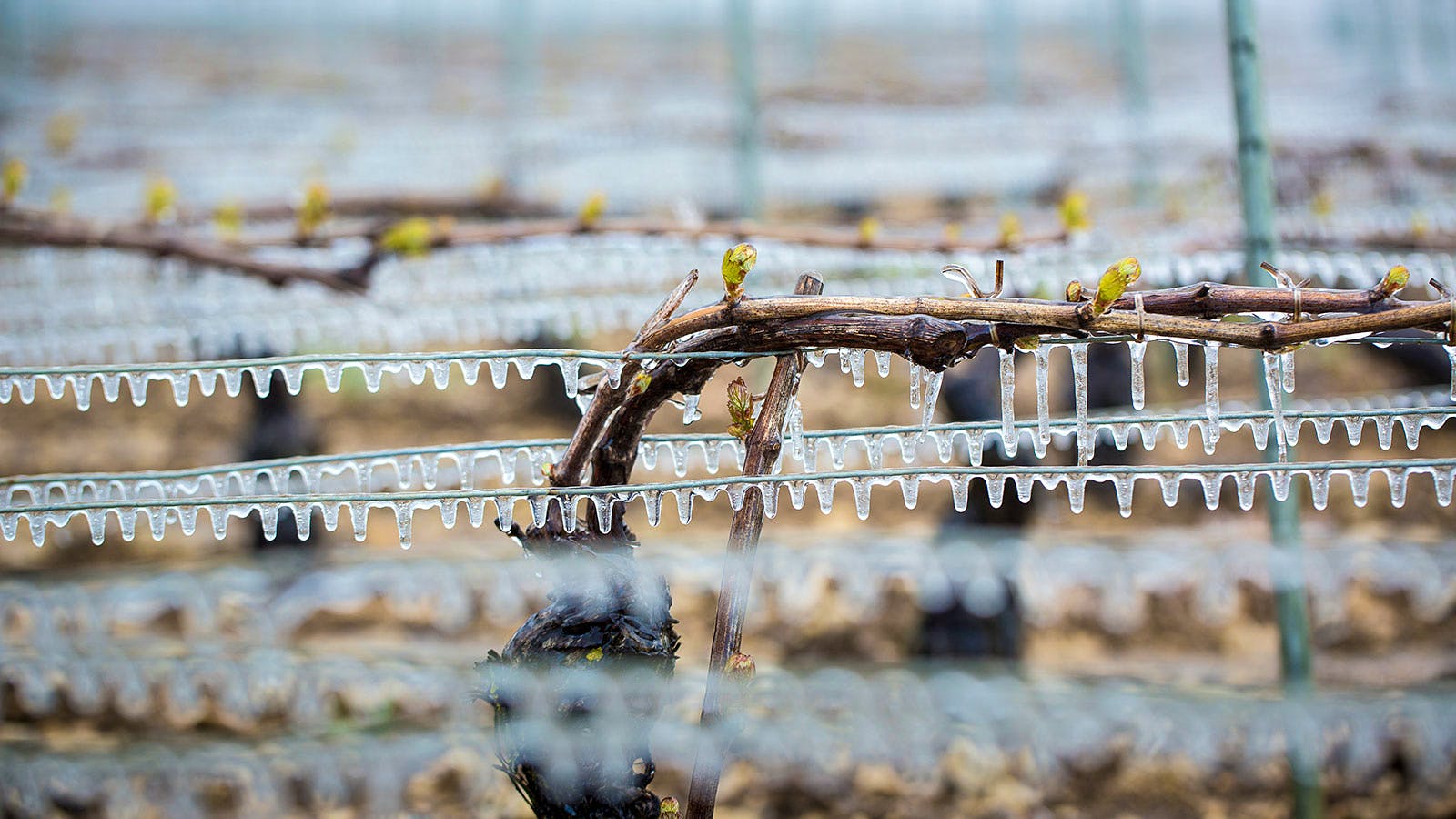
"Based on the forecast from Environment Canada [for Friday], that will go to - 25 C. And currently for most of the [local] wine grapes, which are European wine grapes, they can only tolerate to around - 24 C. That means if the temperatures really reach to - 25 C, at a certain place in the valley, that will cause some devastating yield loss," Chang said.
These temperatures are low enough that they could kill the wine grape flower buds before the next season.
"The first concern is the direct impact over the yield, the other side is at certain places, where the temperature might go to minus 27 C, at that range, they might actually kill the the whole vine," Chang added.
With wineries already suffering from reduced yields, Wine Growers British Columbia said there also won't be as much ice wine to go around the province this year with the lowest expected ice wine harvest on record.
Lindsay Kelm, acting communications director at Wine BC, says this low harvest is likely due to a variety of factors, including climate change and extreme weather events.
Much of the province experienced a green December, with cities throughout the Okanagan not seeing their first snowfall until the second week of January.
Temperatures, until now, have been as much as five degrees above normal, which hasn't been too kind to ice wine makers this time.
Bobby Gidda, the president of Volcanic Hills Estate Winery in West Kelowna, told Castanet the winery was registered to produce ice wine this year but the weather refused to cooperate in time for harvest.
“The weather we’ve had this winter has been very interesting to say the least. October, November and December have been really warm compared to other years, and because of that warmth it’s been very challenging to do ice wine. So for us specifically, we actually picked our grapes back in November because it was too warm," said Gidda.
"The weather is usually around zero or minus three around that time, so basically outside becomes a refrigerator and preserves those grapes, but what’s been happening is its been plus four or plus five, and at those temperatures it’s no longer a refrigerator outside and the grapes are not able to survive to get to that ice wine stage. For ice wine it needs to be -8 degrees celsius and you have to be able to harvest and process those grapes while they’re still frozen.”
While four wineries are registered for the production of ice wine this season, Wine BC says only three will produce ice wine this year, including Hillside Estate Winery, Gehringer Brothers Winery and Recline Ridge Winery.
"Ice wine is already termed ‘liquid gold’ and 2023 vintage ice wine will live up to that moniker with only 18 tonnes intended to be produced by the four wineries that registered," Kelm told Castanet in a written statement.
Given climate trends, there may be changes coming as to what varietals are planted in the Okanagan Valley, and how much ice wine or regular wine is produced.
"We're seeing, for example, traditional Spanish or Italian [varietals], which are from the warmer parts of Europe. So these varietals are more susceptible to the cold temperatures. If you compare it to, for example, [varietals] rom Austria or from Germany, they behave differently," he added.
"And of course, American wine grapes, which are hybrid, they could be tolerant to maybe - 27 C. That's the other option."
One way to prevent cold damage is to use wind machines, Change said, which help disturb the warm and cold air around the area.
"But if the weather is calm and there's no wind, the condition we call temperature inversion, the wind machine won't be very effective. So it really depends on the situation."
Chang added that the mechanics of these freezing events is still kind of mystery in the biology world, but he is working on a guide for cold damage assessment to help growers.
"I hope that people don't have to use those techniques for damage assessment, but basically it will help people to have a better idea about the damage."
Source - https://www.castanet.net