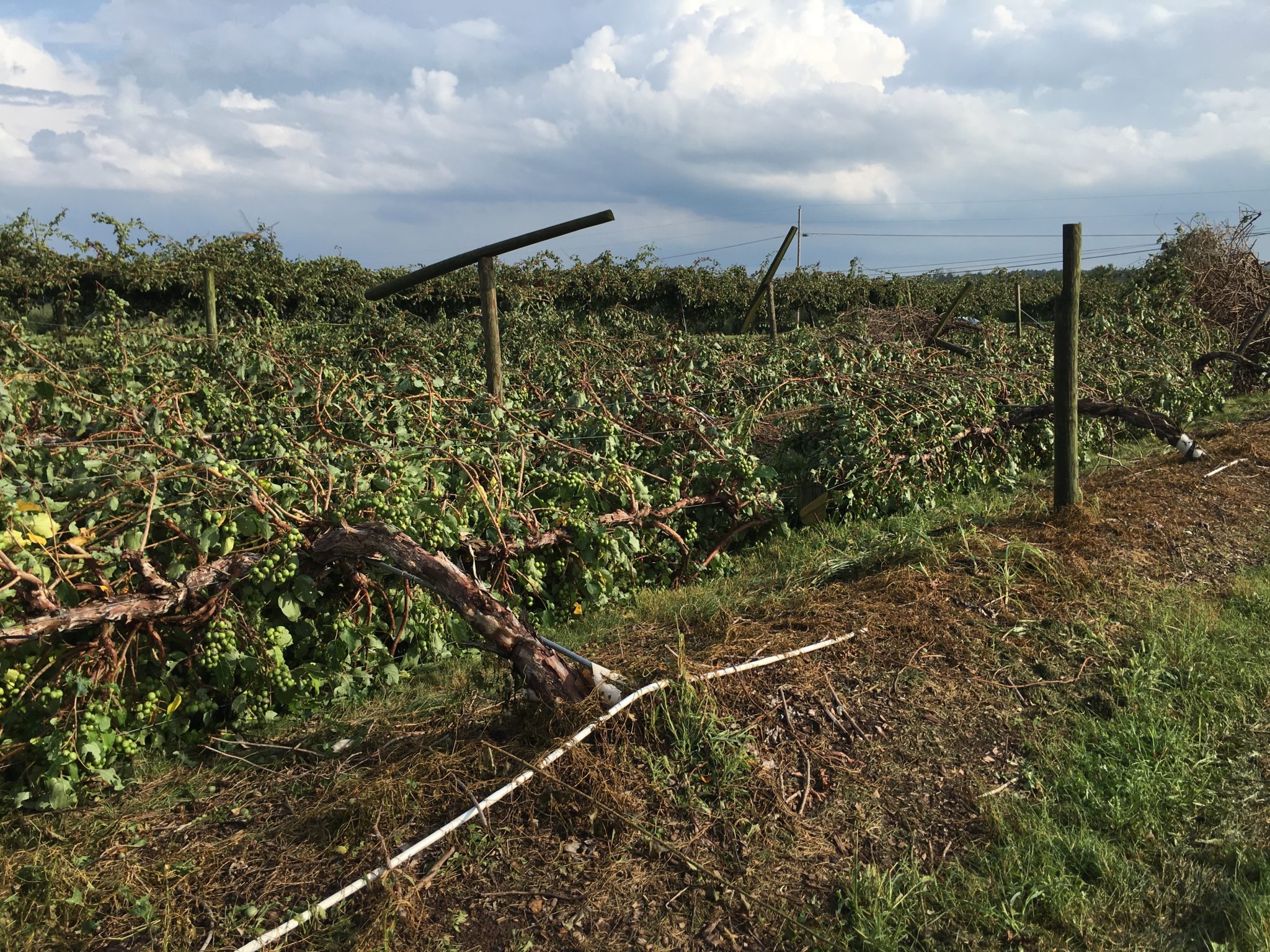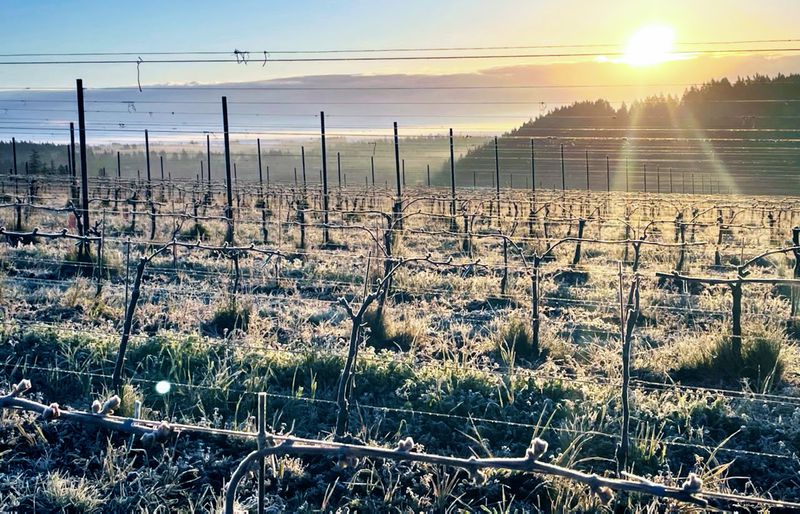
Winery owner Rolf de Bruin was well aware of the stakes as temperatures plunged to -24 C in Lillooet, B.C., in mid-January.
"It's really painful because there's nothing that you can do," said de Bruin, founder and co-owner of the 15-hectare Fort Berens Estate Winery, 250 kilometres north of Vancouver.
"You can just watch it go down. You can only feel the hardship and the pain as you realize that the temperatures are really going to put 2024 in a different light."
After the cold snap, a survey of his vines confirmed de Bruin's worst fears. Out of about 70,000 plants, only "a handful" of productive buds were found, essentially eliminating the harvest.
Across B.C., the 2024 vintage is facing a near-total wipeout, according to a report into the January cold snap commissioned by industry group Wine Growers British Columbia.
It says the province faces "catastrophic crop losses" of 97 to 99 per cent of typical grape production.
The report by consulting firm Cascadia Partners says preliminary industry estimates foresee one-to-three per cent of typical yields for wine grapes, with most of that coming from the Fraser Valley and Vancouver Island, where temperatures were milder.
Wine Growers B.C. president and CEO Miles Prodan said vineyard and winery operators were "stunned" at the devastating level of damage.
"I think the report speaks for itself," Prodan said. "And it unfortunately paints a very dire picture of the current state of the B.C. grape farm industry.
"It is actually almost incomprehensible. And I think that's the reaction a lot of us in the industry are having."
Environment Canada data show Kelowna's daily low temperature breached -20 C from Jan. 12 to 14, hitting -26.9 C on Jan. 13.
Daily lows were around -20 C on Jan. 11 and Jan. 15, and did not return above -10 C until Jan. 20.
Wine growers say the loss in grape and wine production triggered by the deep freeze — described by the report as "an almost complete writeoff of the 2024 vintage" — is expected to result in revenue losses of up to $346 million for vineyards and wineries in B.C.
The industry is also anticipating an additional revenue loss for suppliers, logistic providers and distributors of up to $99 million.
The vast majority of B.C.'s wine production is located in the Interior, including Kelowna and the surrounding Okanagan Valley where 86 per cent of the province's vineyard acreage is located.
Wine grape growers said the January cold snap was especially damaging due to the relatively mild winter leading up to the deep freeze in the B.C. Interior, a sentiment echoed by the producers of other fruits such as cherries and peaches.
The Wine Growers' report said experts began assessing the damage of the cold snap quickly after the weather event, and the results "confirmed the industry's worst fears" with "the vast majority" of bud samples showing no signs of life."
"Due to the extent of damage, appropriate pruning practices will be ineffective at mitigating against severe crop losses," the report said.
Prodan said the industry group has asked the provincial government to communicate the dire situation to federal authorities in Ottawa, where programs to help farmers during poor harvests may be available.
He said whatever aid is put in place for grape growers must also include support for wine producers because the fortunes of the two sectors are "intricately tied together" along with the health of other industries such as rural tourism.
Prodan said the wineries may also consider asking for permission to import grapes from places like Ontario and Washington state.
"Wineries will probably start bringing back some of the wines they have in distant distribution channels so that they'll have wine to sell to visitors who come," Prodan said. "And visitors should come (to wineries) because there will be wine.
"In many instances, that's probably going to be one of the only places you're going to find B.C. wine — directly at the winery."
The effects of the cold snap went beyond wine grapes.
The BC Cherry Association has said a dramatic reduction in the crop is feared.
Laurel Van Dam, vice-president of grower relations and corporate affairs at the BC Tree Fruits Cooperative, said while apples and pears are hardier, softer fruits such as peaches and nectarines saw some bud kill during the cold snap.
Van Dam said agricultural scientists are working with orchids to determine the damage, but the full impact may not be clear until the spring bloom.
"Because it had been warm up until that point and then it was anticipated to drop, some of the modelling that (horticulturalists) have done over the last few decades wasn't really telling them a lot about what this was going to do," she said.
"Definitely, there is some concern for sure. How much concern? It's a wait-and-see game."
B.C.'s wineries and vineyards said this is the second straight year where yields have been damaged by severe cold weather.
According to the crop assessment from the BC Wine Grape Council, the cold snap in the previous winter in late 2022 and early 2023 resulted in a 58 per cent reduction of grape and wine production provincewide last year.
The Wine Growers' report warns of "longer term impacts on grapevine health — including the need to replant."
Prodan said vineyard operators are also waiting for blossoming in the spring to make a final assessment, but the best-case scenario is that the grape vines simply survive.
The worst case, he said, would be widespread vine degradation where massive replanting is needed, meaning it would be another three or four years before some B.C. vineyards can produce grapes again.
"There is an ongoing replant program all the time … but replanting entire vineyards because they've been destroyed — because of climate changes — is something we have never encountered," Prodan said.
De Brui said he would try everything in his power to keep his Lillooet business afloat and not lay off any staff, who number 12 to 40 depending on the season. And even if the 2024 vintage is non-existent, the work continues.
"You still have to do all the work," he said. "The vineyard's still there, and you still have to go out and prune, and you have to irrigate, and you have to fertilize."
"And even though it's not productive, you have to put in all the work. And I can say that it's a financial burden, (but) it's also a mental health burden. It's tough to go out there and do all this work, knowing that at the end of this season, there's no fruit."
Source - https://www.piquenewsmagazine.com