Canada’s cattle sector is urging governments to modernize business risk management programs, warning that current tools are not keeping pace with market volatility, rising costs, and major policy uncertainty.
Canadian Cattle Association (CCA) president Tyler Fulton outlined those concerns during testimony last week before the House of Commons Standing Committee on Agriculture and Agri-Food, as part of a broader review of Business Risk Management (BRM) programs.
A Pivotal Moment for the Cattle Sector
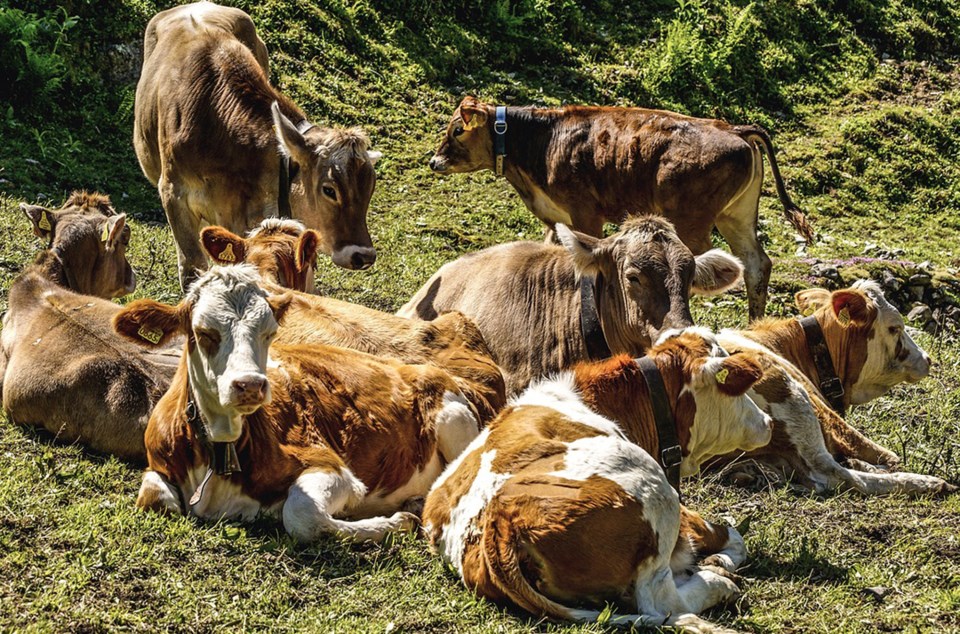
Fulton told MPs the cattle industry is at a critical turning point. After years of contraction following drought, rising costs, and past trade disruptions, Canada’s national cow herd is beginning to rebuild — growing an estimated 2.5 per cent last year.
However, he stressed that momentum remains fragile and highly sensitive to policy decisions.
He emphasized that rebuilding a cattle herd is not a short-term decision.
“Rebuilding a cattle herd is a multi-year, capital-intensive decision that depends on policy certainty and effective risk management.”
Business Risk Management Key to Youth Confidence
Fulton said BRM programs play a central role in attracting young producers back to the cattle industry, particularly after losing much of a generation following the BSE crisis.
He noted that BRM programs give young ranchers the confidence to invest, borrow, and expand.
Fulton said producers must be able to “go to the bank and lever their life” on decisions such as buying land, expanding herds, or taking over family operations — something that requires predictable and effective risk management tools.
Livestock Price Insurance Needs Reform
One of the CCA’s top priorities is reforming Livestock Price Insurance (LPI).
Fulton told MPs that LPI is the only BRM program that allows cattle producers to proactively manage price risk — a key concern given volatile markets and global uncertainty.
However, high premium costs have limited uptake, particularly among cow-calf producers and younger farmers. Unlike crop insurance and similar U.S. programs, LPI premiums in Canada are not cost-shared with governments.
Fulton said the CCA has long called for cost-shared LPI premiums and for the program to be made permanent, arguing this would level the playing field with U.S. competitors and reduce reliance on reactive programs.
AgriStability Improvements Welcome, but Gaps Remain
Fulton also addressed AgriStability, describing it as an essential safety net when producers face major income losses due to drought, market disruptions, or rising input costs.
He welcomed recent changes allowing pasture-related feed costs as eligible expenses, saying the update makes the program more responsive for cattle producers.
However, he cautioned that the current payment cap limits effectiveness, especially for feedlots and larger operations that drive export capacity and investment. The CCA is recommending:
- Increasing the AgriStability payment cap to $15 million
- Eliminating the cap during catastrophic events such as foreign animal disease outbreaks
- Raising the program trigger to 85 per cent of the reference margin
According to Fulton, strengthening AgriStability would provide a more reliable backstop and support reinvestment across the sector.
Trade Uncertainty Adds to Risk Picture
Fulton also connected BRM concerns to Canada’s ongoing trade negotiations with Mercosur countries, calling the proposed deal one of the biggest risks facing the cattle industry in decades.
He warned that expanding market access for South American beef could undermine confidence just as Canadian producers are beginning to rebuild the herd, particularly given differences in production standards, traceability, and animal health reporting.
Fulton said introducing new trade risks at this stage sends the wrong signal to producers — especially young ranchers — who are deciding whether to invest in the industry.
Call for Action Before Next Policy Framework
With the next federal-provincial-territorial agricultural policy framework not set to begin until 2028, Fulton urged governments to act now rather than wait.
He warned that delays in improving BRM programs could push tangible benefits for cattle producers out to the 2029 calf crop.
Fulton closed by telling MPs that growing Canada’s cattle herd is essential to food security, trade diversification, and rural economic stability — but success will depend on a BRM suite that is both effective and equitable for the realities of cattle production.
Source - https://strathmorenow.com